


What Size Dehumidifier for Grow Room Is Right for You?
A grow room with poor humidity control will suffer from slow growth and gray mold. Every drop of water you give your plants eventually ends up back in the air. Sizing your equipment for these moisture loads keeps your environment stable and your plants healthy.
Browse GroIndoor dehumidifiers to match your measured moisture load with the right capacity.
What size dehumidifier for grow room you need depends on daily water input because plants transpire roughly 97 percent of the water they get. To find the right capacity, convert your daily watering total into pints by multiplying by eight and add a 25 percent safety buffer. If you add ten gallons daily, you need a unit that removes one hundred pints every day so the machine avoids running at full load. This extra capacity ensures your equipment stays efficient and helps the machine last longer by reducing the total stress on the motor and coils. These steps keep your humidity levels low even during the heavy flowering stage when your plants release the most moisture into the air of your room.
You might think these numbers are too complex, but knowing your moisture load is the only way to avoid mold. Finding exactly what size dehumidifier for grow room conditions works depends on your specific plant count. The path begins with the practical sizing steps below.
What size dehumidifier for grow room conditions works?
The right capacity is based primarily on how much water enters the room each day, not floor area alone. Convert daily irrigation gallons to pints, account for plant transpiration, then add a 25 percent buffer so the unit can control humidity during peak moisture loads without running continuously.
To find out what size dehumidifier for grow room setups you need, look at your water use first. Many growers make the mistake of looking only at floor space or tent size. While area matters, the real moisture load comes from your plants. Plants release almost all the water they get into the air. If you add ten gallons of water a day to your pots, your machine must pull that same amount back out.
Link water use to moisture load
The amount of water you give your plants is the best guide for sizing. Research shows that plants transpire about 97 percent of the water they receive. This means that nearly every drop you pour into the soil will end up as vapor in the room. This process is the main reason why you need environmental controls in your setup.
To get a clear number, track how many gallons of water you use each day. A single gallon of water weighs about eight pounds and holds eight pints of liquid. If you use 20 gallons of water daily, your plants release about 160 pints of moisture into the air. Your unit must have a high enough rating to handle this daily load to keep your crops safe.
Use the 25 percent safety rule
You should not buy a machine that just barely meets your daily water use. Pro growers use a 25 percent safety buffer to handle spikes in humidity. This extra room helps when plants are in full bloom or when the weather gets wet outside. A buffer ensures the air stays dry even when your system faces a heavy load.
Managing moisture is a key part of controlling humidity in a grow tent or large room. Stable humidity helps plants grow well and prevents issues like mold. Studies show that keeping steady levels is key for crop yield and health. A larger unit also runs less often, which saves power and helps the parts last longer.
Rate your dehumidifier for success
Most dehumidifiers for grow rooms use a "pints per day" rating. This number tells you how many pints the unit can pull from the air in 24 hours. To find your best size, take your total daily pints and add the 25 percent buffer.
- Total Pints = Daily Gallons x 8.
- Final Size = Total Pints x 1.25.
For example, if you use five gallons of water a day, that equals 40 pints. Adding the buffer brings your needs to 50 pints. It is best to run your machine at 70 to 80 percent of its total power. This setup is a smart way to keep your room dry while saving on your light and power bills.
How to calculate your daily moisture load
To find the right equipment for your space, you must first know how much water enters the air each day. Most of the water you give your plants does not stay in the soil or the plant. Instead, plants transpire about 97 percent of the water they receive. This process moves moisture from the roots to the leaves and then into the air as vapor. By tracking your daily watering, you can find exactly what size dehumidifier for grow room setups you need to keep your crop healthy.
Calculate your water input
Start by finding the total gallons of water you give your plants in one day. If you water every few days, divide the total volume by the number of days between waterings. For example, if you give your plants 20 gallons of water every two days, your daily input is 10 gallons. This number is your base for finding the total moisture load. Since plants release almost all this water back into the room, your daily water use is the best way to estimate your needs.
Convert gallons to pints
Dehumidifiers are rated by how many pints of moisture they can remove in 24 hours. To find your load, you must change your daily gallons into pints. Each gallon contains 8 pints of liquid. If you use 10 gallons of water per day, you have 80 pints of moisture entering the air. This conversion is vital because most shop units and commercial models use pints as their main measure of capacity.
Add a safety buffer
You should not buy a unit that matches your daily load exactly. A unit that runs at full load all the time will wear out fast and use more power. Industry experts suggest adding a 25 percent safety buffer to your total. This extra capacity helps the unit handle spikes in moisture and run more efficiently. Taking this step ensures you have a grow tent or room environment that stays stable even during peak plant growth.
- Find daily water use: Total the gallons of water your plants get in a 24-hour window.
- Change to pints: Multiply your daily gallons by 8 to find the total pints of moisture.
- Apply safety margin: Multiply the pint total by 1.25 to add the 25 percent buffer.
- Compare to ratings: Look for a unit with a daily pint rating that meets or exceeds your final number.
Managing humidity is a key part of greenhouse environmental control to ensure your plants grow well. Following these steps helps you pick a unit that keeps air dry and protects your plants from mold. If you have questions about specific models, call our team at 866-GRO-INDR for expert help with your setup.
Factors that change dehumidifier capacity
Choosing the right size for your grow room depends on more than just floor space. Several things change how much work your unit must do to keep the air dry. If you do not plan for these factors, you might buy a unit that cannot handle the moisture load during the peak bloom stage.
Plant transpiration and water use
Plants are the main source of moisture in an indoor garden. Plants transpire about 97 percent of the water they get, turning liquid into vapor in the air. This means your daily water use is a clear sign of your drying needs. For example, if you give your plants 30 gallons of water a day, your dehumidifiers for grow rooms must pull about 240 pints of moisture to keep levels steady.
The growth stage also shows how much water your plants use. Young plants in early veg often need much less water than large plants in full flower. You can count young starts as 0.25 plants when you work out your needs. As plants grow and you add more water, the work for your gear will go up fast.
Heat and room size
Air heat has a big impact on how much water vapor the air can hold. Warm air holds more moisture than cold air, which changes how hard a unit must work. Most grow room humidity controllers help manage these shifts, but the base power must be there. Different growth stages need different heat levels, with bloom rooms often kept between 78 and 80 degrees Fahrenheit.
Room size and air flow also matter. A large room with high walls has more total air to treat than a small tent. If your room is not sealed tight, outside air can leak in and bring more moisture. Good air flow and sealing help ensure a good growth area while saving power by cutting the load on your dryer.
Gear safety margins
It is best to add a 25 percent safety margin when you choose a unit size. This extra power helps your gear handle fast moisture spikes or very humid days. Running your unit at 70 to 80 percent power is better and helps the gear last longer than running it at full load all the time. Proper controlling humidity in a grow tent or room keeps your plants healthy and your gear in good shape.
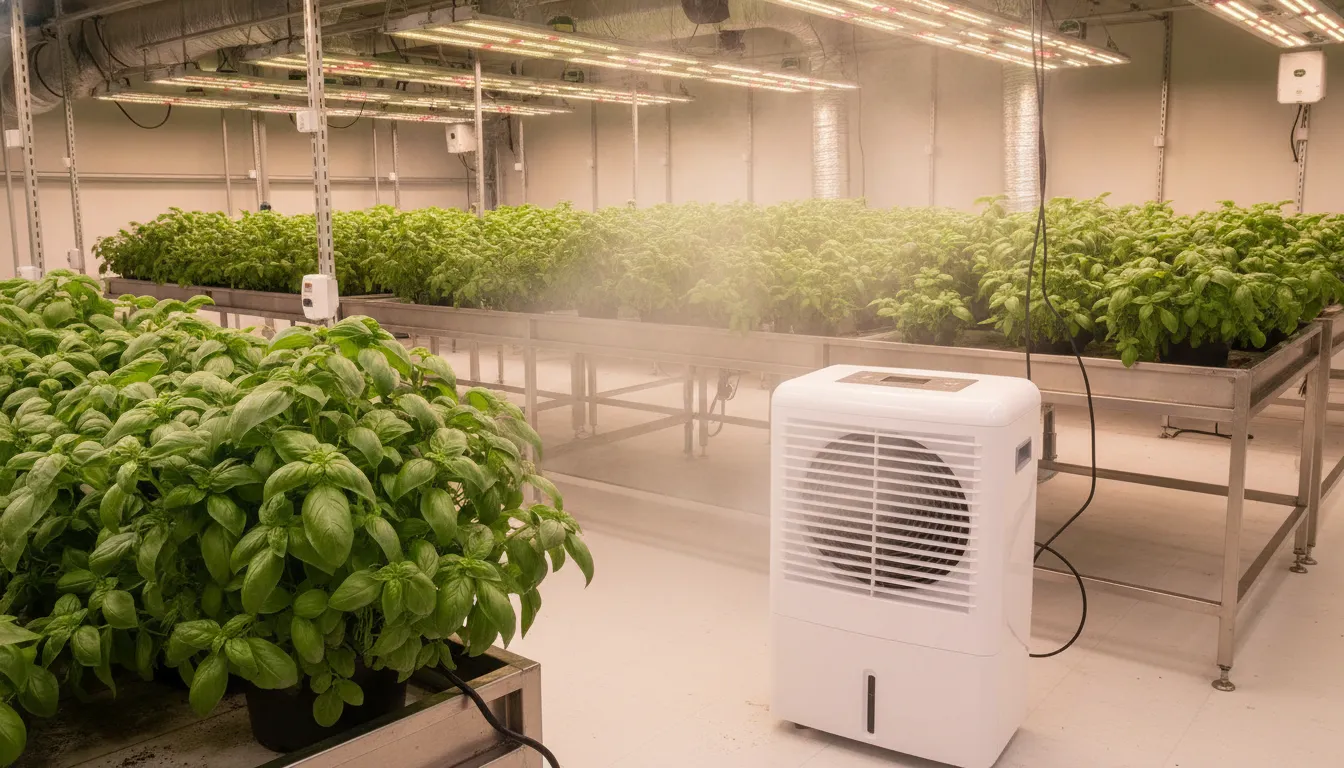
Residential vs. commercial dehumidifiers
Choosing the right gear depends on your grow space size and plant count. While home units work for small tents, larger grows need heavy-duty tools. You must find dehumidifiers for grow rooms that can handle high moisture loads without failing. Using the wrong size can lead to mold and lost crops.
Capacity and duty cycles
Home models often lack the power for dense plant rooms. Plants release about 97 percent of the water they get back into the air through transpiration, as noted by Dehumidifier Corp. This means a room with many plants needs to move a lot of water every day. Commercial units are built to run all day and night. They can pull more pints of water from the air in a 24-hour period than home models. Most pros use a 25 percent safety buffer when they pick a unit to handle moisture spikes, according to Hydrobuilder.
Drainage and controls
Home units often have small tanks that you must empty by hand. This is hard to do in a large grow room. Commercial tools use pumps to send water to a drain on their own. They also have better grow room humidity controllers built in. These sensors are more accurate and help keep the air steady. Steady air helps plants grow better and saves power. Research in academic journals shows that keeping humidity steady is key to high yields and energy savings.
Equipment lifespan
Running a unit at full load all the time will make it break soon. A unit that runs at 70 to 80 percent capacity lasts longer and works better, per industry best practices from Hydrobuilder. Commercial gear uses tough parts to handle the heat and wet air of a grow room. This makes them a better choice for serious growers who want tools that last for years.
| Feature | Residential Units | Commercial Units |
|---|---|---|
| Daily Capacity | 20-50 pints | 70-500+ pints |
| Duty Cycle | Short bursts | Always on |
| Water Removal | Manual tank | Built-in pump |
| Build Quality | Plastic parts | Steel or tough |
| Humidistat | Basic sensor | Pro accuracy |
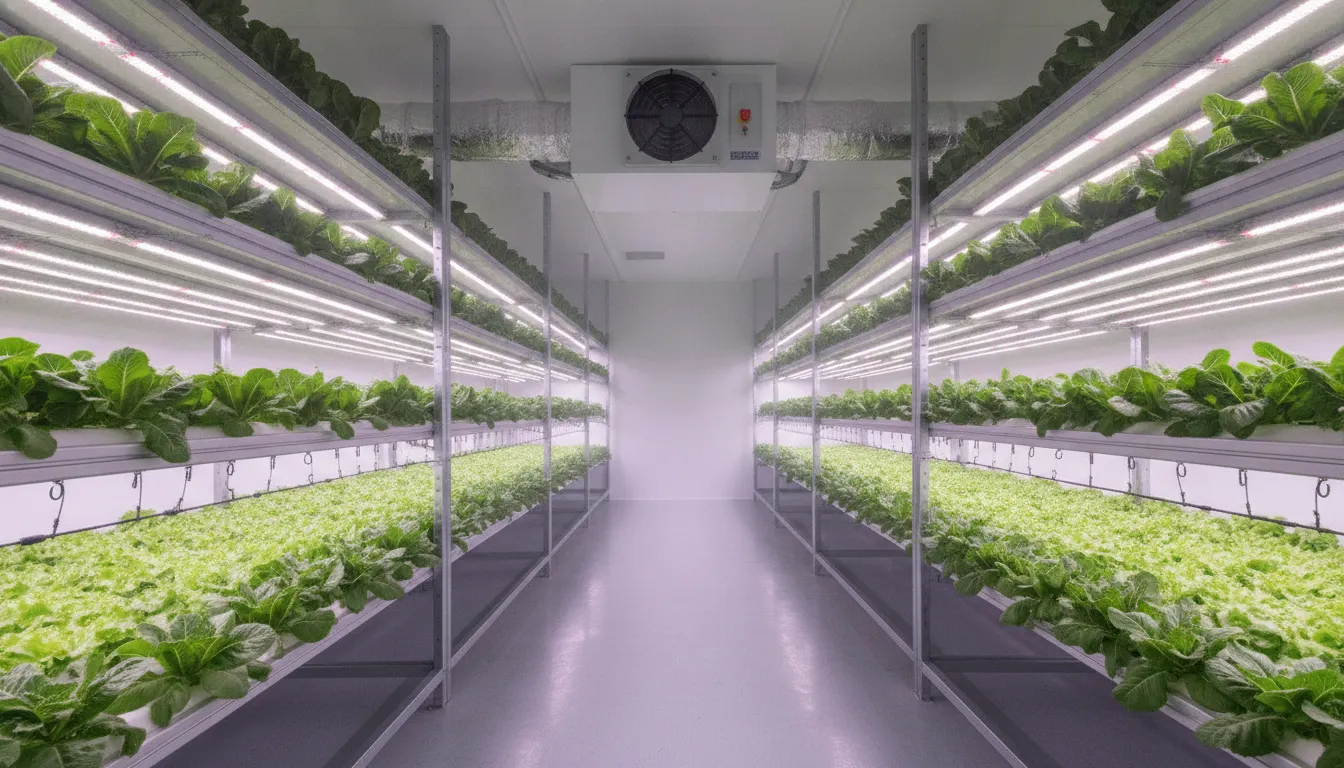
Compare GroIndoor commercial dehumidifiers for high-capacity grow room humidity control.
How to install and verify your dehumidifier
Setting up your unit the right way helps it work better and last longer. You want to keep the air in your grow room dry and moving. If you do not plan for placement and drainage, you might face mold issues later on. Proper setup ensures that your plants stay healthy and your gear stays safe.
Best placement for even airflow
Where you put your unit matters as much as its power. You want the air to move freely around your plants to stop wet spots. Place the unit in a central spot or where your fans can pick up the dry air. Do not put it against a wall or in a corner where air gets stuck.
You should leave at least two feet of space around all sides for the best intake. If the air does not move well, you might get pockets of high humidity. This can happen even if you know what size dehumidifier for grow room you need. You must also control factors like light and heat to keep your plants in the best state for growth.
Good airflow helps the dry air reach the center of your plant canopy. This is where moisture often hides. If you use big fans, aim them so they mix the dry air from the unit with the rest of the room. This makes the whole space stable for your crop.
Setting up drainage and controllers
Most grow room units remove many pints of water every day. This is because plants transpire about 97 percent of the water they get. You should set up a floor drain or a pump to move this water out. If you use a tank, it will fill up fast and shut the unit off.
A full tank leads to spikes in wetness that hurt your yield and invite pests. You also need good grow room humidity controllers to manage the unit. Place the sensor at plant height, but keep it away from the unit's dry air blast. This gives you a true reading of the air your plants feel.
Verify performance and care
Once you turn the unit on, watch it for a few days to see how it acts. The unit should run for long cycles, not turn on and off every few minutes. This rapid on-and-off is called short cycling and it can break the motor fast. You want to avoid this to keep your costs low.
A unit works best and lasts longer when it runs at about 70 to 80 percent of its full power. If it runs all the time without a break, it might be too small for the room. This is why a 25 percent safety buffer is the industry best practice when you pick your gear.
Check the air filters every few weeks to keep the airflow high. Clean the coils if they look dusty or dirty. Simple care like this helps your dehumidifiers for grow rooms work well for many years. It keeps your grow space safe and dry.
Common dehumidifier sizing mistakes
Choosing the right unit for your garden is not always easy. Many growers make small errors that lead to big problems. If you pick the wrong size, you may deal with mold or high power bills. You want a unit that can handle the wet air without wasting money on a model that is too big. Knowing what size dehumidifier for grow room use you need is the first step to a healthy crop. Here are some of the most common errors to avoid:
- Buying based on floor space alone.
- Ignoring the test settings of the unit.
- Leaving no safety margin for high humidity.
- Forgetting about lights-off humidity spikes.
- Using a small water tank instead of a hose.
Using square footage alone
Many people buy a unit based only on the size of the room. This works for a basement, but it does not work for a grow room. Plants add a huge amount of water to the air through their leaves. In fact, plants release about 97 percent of the water they get back into the room to stay cool. This means you must size your unit based on how much you water your plants, not just the floor space. If you only look at square footage, your unit will likely be too small for a dense garden.
Ignoring test conditions
A common mistake is looking at the rating on the box without checking the test settings. A unit might say it removes 100 pints a day. But that rating is often based on very hot and wet air, like 80 degrees and 60 percent humidity. Grow rooms often run at lower heat levels than these test rooms. Since environmental control systems must balance plant growth and energy use, you need a unit that works in your exact climate. A unit that removes 100 pints in a lab might only remove 60 pints in your cool grow room. This drop in power can leave your plants at risk.
Missing a safety margin
Some growers buy a unit that fits their exact needs with no room to spare. This is a mistake because it forces the unit to work too hard. A 25 percent safety buffer is the best way to figure out your needs for a steady grow. Running a unit at 70 to 80 percent of its total power is better for the machine. It saves energy and helps the gear last much longer. If you need to remove 100 pints, you should buy a unit that can handle at least 125 pints.
Another issue is ignoring humidity spikes when the lights go off. When lights turn off, the heat level drops and the air can hold less water. This causes humidity to rise fast. A unit without extra power will not be able to catch up before mold starts to grow. You should also check your drainage. A small tank that fills up fast will stop the unit from working when you are not there. Using a hose for constant drainage is a much better choice for controlling humidity in a grow tent or room. This keeps the air dry even when you are away.
Shop GroIndoor dehumidifiers after calculating your required daily pint capacity.
Frequently Asked Questions
How to size a dehumidifier for a grow room?
To size a unit, find the total amount of water your plants get daily. Since plants transpire about 97 percent of that water back into the air, your watering volume is a good guide. Multiply your daily gallons by eight to get the pints of moisture. According to Dehumidifier Corp, this total is the minimum capacity you need. The unit must remove this much moisture every day to keep the room stable.
Is it better to undersize or oversize a dehumidifier?
It is often better to pick a unit with more power than you need. Running a dehumidifier at 70 to 80 percent of its total limit is better for power use than running a small unit at full speed. This also helps the machine last longer by stopping wear. A 25 percent safety buffer is the best way to make sure your system can handle more moisture during the flowering stage.
How do plants affect grow room dehumidification needs?
Plants are the main source of moisture in a grow room. They release water through their leaves in a process called transpiration. Large plants and those in big pots need more water, which leads to high humidity. Even the growth stage matters, as plants in bloom often need more water than small seedlings. You should count each seedling as 0.25 of a full plant to avoid getting a unit that is too big.
What size dehumidifier do I need for a 5x5 grow tent?
A 5x5 grow tent often needs a unit that can remove 30 to 50 pints of water each day. The exact size depends on your lights and the number of plants you grow. High heat from lights makes plants release more water, while more plants add more moisture to the air. Using a unit rated for pints per day makes sure your tent stays dry enough to stop mold from growing during the final weeks.
Ready to find the right dehumidifier for your grow?
Failing to control the moisture in your grow room puts your whole crop at risk of mold and ruins all of your hard work. Getting the right size unit makes sure you stop these damp air problems before they start and helps your plants stay healthy as they grow. You should set up your gear now to enjoy the better results and peace of mind that come with a high grade indoor garden setup.
Ready to shop dehumidifiers? Browse our full stock to shop dehumidifiers and talk to an expert to get your room set up the right way and keep your plants safe and healthy for a great harvest today.
Tags: