


Heat buildup from high-intensity lights can turn a grow tent into a breeding ground for mold. Failing to calculate your grow tent ventilation CFM accurately leaves your crop at risk for heat stress. A properly sized fan is the base of a healthy garden.
Shop fans and blowers sized for reliable grow tent ventilation.
The grow tent ventilation cfm you need depends on your total tent volume and the resistance from filters and long runs of flexible ducting. Calculate this value by multiplying the tent length, width, and height to find the cubic feet and then aiming to exchange that air every single minute. Account for static pressure from carbon scrubbers by multiplying your base volume by a factor of 1.5 to 2 to ensure you have enough power. This extra power allows your fan to pull air through the system while keeping your plants fresh and your heat levels stable during the day. Choose a fan with enough rated capacity to maintain stable airflow after filters, ducting, and bends add resistance.
Grow tent ventilation CFM formula
Calculate base grow tent ventilation CFM by multiplying the tent's length, width, and height in feet. That volume is the airflow needed for one complete air exchange per minute. Then increase the result to offset resistance from carbon filters, duct length, bends, and heat-producing equipment.
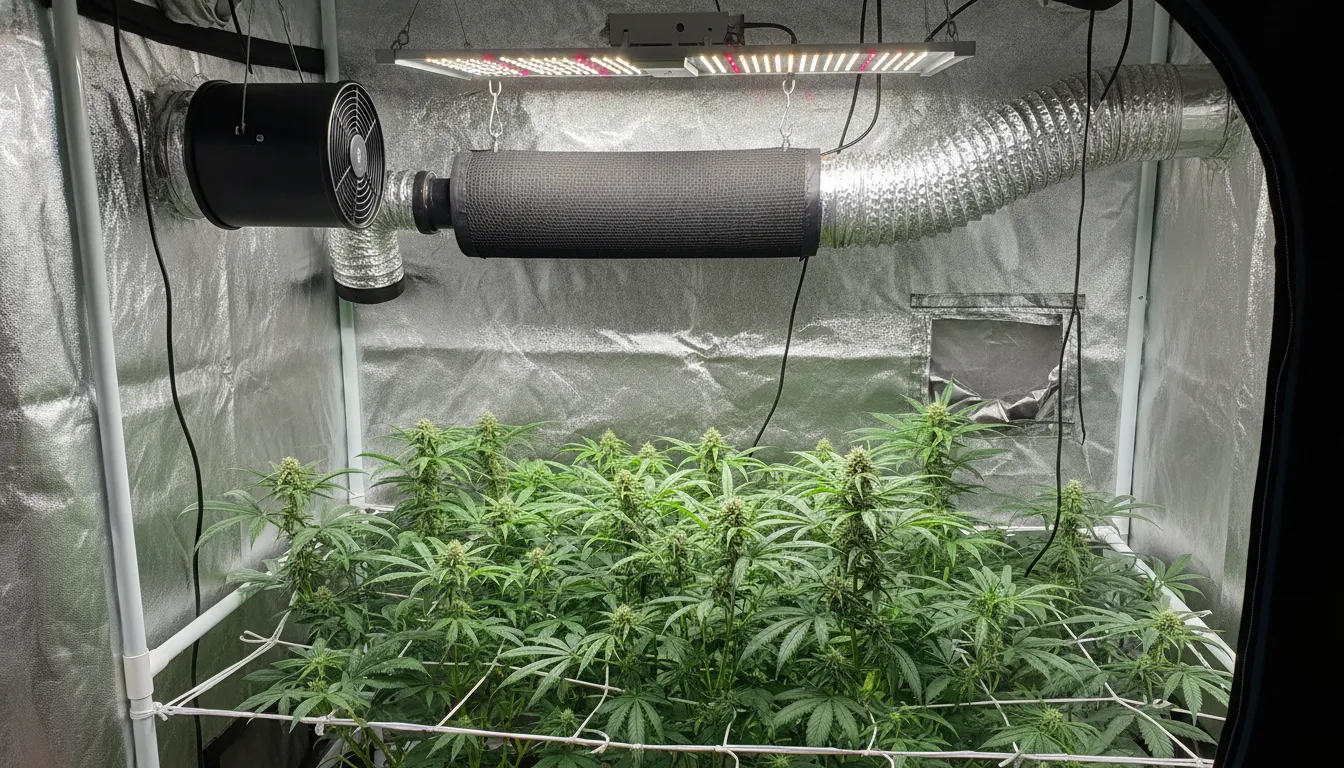
CFM means cubic feet per minute. This rate shows how much air moves through your fan every sixty seconds. To keep a healthy space, you must swap the old air for fresh air often. Moving the air helps control heat and humidity so your plants can grow well. Finding the right grow tent ventilation CFM is the first step to a great harvest.
What is the base air swap sum?
To find the right fan, you first need to know the size of your tent. You find the total volume by doing a simple sum of length, width, and height. Most pros suggest a full air swap once per minute. This fan and blower options for tent ventilation plan ensures fresh gas and a cool room for your crop. It is the best way to start your setup.
- Measure the length, width, and height of your grow tent in feet.
- Times those three numbers to find the total cubic feet of the tent.
- Set your air swap goal to once per minute as a safe starting point for home growers.
- Times that total by two to account for parts like filters and ducting that slow down the air.
- Pick a fan that is rated for this final number or one that is slightly higher for better control.
The need for a fan buffer
You rarely get the full speed of a fan in a real setup. Parts like carbon filters for odor control and long pipes add drag. Using a filter can cut the air flow of your fan quite a bit. Because of this, you should always buy a fan with more power than the base sum suggests. A fan that is too small will work too hard and make too much noise.
Ducting with sharp turns also makes the fan work harder. Each bend in your hose makes it harder for the air to escape. If you have many turns, you need even more CFM to keep the air moving at the right speed. Most growers add a buffer to make up for these parts. This keeps the fan from burning out too soon.
Examples for common tent sizes
In a small 2x4 tent that is 5 feet tall, the volume is 40 cubic feet. For a one minute swap, you need 40 CFM. With a buffer of 1.5, your goal is 60 CFM. This size is easy to manage with a small four inch fan. You will find that most kits give you plenty of power for this small space.
A large 4x4 tent that is 7 feet tall has a volume of 112 cubic feet. For that space, a 200 CFM fan is a much safer choice to keep the air moving. If you use a big light, it will put out a lot of heat. You might even want to go up to a six inch fan. A larger fan can run at a lower speed to select an efficient ventilation fan while still moving enough air.
Adjust CFM for filters, ducting, and heat
Increase base CFM whenever air must pass through a carbon filter, long duct run, or sharp bend. These components create static pressure that reduces delivered airflow. Add capacity for each source of resistance and for hot grow lights, then use a speed controller to tune the final system.
Once you know your tent size, look at what is inside. Base math assumes air moves with no blocks. In a real room, filters and long tubes slow down the air. This is called static pressure. To keep the air fresh, add extra capacity to the calculated fan requirement.
How filters and ducting slow down air
Carbon filters are great for cleaning the air and stopping smells. But they also act like a wall that the air must push through. This push back reduces how much air the fan can move each minute. Long runs of ducting also create drag. If your tube has many bends or turns, the air slows down even more. Every inch of pipe adds more work for the fan.
Every 90-degree bend in your duct can cut your air flow by a large amount. To make up for this, most growers use a factor of 1.5 or 2 times the base tent size. This extra room makes sure the fan can still swap the air once per minute with the gear on. Sizing your fan to meet these needs helps control high heat and manage moisture in the grow space. A weak fan makes the filter fail and the tent too humid.
Adding CFM for grow light heat
Lights are the main source of heat in a tent. High-pressure sodium (HPS) lights get much hotter than LED bars. If you use hot lights, you need more air to pull that heat out. If you do not move enough air, the heat will stay near the plants and cause stress. This leads to slow growth or burnt leaves. You must match your fan to the heat load of your gear.
You should also think about the air outside the tent. If the room air is already warm, the fan must work harder to cool the tent down. A good rule is to add more CFM if your lights use a lot of power. By picking a fan that is slightly too big, you can run it at a lower speed. This keeps the room cool while also making less noise. A fan at full speed is loud, so extra room stays quiet.
Static pressure and fan power
Push back builds up, which means every part of your kit adds more pressure. A fan that works well on its own might fail once you add a filter and a long duct. You should check your fan's chart to see how much it drops under load. Most fans lose 20% to 50% of their power when you add a carbon filter. This is why buying a fan with a higher CFM rating is a smart move for most growers.
Keep duct runs as short as you can. Use smooth tubes to help air slide through fast. If you have to go around a corner, make the turn wide rather than sharp. These small changes help the fan do its job with less strain. Keeping your system running well means your plants get the fresh air they need to thrive. Use these common rules to find your final fan speed:
- Add 25% for each carbon filter in the system.
- Add 15% for every 20 feet of ducting used.
- Add 10% for every 90-degree bend in the duct path.
- Add 20% if you use hot HPS or MH grow lights.
- Add 10% if you grow in a very humid area.
Explore carbon filters and odor-control options that match your ventilation system.
Quick-reference CFM table by tent size
Use the table as a starting point: match the tent's cubic-foot volume to the base CFM, then select within the adjusted range when filters and ducts are installed. The higher end is useful for hotter rooms or complex duct paths, while a controller prevents excessive airflow.
Choosing the best fan for your grow tent starts with the size of your space. Most indoor growers use quality grow tents to manage their crops. These spaces need a steady flow of fresh air to thrive. Without it, heat and moisture can build up and harm your plants. Experts use a grow tent ventilation cfm rating to find the right fan for each tent size.
Common grow tent volumes
To find your CFM needs, first find the total volume of your tent. You do this by multiplying the length, width, and height. A standard goal is to replace all the air in your tent once every minute. This helps control high heat and humidity that can lead to plant stress or rot. Using a fan with the right power ensures that your plants always have fresh air for growth.
Sizing table for ventilation fans
The table below shows common tent sizes and their basic air needs. Keep in mind that these numbers are a starting point. Most compare ventilation fan capacities guides suggest adding extra power. This extra power helps when you use filters or long duct runs. It is often better to have a fan that is slightly too big than one that is too small.
| Tent Size (Feet) | Total Volume (Cubic Ft) | Base CFM (1x/min) | Adjusted Range (CFM) |
|---|---|---|---|
| 2 x 2 x 4 | 16 | 16 | 25 - 50 |
| 3 x 3 x 6 | 54 | 54 | 80 - 110 |
| 4 x 4 x 7 | 112 | 112 | 170 - 225 |
| 5 x 5 x 7 | 175 | 175 | 260 - 350 |
| 10 x 10 x 8 | 800 | 800 | 1200 - 1600 |
Adjusting for filters and ducts
Real grow rooms have things that slow down airflow. Carbon filters are great for scrubbing odors, but they add resistance. Long ducting runs and sharp bends also lower the actual CFM. To fix this, plan a low-resistance duct path by adding a buffer. This ensures your fan still moves enough air after it passes through all your gear.
What size inline fan does your grow tent need?
Choose an inline fan whose delivered CFM meets the tent's adjusted airflow requirement, not merely its base volume. Four-inch fans often suit compact tents, six-inch fans commonly serve medium tents, and eight-inch fans support larger spaces, but the fan curve and installed resistance determine the correct choice.
Choosing the right fan size is a key step in building a good grow room. Most inline fans for home growers come in four, six, or eight inch sizes. This width matches the size of the opening on the fan's intake and exhaust ports. Your choice depends on the total air volume of your tent and how much gear you plan to use. If your fan is too small, your plants may get too hot. If it is too big, you might waste power or dry out your plants too fast.
Standard sizes for indoor growing
A four inch fan is usually the best fit for small spaces like a 2x2 or 2x4 tent. These fans are small and use very little power. However, they may fail if you add a thick carbon filter or long duct runs. For a 4x4 tent, a six inch fan is the most common choice. It gives enough power to move air through a filter while keeping the tent cool. Mechanical fans allow for controlled air exchange that does not depend on the weather outside. This helps you keep a steady climate all year long.
Large tents like a 5x5 or bigger often need an eight inch fan. These fans can move a lot of air quickly. You must check the grow tent ventilation cfm rating on the box before you buy. This number tells you how many cubic feet of air the fan moves each minute. Make sure the fan can swap all the air in your tent at least once every sixty seconds. This rate keeps fresh air near the leaves so the plants can grow well.
Matching fan CFM to your carbon filter
You cannot look at the fan alone when you plan your setup. Most growers use a carbon filter to scrub smells from the air. This filter creates drag which slows down the flow of air. If you pair a high-power fan with a small filter, the fan will work too hard. This can lead to a shorter life for your motor. It can also mean that smells do not get fully removed from the exhaust air. Always check that your filter is rated for the same or more airflow than your fan gives.
Ducting also plays a big part in how well your fan works. Every bend in the ducting adds more drag to the system. Try to keep your duct runs as short and straight as you can. If you must use many bends, you may need to step up to a larger fan size. When pair a fan with an airflow-rated carbon filter, account for this extra drag. Adding 20 to 30 percent to your base needs is a safe way to handle static pressure from filters and ducting.
The value of buying a bigger fan
Many pro growers choose a fan that is one size larger than they really need. For example, they might use a six inch fan in a 2x4 tent. This allows them to run the fan at a lower speed using a simple control box. A large fan running at half speed is much quieter than a small fan running at full blast. This is a great way to keep your grow quiet if noise is a worry in your home. It also gives you extra power if the room gets too hot during the summer months.
Using a bigger fan also leaves room for you to grow in the future. If you decide to get a larger tent later, you may not need to buy a new fan. Most modern inline fans come with speed dials that let you set the exact flow you need. This keeps your power bills low while giving you the force to clear out heat when needed. A large fan at a low setting often lasts longer because the motor does not get as hot. This setup helps you maintain uniform airflow throughout your entire grow space.
How to set up efficient grow tent ventilation
For efficient ventilation, place the exhaust and carbon filter high in the tent, keep the intake low, and make the duct path short and straight. Maintain slight negative pressure, then use circulation fans inside the tent to prevent stagnant pockets without confusing circulation with true air exchange.
Setting up your system right is just as key as choosing the right ventilation duct components. You want to move old air out and pull fresh air in as fast as you can. Physics helps you here if you place your gear in the right spots.
Good airflow keeps heat and moisture from building up and hurting your plants. Proper mechanical ventilation also gives your garden the fresh air it needs to grow well.
Managing air pressure and flow
You should always place your air intake low and your exhaust high. Heat rises, so pulling air from the top of the tent gets rid of hot air fast. Your intake should be near the floor to pull in cooler air.
This path creates a steady stream that covers all your plants. You can use a passive vent for intake, but an active fan is better for larger tents. This helps you hit your grow tent ventilation cfm needs more easily.
Most growers aim for negative air pressure. This means your fan pulls more air out than the intake lets in. It keeps the tent walls slightly sucked in.
Negative pressure is helpful because it forces all air through your filter. This stops smells from leaking out of the tent seams. If your tent walls bulge out, you have positive pressure. You can fix this by turning up your exhaust fan speed.
Arranging the filter and fan
The best setup is to hang your carbon filter and fan inside the tent. Place the filter first in the line, followed by the fan, then the ducting. The fan pulls air through the filter and pushes it out of the tent.
This way, the fan stays clean and the air is scrubbed before it leaves. High moisture can make filters less helpful, so keep your levels in check. Studies show that humidity over 90 percent can lead to fast fungal growth.
Keep your ducting as straight as possible to keep your air moving fast. Every 90-degree bend in your hose can drop your airflow by 20 percent or more. Use short runs of ducting and pull the hose tight to smooth out the inside walls. If you have too many bends, your use appropriately sized duct components might not be enough to keep the tent cool.
Internal circulation and air exchange
Your main fan pulls old air out, but you also need internal fans to move air around. Use small clip fans to stir the air near the plant tops. This stops dead spots where hot air and moisture hide.
Moving air also makes plant stems stronger as they fight the slight breeze. Check your plants often for signs of poor airflow.
Watch for leaves that look wet or spots of mold on your flowers. If your tent feels stuffy or smells bad, you likely need more air exchange. You should aim to replace the entire volume of air in your tent every minute.
If you see these signs, check for dust in your filter or kinks in your hose. You might also need to speed up your fans or add a bigger intake vent to help the system work.
Common grow tent ventilation sizing mistakes
The most common sizing mistakes are using only the tent's base volume, ignoring filter and duct resistance, and treating circulation fans as exhaust. Avoid them by calculating adjusted CFM, checking component ratings, planning a clear intake-to-exhaust path, and testing temperature, humidity, and negative pressure after installation.
Setting up a grow tent is about more than just picking a fan that fits. Many growers pick a fan based only on the size of the tent. They do not think about the parts that slow down the air. This mistake leads to heat and moisture issues that can hurt your plants. To keep your garden healthy, you must avoid a few common traps.
Ignoring static pressure and resistance
The biggest error is buying a fan that only meets the base choose a fan with enough reserve capacity needs. In an empty room, a 100 CFM fan moves 100 cubic feet of air every minute. But your tent is not empty. When you add a carbon filter, the fan must pull air through thick charcoal. This creates a force called static pressure.
Static pressure is the resistance the fan must push against. If your fan is too weak, the air will not move fast enough to cool your lights. This is why many growers see their tent temps rise even with the fan on high. Filters can cut your fan power by a large amount. You also lose air speed for every foot of duct pipe. One 90-degree turn can drop your duct layout and component choices results by 20 percent. To fix this, multiply your base needs by 1.5 or 2. This ensures your fan is strong enough to handle the gear.
Confusing exhaust with air movement
New growers often think that small fans inside the tent can replace a real exhaust system. Small fans stop stagnant air and hot spots. But they do not bring in fresh air. You need a fan system to swap old air for new air. Experts at the University of Florida IFAS say fans are needed to swap air even when the wind is calm.
A common mistake is using a fan that only moves air in place. Your plants need fresh CO2 to grow. Without an exhaust fan, the air inside gets too hot. High moisture levels can also lead to mold. Fresh air also helps your plants stay strong. Good air flow prevents bugs from setting up home on your leaves. You must use an exhaust fan to pull air out. Use small fans inside to keep that air moving around your plants.
Overlooking intake and duct layout
Another mistake is picking a fan based only on its width. Just because a fan fits a 6-inch pipe does not mean it is right for your space. You must check the CFM rating first. Also, if your intake holes are too small, your fan will struggle to pull air in. This can cause the walls of your tent to pull inward.
To keep air flowing well, follow these tips:
- Make sure your intake vents are two times larger than your exhaust duct.
- Place the intake low on the tent to pull in cool air.
- Keep your ducting runs short and straight.
Frequently Asked Questions
These answers address the practical questions growers ask after calculating CFM: whether airflow can be excessive, how to reduce fan noise, why LED-lit tents still need ventilation, and when a carbon filter needs replacement. Use them to fine-tune a correctly sized system during day-to-day operation.
Can a grow tent have too much airflow?
While strong air exchange is good, moving too much air can cause problems. If your fan speed is too high, it may dry out your soil and plants faster than usual. You will need to check the moisture levels of your garden more often to keep things healthy. High fan speeds may require more frequent checks of your watering schedule.
How can I make my grow tent fan run more quietly?
Most fans are loudest when they run at full power. To reduce noise, you can buy a fan that is larger than your tent needs and use a speed controller. Running a large fan at half speed often provides enough air while being much quieter than a small fan at max speed. Use the speed controller to find the lowest setting that still maintains the required air exchange.
Do LED grow lights still need a high CFM ventilation fan?
Yes, even though LED lights stay cooler than older bulbs, they still need steady airflow. Your fan does more than just remove heat. It also brings in fresh carbon dioxide which plants need to grow. According to UF/IFAS, ventilation is needed to keep the right gas levels for healthy growth. Without a fan, your plants will run out of the fresh air they need to make food and thrive in your tent.
How do I know when to replace my carbon filter?
You should replace your filter when you start to smell your plants outside the tent or when your airflow drops. Over time, the carbon inside the filter gets full and can no longer scrub the air. This also creates more drag, which makes your fan work harder. Check the filter regularly to keep air moving and prevent unwanted odors from leaving the grow space.
Ready to choose the right gear for your grow tent?
Start with your adjusted CFM target, then choose compatible fans, filters, and duct components that can deliver that airflow together. A properly matched system is easier to control, quieter to run, and better equipped to manage heat, humidity, and odors throughout the growing cycle.
Stale air and heat can ruin your plants fast without a good fan, so you must act now to save your crops. Getting the right gear today keeps your garden safe from mold and helps keep your grow room healthy for years to come. If you wait to fix your airflow, you risk losing your whole harvest and wasting weeks of hard work and money.
Ready to talk to a pro? Shop our store today to choose grow tent ventilation equipment for your setup. Contact us if you have questions about how to set up your new gear or need help with a custom plan. Our team is here to help you get the best results from your grow space and keep your plants thriving all year long. We want to make sure you have the tools you need for a great grow season and high yields every time you plant.
Tags: