


Choosing the wrong container for your indoor grow can lead to stunted roots and soggy soil. Your choice between fabric and plastic will dictate how often you water and how fast your plants grow.
Shop soils and containers for your indoor garden.
Fabric pots improve airflow, drainage, and air pruning, making them a strong choice for growers focused on root health. Plastic pots cost less, retain moisture longer, and are easier to clean and reuse. Choose fabric if you can water more often; choose plastic if you prefer lower-maintenance watering and rigid support.
How do fabric pots and plastic pots compare at a glance?
Choosing the right home for your plants is a key step for any grower. While plastic pots have been the standard for years, grow bags offer new ways to boost plant health. Both tools have a place in your garden, but they work in very different ways. This guide helps you find the best fit for your space and your goals.
How container types differ
Traditional plastic pots are strong, cheap, and hold water well. They are the top choice for nurseries because they last a long time and are easy to clean for reuse. But plastic can lead to root circling, where roots wrap around the pot and choke the plant. This "root-bound" state can slow down growth and lower your final yields.
In contrast, fabric pots are made from breathable mesh. This material allows air to reach the root zone, which helps with a process called air pruning. When a root tip hits the edge of a fabric bag, the dry air stops its growth. The plant then sends out new, smaller roots from the center. This creates a thick, bushy root system that can take in more food and water.
Choosing your grow method
Your choice often comes down to how much time you have to water your plants. Because they breathe, fabric pots dry out much faster than plastic ones. You may need to water them every day or set up a feed system. For those who want to compare fabric and plastic pots, think about your local climate and how much control you have over humidity.
Plastic is best for growers who want to water less often or use a drain-to-waste setup. It is also great if you need to move your plants often, as the hard walls keep the soil from shifting. Fabric is better for high-heat areas or growers who want to push for the largest possible root mass. Research shows that plant growth is often similar between both types, so your choice depends on your daily routine.
Quick comparison guide
| Feature | Fabric Pots | Plastic Pots |
|---|---|---|
| Aeration | High; promotes air pruning | Low; no air through walls |
| Drainage | Excellent; porous material | Good; through bottom holes |
| Watering | Frequent; dries out fast | Less often; holds moisture |
| Roots | Fibrous and dense | Can become root-bound |
| Durability | 2 to 5 years | Many years if handled well |
| Storage | Foldable and light | Bulky; must be stacked |
| Cost | Moderate | Low to very low |
New growers should start by looking at their grow space. If you grow in a small tent where heat builds up, fabric bags can help cool the roots. If you have a large outdoor garden, plastic pots might save you time and money. For more tips on setting up your grow, check out our growing guides to see how these pots fit into a full system.
How do drainage and aeration differ indoors?
Indoor growers must manage water and air carefully to keep roots healthy. Drainage refers to how fast excess water leaves the pot. Aeration is the amount of air that reaches the root zone. When choosing between fabric pots vs plastic pots, you pick how your root system meets these two forces.
Water movement and drainage
Plastic pots are the industry standard for plant nurseries. They are durable and low-cost. They rely on holes at the bottom to let water out. If these holes clog, water can sit in the base. This raises the risk of root rot. Most people use saucers to catch this runoff and keep their grow room dry.
Unlike plastic, fabric pots do not need holes. The entire surface of a grow bag is porous. This means water can drain out of the sides and the bottom. This helps stop water from pooling. It also means you may need to water more often. Research from the University of Massachusetts shows that soil in breathable pots can dry out faster than in plastic.
Airflow and root health
Aeration is where fabric pots stand out. Since the material is breathable, air can move through the walls. This gives the roots more oxygen. It leads to a process called air pruning. When a root tip hits the edge of a fabric bag, it dries out and stops. This causes the plant to grow many small, fibrous roots rather than circling the edge of the pot.
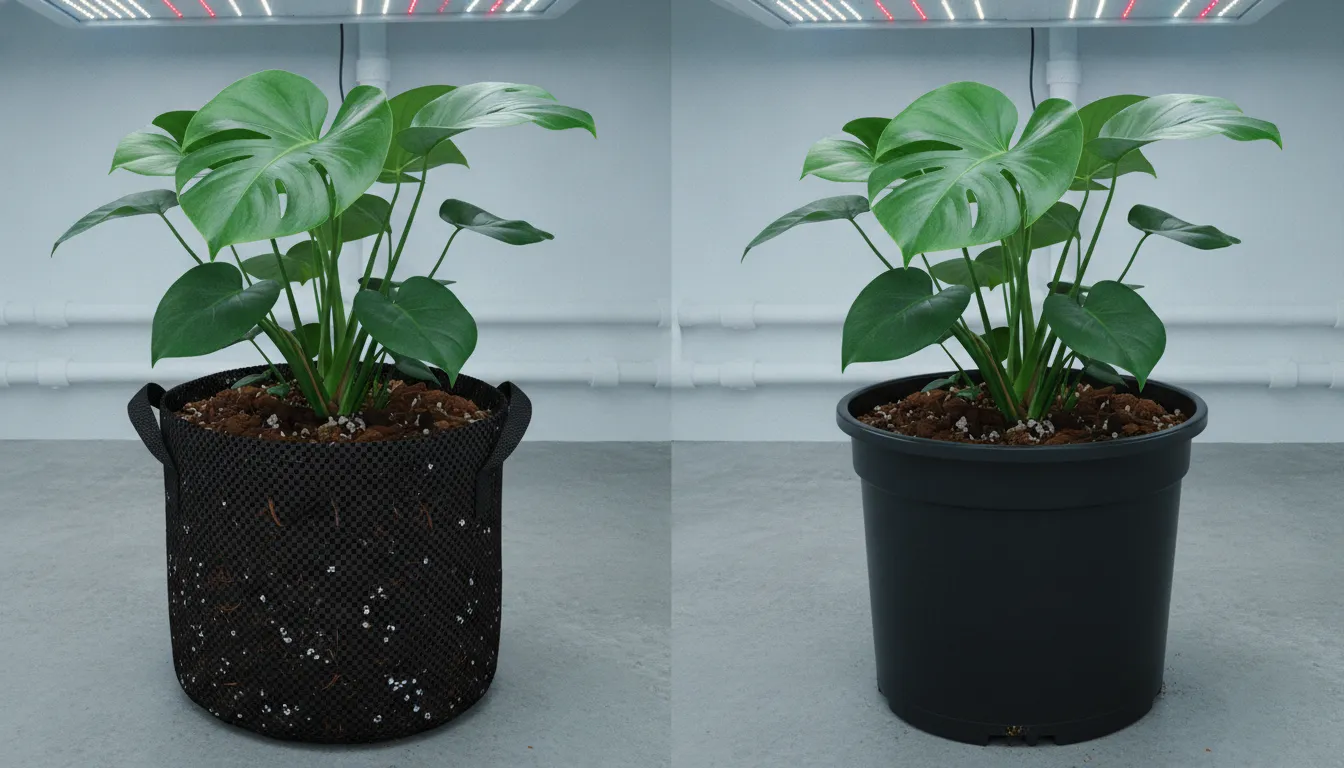
In plastic pots, roots often grow in a circle when they reach the wall. This can lead to root-bound plants that struggle to take up food. While plastic is easy to clean and reuse, it does not offer the same level of air flow as fabric. You can compare fabric and plastic pots by looking at how they manage the root zone.
Choosing the right container
The best choice depends on how you water and how much time you have. If you want to water less often, plastic may be better. If you want to boost root health and lower the risk of overwatering, fabric bags are a top choice. Both types of pots can produce good growth results when used well. You can find many options in the containers and pots category at GroIndoor.
Compare soils and containers for a healthier root zone.
Which pot supports healthier roots?
The health of your plant starts with the root zone. In a plastic pots setup, roots grow out until they hit the hard wall. Since they cannot go through the wall, they start to circle the inner edge. This pattern can lead to root-bound plants that struggle to take in water and food over time.
The benefit of air pruning
Fabric pots offer a new path for root growth through air pruning. When a root tip reaches the side of a fabric bag, it meets air and stops. This tells the plant to send out many small, thin roots from the center. A thick root system with many tips can help your plants get more food from the soil than a few long, circling roots.
Research from the University of Kentucky shows that plants in other pots grow as well as those in plastic. The extra air that hits the root zone in a fabric pot can keep roots from choking. For many indoor growers, this means healthy plants that are less likely to get root rot or heat stress in a small tent.
Managing roots in plastic pots
While fabric has clear perks, plastic pots are still the industry standard for most. They are tough, easy to clean, and keep the soil wet for a longer time. You can still grow a very healthy plant in plastic if you pick the right size. If a plant stays in a small plastic pot too long, the roots will wrap around the edges and slow its growth.
To get the best results, you should move your plants to larger containers and pots before the roots start to wrap. Both types of pots work well if you match them to how you water. Fabric is good if you water too much, while plastic is often better if you want to water less often.
How do watering frequency and daily maintenance compare?
Choosing between fabric pots and plastic pots will change how you care for your plants each day. The main gap lies in how each pot handles air and water. While plastic pots are the industry standard for their low cost, they trap moisture inside. Fabric pots allow air to pass through the walls. This leads to faster drying. When you compare fabric and plastic pots, you will find that your daily routine must adapt to their build.
Why fabric pots dry out faster
The airy nature of fabric is its biggest plus but also its biggest chore. Because these bags let air in, the soil inside loses water through the sides as well as the top. Research shows that soil in other pots often dries out faster than in normal plastic ones. This means you will likely need to water your plants more often if you use fabric pots for your grow.
This fast drying helps cool the root zone during hot days. It also prevents the soil from staying soggy for too long. This protects against root rot. But you cannot rely on a fixed clock. Growers must check the weight of the pots or the feel of the soil daily to ensure the plants stay wet. According to experts at the University of Massachusetts, knowing these drying traits is key to picking the right pot for your setup.
Managing moisture in plastic pots
Plastic pots act as a seal around your growing medium. Since air only enters from the top, the soil stays wet for a longer time. This can be helpful if you have a busy life and cannot water your plants every day. But this same trait carries risks for the health of your roots. If you water too much, the roots may sit in stagnant water. This can lead to pests or disease.
Daily care for plastic pots involves careful watching of drainage. You must ensure that the holes at the bottom stay clear of debris. In some cases, plants in plastic pots may show similar growth to those in fabric bags if the water levels are managed well. A study from the University of Kentucky found that growth results are often alike when watering fits the pot type.
Factors that affect your watering schedule
No single rule tells you exactly when to water. Your room states, like heat and moisture in the air, play a large role in how fast the soil dries. A dry room will pull water from fabric bags very quickly. Plant size also matters, as larger plants drink more water each day. The type of soil you use will change how much water the pot can hold at once.
The size of the pot is another key factor. A small plant in a huge plastic pot might only need water once a week. A large plant in a small fabric pot might need a drink twice a day. Instead of following a rigid clock, learn to read your plants. Watch for slight wilting or a light pot weight to know when it is time to feed your garden.
Which pot offers better cost, reusability, and long-term value?
Upfront costs and toughness
When you pick between fabric pots vs plastic pots, the first thing you may look at is the price. Plastic pots are a top pick for many shops. They are light and cost little. You can buy many of them without spending a lot of cash. They are also tough and do not crack or break easily. This makes them a good choice if you want to save money when you start your grow room.
Fabric pots often cost more than plastic bags at first. But they offer some great perks for your plants. They are strong, but may not last as long as hard plastic. A fabric pot usually lasts from two to five years. Lifespan depends on use and care. Over time, some fabric bags made of plant fibers might start to break down. You will need to buy new ones more often than if you used plastic.
Cleaning and reuse
Reusing pots saves money and cuts waste. Plastic pots are easy to wash. You can scrub them with soap and water. You can also use a mild bleach mix to kill germs. Because they have a smooth side, they do not hold onto old soil or bugs. This simple task makes plastic nursery pots the main choice for most big farms.
Cleaning fabric pots takes more time and effort. You cannot just wipe them clean. You often need to wash them in a machine. You can also soak them in a big tub of water. This helps get rid of salt build-up from plant food. It also kills mold that might be hiding in the cloth. If you do not clean them well, your next crop could get sick. Many feel the work is worth it for better root growth.
Storage and total value
Think about where to keep empty pots. Plastic pots can stack inside each other. Still, they take up a lot of room. If you have hundreds of them, you will need a large shelf or a closet. This can be a hard task if you grow in a small home or flat.
Fabric pots are much better for storage. You can fold them flat and put them in a small box or a drawer. This is great for city growers with little space. When you look at the total value, think about the life of your plant. While plastic pots save you money on day one, fabric pots help your plants grow better roots. You must decide if the low price of plastic is better than the extra plant health you get from fabric. Take a look at our fabric pots to see which sizes might fit your grow.
How to choose the right pot for your indoor garden
Choosing the right container is about more than just size. Your choice impacts how often you water, how healthy your roots stay, and how much work you have to do each week. Most indoor growers find that the best pot for their space depends on their own habits and the needs of their plants.
Think about your watering habits
If you enjoy checking on your plants daily, fabric pots are a great choice. These porous bags allow for more airflow, but they also dry out faster than other options. This can help prevent overwatering for alert growers. But plants in fabric containers may need more water because of this air flow.
For those who travel often or prefer less work, plastic pots may be better. These solid walls hold moisture much longer. This lets you go more days between watering. Plastic containers are also the industry standard because they are light and easy to clean for your next grow.
Check your root health goals
Root health is a big factor when you compare fabric and plastic pots for a long-term garden. Fabric pots use air-pruning to stop plants from becoming root-bound. When roots reach the edge of a fabric pot, they hit air and stop growing. This tells the plant to grow more small, feeder roots in the center of the pot.
Plastic pots can sometimes lead to roots circling the inside of the container. If left too long, this creates a root-bound plant that struggles to take in nutrients. If you plan to keep a plant in the same pot for many months, a fabric option might help maintain a healthier root system. For quick-growing herbs or starts that you will move soon, plastic is often simpler.
Match the pot to your space
Think about how much room you have and how you want your garden to look. Fabric pots are flexible and can squeeze into tight corners or odd spaces. When you are not using them, you can fold them flat to save storage room. This makes them a top choice for small homes or grow tents with limited floor space.
Plastic pots are stiff and give more support for tall plants. They also sit flat and firm on most surfaces, which can be safer in busy areas. Since research shows that growth is often the same in both types, your choice usually comes down to these setup details.
Decision steps for your garden
- Assess your schedule to see if you can water every day or need to wait longer.
- Measure your grow space to decide if you need flexible bags or rigid pots.
- Look at your plant type to see if it needs the extra root airflow of fabric.
- Decide if you want to reuse pots often, as plastic is easier to sanitize quickly.
- Pick the size that matches your plant's final growth stage to avoid extra transplanting.
How do you set up either container for indoor success?
Setting up your indoor garden takes a few key steps to help your plants thrive. Whether you choose fabric pots or plastic pots, the right setup stops common issues like root rot or salt buildup. Your goal is to create a balanced home for the roots to grow strong and healthy.
Select the right size and medium
The size of your pot should match the growth stage of your plant. Using a pot that is too large can lead to wet soil. A pot that is too small limits root growth. Most indoor growers use 3-gallon or 5-gallon pots for large plants. For fabric pots for plants, you may need a slightly larger size than plastic to handle faster drying. Research shows that plants grown in these alternative containers often show similar growth rates to those in standard plastic ones.
Choose a growing medium that suits your pot choice. Since fabric pots are breathable, the soil inside can dry out faster than in plastic containers. This often means you need to add more perlite to your soil in plastic pots to help with drainage. In fabric pots, the air-pruning effect helps prevent root-bound plants by stopping roots from circling the edge of the pot.
Manage drainage and airflow
Drainage is vital for indoor success. Plastic pots usually have holes at the bottom for water to escape. Fabric pots do not need these holes because the material is porous. This lets water seep out through the sides and bottom. You should always use drainage trays or saucers to catch extra water and keep your grow area clean.
Using risers or "pot elevators" inside your trays can improve air flow. This keeps the bottom of the pot from sitting in stagnant water. Risers are very helpful for fabric pots because they let air reach the bottom surface. This helps with the air-pruning process and stops mold growth on the fabric.
Monitor water and roots
Indoor watering needs vary between container types. You will likely need to water more often when using fabric pots because of the extra air flow. Keep a close eye on the moisture level of your soil or coco. You can check this by sticking your finger an inch into the medium. You can also lift the pot to feel its weight.
Checking root health is easier in some pots than others. In plastic pots, you can sometimes see roots through the drainage holes. In fabric pots, you may see fine root tips poking through the fabric as they air-prune. This is a sign of a healthy root system. If you plan to reuse your containers, remember that plastic is easier to clean and sanitize than fabric, which may need a wash in a machine.
Frequently Asked Questions
Are fabric pots better than plastic pots for plants?
Fabric pots offer better air flow and drainage than old plastic pots. According to studies, fabric pots help prevent plants from becoming root-bound by air-pruning the roots. This leads to a more fibrous and healthy root system. However, plastic pots remain the market standard because they are cheap, strong, and easy to clean. The best choice depends on your specific growing room and how much time you can spend on watering.
Do fabric pots need more water than plastic pots?
Yes, plants in fabric pots usually need more water. Because the cloth is breathable, the soil inside dries out much faster than in plastic pots. A study from UMass notes that growers must understand these traits to handle watering well. You may need to water your plants every day or use a timed system to keep the roots moist. Plastic pots hold moisture longer, which can be helpful if you water less often.
How do fabric pots affect root health compared to plastic pots?
Fabric pots improve root health through a process called air pruning. When roots reach the edge of a fabric pot, they stop growing and branch out into smaller roots. This prevents the circling roots often found in plastic pots. According to experts, this results in more oxygen for the root zone. Plastic pots can cause plants to become root-bound, which limits how they take in water and food.
Can you reuse fabric pots like plastic containers?
You can reuse fabric pots, but they need more work to clean than plastic ones. Plastic pots are easy to wash and clean for the next season. Fabric pots often need to be scrubbed or even put in a washing machine to remove salt buildup and soil. A common guess is that fabric pots last between two and five years with proper care. While plastic lasts a long time, fabric pots slowly wear down and may need new ones sooner.
Ready to find the right container?
Starting an indoor grow with the wrong pots can lead to weak roots and poor yields. If you stick with old gear, you risk root rot or heat stress in your tent. You need fresh soil and pots now to keep your plants healthy. Do not wait until your plants start to wilt to make a change. Choosing the right pots today will save you time and money later. It is the best way to ensure your next harvest is a great one. We have all you need to set up your grow the right way from the start. Our team is here to help you pick the best gear for your space and your plants. You can also see our guide on fabric pots to learn more. Making the switch now will help your garden thrive for years to come.
Shop soils and containers to find the right option for your indoor garden.
Tags: