


A sunny windowsill is helpful, but it is not a requirement for growing herbs and leafy greens indoors. The right compact hydroponic kit fits on a countertop with an integrated LED light, keeping plant care manageable without any outdoor space.
Browse compact hydroponic grow systems and find one that fits your countertop.
The best hydroponic system kits for small spaces balance footprint, plant capacity, light coverage, grow height, and maintenance. Countertop pod gardens suit beginners who want a simple starting point, while vertical systems make better use of limited floor space. The best choice depends on what you want to grow, where the system will sit, and how much daily involvement you prefer.
As you compare compact kits, look beyond the number of planting sites. Reservoir size, adjustable light height, temperature, and the needs of your chosen plants all affect whether a system feels convenient or cramped. Start by matching those practical details to your available space and growing goals.
How to Choose the Best Hydroponic System Kits for Small Spaces
Start with the space you have, not the number of plants you hope to grow. A compact hydroponic kit is a self-contained growing setup that typically combines a reservoir, plant sites, circulation, and a grow light. For an apartment or small room, the right choice should fit comfortably, support the plants you want, and match the amount of daily care you can provide. Available space, temperature, light intensity, plant type, substrates, nutrients, and maintenance are all useful selection criteria.
Measure the footprint and growing height
Measure the counter, shelf, or table where the system will sit, then leave room to access the reservoir and clean around it. A kit that technically fits but blocks a window, cabinet, or outlet will quickly become inconvenient. Also measure the vertical space above it. Peppers and tomatoes need more headroom than herbs or leafy greens, and leaves can singe when they grow too close to a light. One compact system tested by Bob Vila has an adjustable light that reaches a maximum height of 14.6 inches. So it requires plant varieties that stay within that limit. See the tested system criteria before choosing taller crops.
Match plant capacity to your routine
Pod capacity is more than a headline number. More sites can support a broader mix of herbs and greens, but they also mean more roots, leaves, and harvest timing to manage. For a narrow countertop, a smaller kit may be easier to keep organized. If you want several plants, compare the spacing between pods as well as the total capacity. Crowded plants can compete for light and make pruning or refilling awkward.
Check the light, reservoir, and controls
Small indoor kits often use LED lighting to make up for limited natural light in apartments. If the growing spot is far from a bright window, prioritize a built-in LED panel or plan for a suitable LED grow light. Look for a light that adjusts as plants grow, with enough clearance for the varieties you selected.
Finally, inspect the reservoir size and refill access. A larger reservoir may reduce how often you add water, while a smaller one can be simpler to lift and clean. Timers and water circulation reduce repetitive manual work, but they do not eliminate checks. Choose automation if you want a more hands-off routine, or a simpler manual system if you prefer to monitor water and plants yourself.
The Best Hydroponic System Kits for Small Spaces in 2026
The right compact system depends on where you will place it and what you want to grow. A countertop pod garden suits herbs and leafy greens near the kitchen, while a vertical farmstand makes better use of height beside a bright window. Hydroponic systems can produce more growing capacity in a small footprint by stacking plants vertically or keeping the root zone contained. Browse complete hydroponic grow systems when you are ready to compare formats.
Best for herbs on a countertop: pod-style gardens
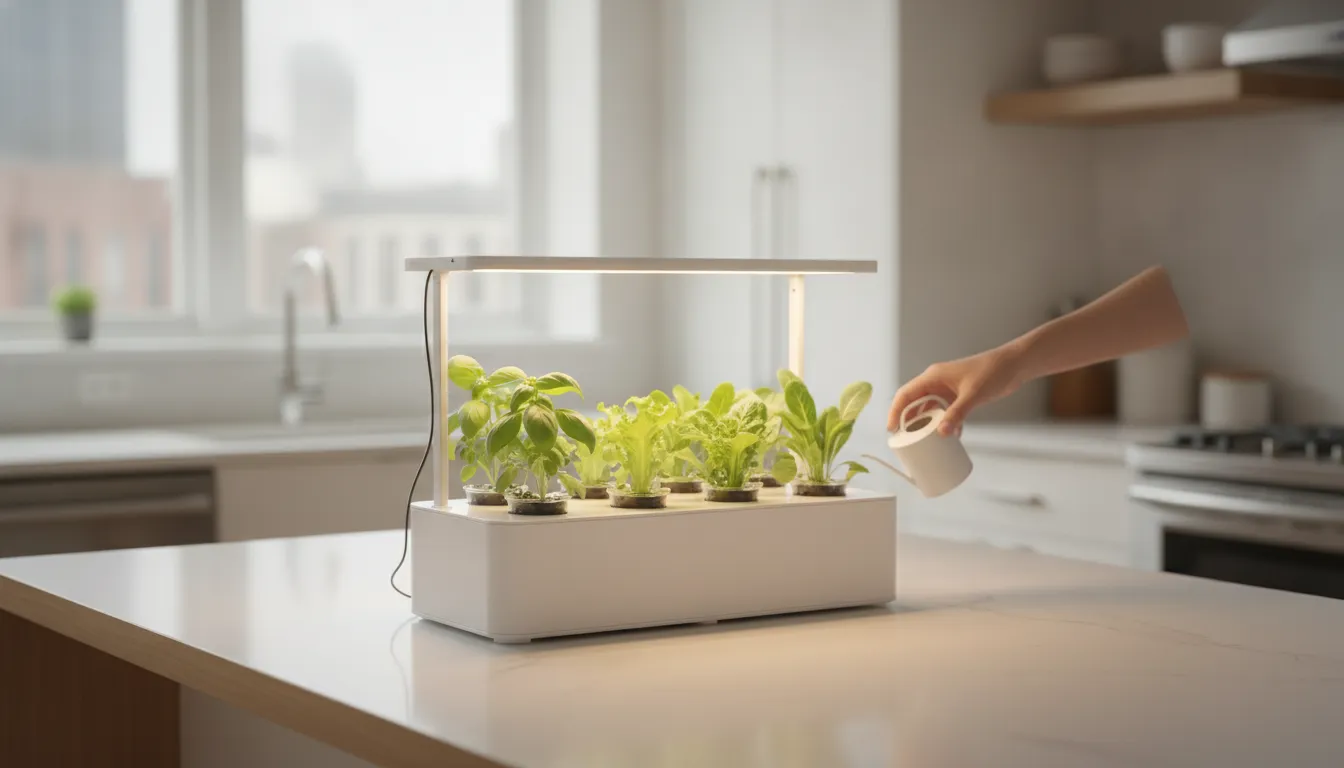
AeroGarden-style countertop kits are an easy fit for apartments because they combine a small reservoir, planting pods, and an overhead LED light. The Ahopegarden 10-Pod Aeroponics Growing Kit is a practical example for beginners. It includes baskets, sponges, plant food, and grow domes, so the main extra you need is seed. Its adjustable light reaches up to 14.6 inches, which makes it better suited to compact herbs and greens than varieties that quickly outgrow the hood. LED lighting is especially useful where a kitchen counter does not receive enough natural light.
If you want fewer pods and a more automated routine, consider a smart garden with preset light timers, water circulation, or app guidance. WIRED's 2026 testing highlighted the Auk Mini as a low-maintenance option for herbs, while its coverage also included the Gardyn Home 4.0 and Just Vertical Eve. Features vary by model, so check whether the controls manage lighting, watering, or both before buying. Treat listed prices, including the Gardyn Home 4.0's reported price, as a snapshot rather than a guarantee.
Best for a salad garden near a window: vertical farmstands
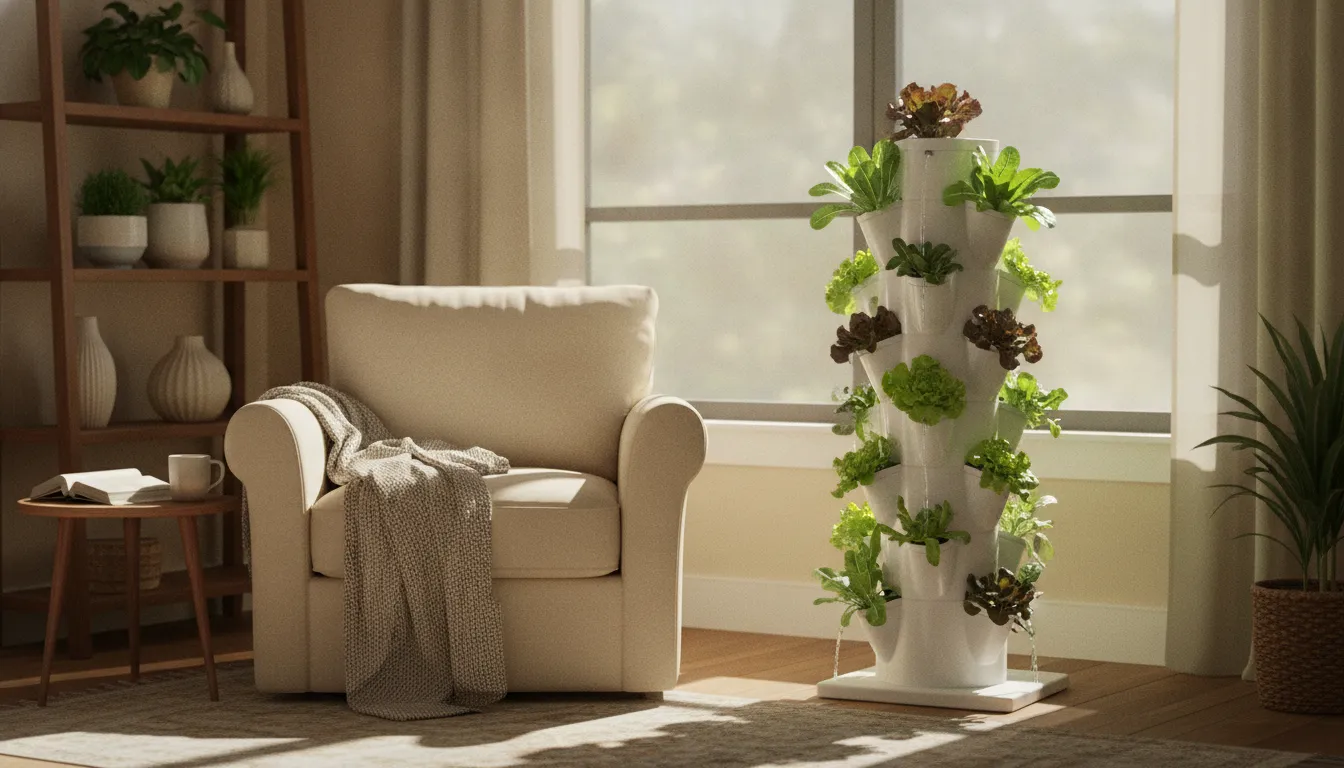
Vertical systems use floor space efficiently by placing growing sites at different heights. The Lettuce Grow Farmstand is a notable small-space option reported to grow 16 plants in about 1.4 square feet. That arrangement can work well beside a window or in a compact dining area, provided you have enough vertical clearance and access to an outlet. It is a stronger match for someone who wants a mix of salad greens rather than only a few kitchen herbs.
Best for quick harvests and simple experiments: microgreens and jar kits
For the smallest footprint, the Ingarden Organic Microgreens Starter is designed around microgreens, which grow quickly and need minimal space. It is a good choice for a windowsill or a grower who prefers short cycles over a large plant collection. Kratky-style jar kits, such as the Modern Sprout jars included in WIRED's honorable mentions, offer another low-profile approach. They are appealing when you want to learn the basics with a few plants and minimal equipment, rather than manage a taller automated garden.
Compact Hydroponic Kits Compared: Pods, Footprint, and Price
In a small kitchen or apartment, capacity and footprint are the two specifications that matter first. A kit that holds more pods may be useful, but only if it leaves enough counter or floor space for everyday access. Compare the number of growing sites with the available vertical and horizontal room, then consider how much water and attention the system requires.
| Kit type or name | Pod count | Footprint | Reservoir | Light type | Automation | Price tier |
|---|---|---|---|---|---|---|
| LetPot LPH-Max | 21 pods | Countertop or narrow floor space | About 7.5 L | LED grow light | Light and water-cycle controls | Premium |
| Growell hydroponic system | 16 pods | Compact vertical footprint | About 8 L | LED grow light | Timed light and circulation | Mid-range |
| Suncoze growing system | 12 pods | Countertop | About 4 L | LED grow light | Timed light and circulation | Budget |
| Ahopegarden aeroponics kit | 10 pods | Small countertop footprint | Not reported | Adjustable LED | Light timer and simple controls | Budget to mid-range |
| Lettuce Grow Farmstand | 16 plants | About 1.4 sq. ft., vertical | Model-dependent | Natural-light focused tower | Light and pump timers | Premium |
| Countertop pod kit | 3-6 pods | Small countertop footprint | Small reservoir | LED grow light | Usually automatic light cycle | Budget to mid-range |
The LetPot, Growell, and Suncoze figures above come from Urban Agriculture with Mike's comparison. The Ahopegarden and Farmstand capacity and space details are reported by Bob Vila's tested hydroponic systems review. Treat price tiers as a planning guide rather than a quote, since configurations and availability change.
Match the layout to your counter before choosing a kit. A vertical tower can grow upward while preserving floor space, while a three- to six-pod countertop unit is often the simplest choice for herbs. For more configurations, browse GroIndoor's hydroponics collection and compare the reservoir, light height, and controls that fit your routine.
Compare the complete hydroponic systems available at GroIndoor, or check LED grow lights and accessories to complete your setup. See the full hydroponic system lineup to match the kit format to your room.
Are Small Hydroponic Kits Worth It?
For many apartment gardeners, a small hydroponic kit is worth the investment when it becomes part of a regular cooking routine. Fresh herbs and leafy greens can cost less than repeated supermarket purchases over time, especially when the system supports continuous harvesting instead of a single planting cycle. The savings will vary with the kit, electricity use, seed choice, and how consistently you use it. It is better to think of the purchase as a long-term growing tool rather than an instant money-saving shortcut.
The value is in consistent, convenient harvests
The biggest practical advantage is convenience. Many countertop systems use built-in timers for the grow light and automated water circulation. Which reduces daily work to checking the plants, topping up water, and following the nutrient instructions. That routine is much easier to maintain than carrying soil, pots, and outdoor gardening supplies into a small home. Because the growing environment is indoors, you can keep producing herbs and greens through winter or during hot, cold, or otherwise unsuitable weather outside.
Soil-free growing can also feel cleaner in a kitchen or living area. Without potting soil, there is less mess around the growing site and no soil-borne growing medium to manage. It does not remove every possible plant problem, but it can simplify the setup and make routine care more approachable for beginners.
Consider the upfront cost honestly
A kit costs more at the beginning than a packet of seeds or a bunch of herbs from the store. You may also need replacement growing media, nutrients, seeds, and electricity. The purchase makes the most sense when you choose plants you will actually eat and keep harvesting as they mature. A compact unit that sits unused will not repay its cost, while one that supplies fresh greens week after week has a clearer value.
Wellbeing can be part of the return
The benefit is not only financial. In an eight-week intervention, indoor hydroponic gardening was associated with improvements in mental wellbeing, depression-related scores, and overall quality of life. The study population and setting matter, so these findings are not a guarantee of a health outcome for every gardener. Still, they support what many indoor growers experience: tending plants can add a calming. Purposeful activity to the day and encourage more frequent use of fresh herbs and greens. For small-space growers seeking convenience, year-round access, and an enjoyable routine, that combination can make a compact kit worthwhile.
Read the academic study on indoor hydroponic gardening and wellbeing.
How to Set Up and Maintain a Compact Hydroponic Kit
A compact kit is easiest to manage when setup becomes a short routine rather than a one-time project. Work through these steps in order, then keep the weekly checks on your calendar until they become second nature.
- Choose a practical location. Set the kit on a level, water-resistant surface near an outlet, with enough room to access the tank and lift the light as plants grow. Keep it away from heating vents, cold drafts, and direct midday sun that could raise the water temperature.
- Prepare the seeds. Follow the seed instructions for your chosen plants. Larger seeds should be soaked for 6 to 12 hours before planting, which can help support germination. Smaller herb and leafy-green seeds usually go directly into the growing media.
- Plant the pods or sponges. Add the seeds to the provided sponges or pods, following the kit instructions for depth and quantity. Place a grow dome over each planted pod to hold a humid environment during early germination. Remove or vent the domes once seedlings begin touching them so the young plants have room to develop.
- Fill the tank and add nutrients. Add water to the reservoir up to the kit's marked level, then mix in the recommended nutrient solution at the label rate. Nutrients are part of the growing system, not an optional extra. For help choosing the right products, browse hydroponic nutrients.
- Set the light schedule. Turn on the system and press the vegetable or grow button when your model provides those controls. This sets the grow light to its appropriate timer, giving seedlings a consistent daily cycle without requiring manual switching.
- Check water and nutrients weekly. Inspect the tank once a week and refill water as needed. Top up the nutrient solution according to the manufacturer's directions rather than adding concentrated product blindly. A regular check also gives you a chance to look for clogged openings, unusual odors, or stressed leaves.
- Prune as plants develop. Remove overcrowded or damaged leaves and trim plants when they begin competing for light or space. Pruning helps keep a small countertop garden orderly, but avoid removing healthy growth all at once. If you are still choosing a hydroponic setup, review the space, plant, and maintenance requirements before buying. You can also compare beginner hydroponic systems to find a manageable starting point.
Because these kits grow plants without soil, they avoid soil-borne pests and common indoor plant diseases associated with soil. That does not eliminate every possible growing problem, but it keeps cleanup simple and makes routine observation easier.
What to Grow in a Small Hydroponic Kit
Compact hydroponic gardens are best suited to plants that stay relatively small, grow steadily, and do not compete for much vertical space. The easiest place to start is with herbs such as basil, mint, and cilantro. They are useful in everyday cooking, fit well in countertop systems, and let you see new growth without waiting for a long harvest cycle.
Choose quick-growing greens
Leafy greens, including lettuce and spinach, are also dependable choices for a small kit. They typically make better use of a limited light footprint than large fruiting plants. Microgreens are especially practical when space is tight. They grow quickly and need minimal room, making them a good option for a shallow tray or compact countertop garden. Independent testing of hydroponic systems also highlights dedicated microgreen kits as a strong fit for small-scale growing.
When peppers and tomatoes can work
Compact peppers and small tomato varieties can grow in some countertop systems, but check the light adjustment range before planting. A system with a maximum grow height of about 14.6 inches may not leave enough room for every variety. Taller plants can crowd the light, and leaves may become singed when they grow too close to it. Choose dwarf or patio varieties, train growth as needed, and leave enough clearance between the foliage and the fixture. Grow height is a key consideration for peppers and tomatoes in small indoor systems, not an afterthought.
Plants to skip in a compact kit
Root-heavy crops such as carrots and potatoes usually need more depth and room for their underground growth than a small kit provides. Large squash is another poor match, while vining crops can quickly outgrow a compact light and become difficult to support. If a plant needs extensive root space or a long, sprawling vine, choose a larger system instead of forcing it into a countertop setup.
Whatever you plant, use the growing media and nutrients specified for the kit. Sponges can support seedlings in pod systems, while clay pebbles and other substrates help anchor roots in different designs. Grow domes are useful during germination, when young seedlings benefit from a more humid environment. Matching the crop, substrate, nutrients, and available light will make a small system much easier to manage.
Ready to start growing? Browse GroIndoor's compact hydroponic system kits to compare countertop options today.
Frequently Asked Questions
What is the best small hydroponic system?
The best option is the one that fits your available footprint, plant list, and maintenance preference. A countertop pod system suits herbs and leafy greens in a compact area, while a vertical tower makes better use of limited floor space. Look for an integrated LED light, a stable reservoir, adjustable light height, and controls that make watering and scheduling straightforward.
What is the best hydroponic kit for beginners?
Beginners generally benefit from a kit with pre-sized growing spaces, an included light, a simple timer, clear nutrient instructions, and easy access to the reservoir. Start with forgiving crops such as basil, lettuce, or other leafy greens. A smaller system can also make it easier to learn water-level checks, nutrient mixing, and light positioning before expanding.
Are hydroponic kits worth it?
They can be worthwhile when convenience, year-round indoor growing, and fresh herbs or greens matter to you. Automated lighting and circulation can reduce daily effort, while the reusable system avoids purchasing a new setup for each planting cycle. Value depends on the kit price, replacement supplies, electricity use, and how consistently you will use it.
What plants are not recommended for a small hydroponic kit?
Avoid crops that need substantial root room, long support structures, or more space than the light and reservoir can accommodate. Large vining plants, sprawling squash, and full-size root crops are poor matches for most countertop units. Compact herbs, leafy greens, and microgreens are usually easier choices. Check the available grow height before adding peppers or tomatoes, which can outgrow a small light enclosure.
Ready to choose your compact hydroponic kit?
A small setup can make indoor growing easier to plan around your available counter or floor space. Browse the complete hydroponic systems collection to compare compact kits by footprint, pod count, and price. Questions about which kit fits your room? Contact the GroIndoor team for guidance on choosing a system that matches your home.
Tags: