


Choosing the right soilless setup depends on whether you want easy maintenance or the fastest possible growth. Both methods can give you a high yield, but they differ in cost and the work they take to run. Here is what you need to know.
Shop reliable hydroponic equipment for a more forgiving first grow.
The choice of aeroponic vs hydroponic setups depends on how hard the gear is to run, as growing in water with nutrients is much safer for new growers. Aeroponics is a high-speed way to grow where roots hang in the air and get misted, which leads to much more air and faster plant growth over time. This way needs costly tools and steady work to keep the spray heads clear, but it uses much less water than growing in the ground or the dirt. This fast type of hydroponics gives high yields, but most home growers find that simple water systems give the best results for the lowest cost at home today.
Picking the right system needs a look at how each one works in a real grow room. This aeroponic vs hydroponic at-a-glance guide compares the tradeoffs that matter most.
Aeroponic vs hydroponic at a glance
Hydroponics is usually the more forgiving, lower-cost choice, while aeroponics trades simplicity for maximum root oxygen and potentially faster growth. Both methods give growers precise control over food and water. The practical decision is not which technology is universally better, but which failure risk, maintenance schedule, and startup budget you can manage consistently.
Hydroponic systems keep roots in a liquid mix or a wet material. Hydroponic systems are a key tool in modern plant biology. Aeroponics is a more advanced type of this tech. In an aeroponic setup, roots hang in the air and get a fine mist. This method helps scientists and growers track how plants use water and food.
Key differences in root care
The main split between these two methods is the root zone. Hydroponics often uses a medium like rockwool or clay pebbles to hold the plant. The roots stay wet as water flows past them. In contrast, aeroponic system benefits come from a lack of any medium. Roots stay in the air, which gives them lots of oxygen. This high oxygen level often leads to faster plant growth. High growth rates are a big plus for those who want quick harvests.
Comparing system performance
Both methods use far less water than soil. Soilless farming can cut water use by 80 to 90 percent. But the costs and work levels vary. Aeroponic gear often costs more at the start. You need special pumps and fine mist heads. These systems also need more care. If a nozzle clogs, plants can dry out fast. If you are new to indoor growing, you might find a hydroponic vs aeroponic systems guide helpful. Most beginners start with hydroponics because it is more forgiving.
| Feature | Hydroponics | Aeroponics |
|---|---|---|
| Root Zone: | Submerged or in medium | Suspended in air. |
| Startup Cost: | Lower to moderate | Higher initial cost. |
| Maintenance: | Regular checks | High precision needed. |
| Water Use: | 80-90% less than soil | Most efficient use. |
| Growth Speed: | Fast | Very fast. |
| Failure Risk: | Moderate tolerance | Low tolerance. |
| Best Fit: | Beginner to pro | Advanced growers. |
How do aeroponic and hydroponic systems work?
Both methods feed plant roots with nutrient-rich water instead of soil. Hydroponics keeps roots in water, intermittent flow, or moist growing media, while aeroponics suspends roots and mists them on timed cycles. That delivery difference determines each system's oxygen exposure, required hardware, maintenance demands, and tolerance for interruptions.
The basics of hydroponic delivery
Hydroponic systems are a type of soilless farming that allow for tight control over water and food. These systems typically use a pump to move a liquid food mix from a tank to the plants. Some methods keep the roots in the water all the time, while others move water in and out. This constant access to food helps plants grow strong and healthy.
Many of these setups use a material like rockwool or clay pebbles to hold the plants. These materials also act as a buffer against changes in the liquid mix. For the best results, you must keep the water well-aired to prevent root diseases and help roots develop. Regular checks of pH and salt levels are also needed to keep the plants happy.
How aeroponic misting works
Aeroponics is a special type of soilless growth where roots hang in the air. Instead of being in water, the roots get a fine mist of liquid food. This method is an efficient subset of hydroponics because it uses very little water. Since the roots are in the air, they have more access to oxygen, which can lead to faster growth cycles.
These systems use high-pressure pumps and fine nozzles to create the mist. The misting often happens in short bursts, such as a few seconds every few minutes. This keeps the roots wet without drowning them. But these systems need more care than standard setups. If a nozzle clogs or the power goes out, the roots can dry out very fast because they have no soil to hold moisture.
Key differences in system parts
The tools used in each system set them apart. Hydroponic systems often use simple pumps to move water around. They are widely used in research and farm work because they are easy to scale up. You can find many water-based growing setups that fit any space, from a small closet to a big greenhouse.
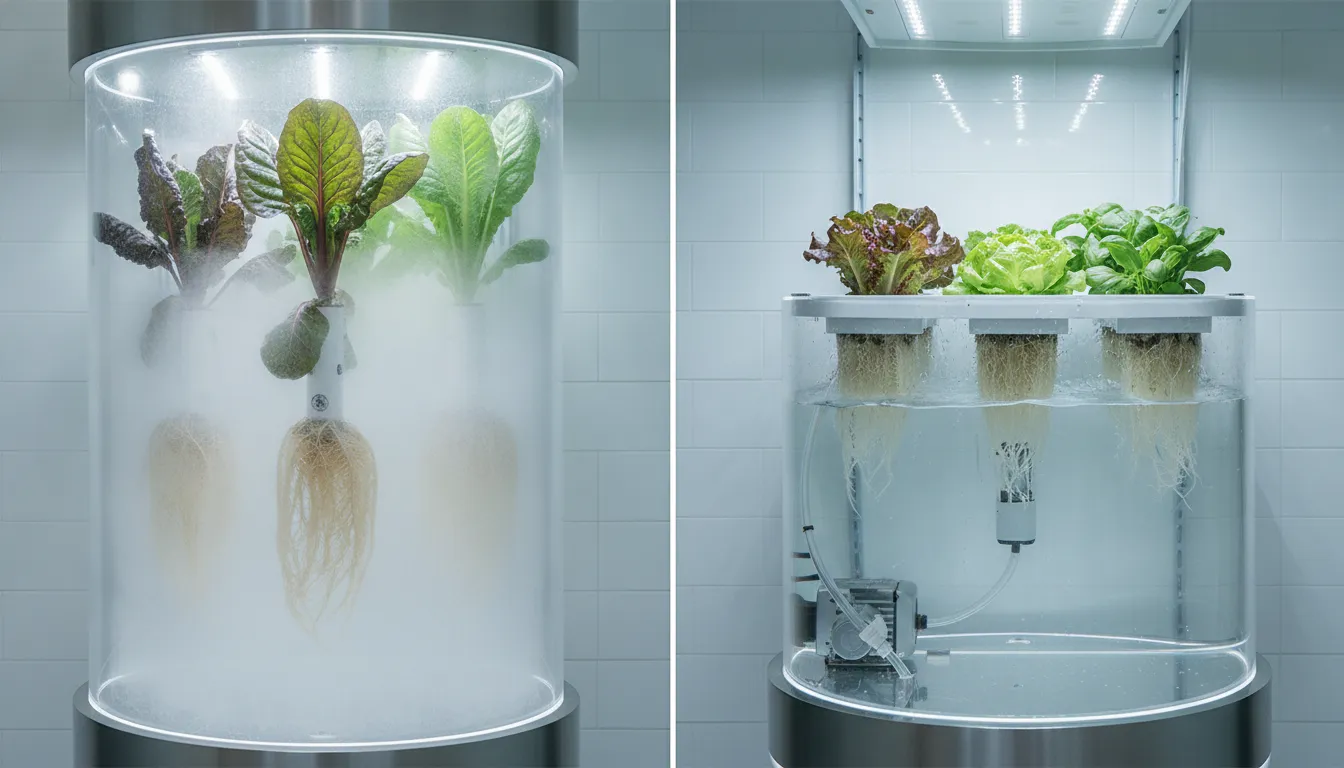
Aeroponic setups are usually more complex and cost more to start. They need sprayers and timers to control the mist cycles. This precision makes them great for advanced growers who want to see the roots clearly. Because the roots hang free, it is much easier to check them for health compared to systems that use heavy materials to hold the plant.
Which setup costs less to start?
Hydroponics usually costs less to start because its reservoirs, low-pressure pumps, air stones, and timers are common and easy to source. Aeroponics needs high-pressure pumps, fine mist nozzles, filters, and often backup power. Compare the complete system and its safeguards, not just the base kit price, before choosing.
The lower barrier of hydroponics
A basic water system uses a simple tank and a low-pressure pump to move food to the plants. You do not need complex parts to get started. These systems can use a mix of inert substrates like rockwool or coco coir. These items help hold water and food for the roots, which acts as a safety net if things go wrong. This makes it a great choice for people who want to save money on their first grow.
Because the tech is older and more common, you can find parts at most garden stores. You do not need to spend a lot of money on high-end tools to see good results. If you want to compare hydroponics and aeroponics, look at the pumps first. A standard water pump costs much less than the high-pressure tools needed for misting. This helps keep your start-up budget low.
- Plastic tanks and trays are cheap and last a long time.
- Basic air stones and pumps add oxygen for a small price.
- Standard timers are easy to set up and do not cost much.
- You can scale up the size of your grow without a big jump in cost.
Higher costs for exact feeding
Compare aeroponic systems built for precise, high-oxygen root feeding.
Aeroponics costs more because it needs exact tools to turn water into a fine mist. Instead of a simple pump, you need a high-pressure pump and mist heads to feed the roots. These parts are more complex and carry a higher price tag. You also need to clean reservoirs and filters often to keep the system running. Fine nozzles can clog, so you might need better filters to keep the water clean.
The risk of a power fail is also higher with mist systems. If the power goes out, the roots can dry out very fast because there is no soil or water to hold them. This means many growers spend more on backup power tools to keep their plants safe. While these systems grow plants fast, the aeroponic system benefits come with a bigger bill at the start. You are paying for a high-tech tool that needs more care and a larger budget.
To help you choose the best fit for your room, you can always call our team at 866-GRO-INDR for a free talk. We can help you find a path that fits your budget and your goals. Whether you want to start small or go big, the right gear is key to your success.
Maintenance and reliability differences
Hydroponics offers a larger margin for error because roots remain in water or damp media when circulation stops. Aeroponic roots depend on frequent mist cycles, so clogged nozzles or power loss demand a faster response. Choose aeroponics only if you can inspect sprayers routinely and provide a practical failure plan.
Safety and system failure
System safety is a key point in the hydroponic vs aeroponic systems debate. Aeroponics depends on high-pressure pumps and timers to keep plants alive. If a pump breaks, you have very little time to fix it before you lose your crop. Research shows that aeroponics acts as a high-speed tool for plant growth, but this speed comes with higher risks. Hydroponic systems often use simpler air pumps or gravity. These tools tend to last longer and fail less often than complex misting gear.
Most hydroponic systems have a buffer. If the water stops moving, the roots are still sitting in a damp medium or a pool of water. This gives you hours or even a full day to solve the problem. With aeroponics, you may only have minutes of safety. High-tech sensors can help, but they also add more parts that could break. Growers must weigh the faster growth against the need to watch the system at all times.
Cleaning and nozzle clogs
Keeping your system clean is vital for success. Aeroponic systems use fine mist nozzles that can clog easily. This happens when salts in the water build up over time. You must check these nozzles often to ensure every plant gets the food it needs. Hydroponic setups usually have larger water channels or tubes that are harder to block. You still need to clean them to stop algae growth, but the daily risk of a total clog is much lower.
You can find many high-quality tools to help manage these tasks in our aeroponic system benefits collection. Routine care is the only way to prevent salt from building up in your lines. While aeroponics offers great oxygen levels for roots, you must be ready for the extra work it takes to keep the hardware running. Even a small piece of grit can stop a mist head and kill a plant in a few hours.
Weekly care checklist
Both systems need regular checks, but the focus shifts by method. Use this weekly list.
- Check all mist nozzles or water parts to ensure they are flowing freely and not blocked by salts.
- Test the pH and food levels in your tank to make sure they stay in the best range for your plants.
- Look at the plant roots to check for a healthy white color and ensure they are getting enough moisture.
- Scrub the inside of your tank to remove any algae or slime that could harm your root systems.
- Verify that your pumps and timers are working correctly to prevent any dry periods for the roots.
- Change the water in your tank to keep the food balance steady and stop salt buildup.
Water use and growth speed compared
Both methods reuse water and provide precise feeding, but aeroponics applies smaller amounts as mist and exposes roots to more oxygen. That can support faster growth when lighting, temperature, nutrients, and pH are also controlled. Water efficiency alone should not decide the purchase; reliability and crop needs matter just as much.
Oxygen levels and plant growth
Plants in aeroponic setups often grow faster than those in normal hydroponic ones. This happens because the roots hang in the air and get a lot of oxygen. Oxygen is a vital part of root health. It helps the roots take in food and water with less effort. A study from the National Library of Medicine shows that plants grown this way show faster growth rates. This is because of better air flow at the root zone. When roots have all the air they need, the whole plant can grow larger in less time.
In a hydroponic system, the roots sit in a liquid food mix. To keep them healthy, you must add air to the water using air stones or pumps. If the water lacks enough air, the plants can grow slowly or face issues like root rot. Aeroponics removes this risk by keeping roots in a fine mist. This constant air contact allows the plant to reach its full growth limit. This is a main reason why many seek out these systems for the fastest crop turns.
The speed of growth also depends on the type of plant. Leafy greens like lettuce tend to show the biggest gains in an air-based system. Some growers find they can harvest days sooner than they could with water-based methods. While the gains for larger plants might be smaller, the oxygen boost still helps the plant stay strong. This makes aeroponics a strong tool for large farms that need to grow food fast.
Growth still depends on balanced light, temperature, pH, and nutrition. Extra root oxygen cannot compensate for weak control elsewhere.
Water use and how it saves
Both of these soilless methods are great for saving water. Old soil farming loses a lot of water to the ground and the air. By contrast, soilless systems can reduce water use by a large amount. This makes them a top choice for indoor farms and home kits. By using a closed system, you can reuse the same water many times. This is much better for the earth and can lower your water bills over time.
Aeroponics is often seen as a high-saving part of hydroponic tech. It uses a pump to spray a fine mist onto the roots. This mist uses even less water than systems that keep roots in a tank. Because the water is in a closed loop, the plants only use what they need to grow. These systems are unique tools for saving water and food. The misting cycle can be set to run only when needed, which cuts down on waste.
Hydroponic systems are also very good at saving, but they use a larger volume of water at once. Systems like Deep Water Culture keep the roots in a deep tank of food and water. While this water is reused, it can be lost if the tank is not sealed well. When you compare hydroponics and aeroponics, both beat soil by a wide margin. But the misting method used in aeroponics often takes the lead in total water savings. This is why it is used in areas where water is scarce or very costly.
Which system is right for your indoor garden?
Choose hydroponics if you want a lower-cost system with more tolerance for mistakes and outages. Choose aeroponics if faster crop turns, root visibility, or vertical growing justify added maintenance and equipment. The strongest choice is the one you can monitor consistently, repair quickly, and operate within budget.
Best systems for new growers
If you are just starting out, a solid hydroponic system is usually the best choice. These setups are often more safe for people who are still learning. Many hydroponic systems use inert substrates like rockwool or coco coir. These growing media help hold water and nutrients around the roots. This creates a buffer that protects your plants if you make a small mistake with your feed levels.
Basic hydroponics also costs less to start. You can find simple kits that do not need high-pressure pumps or fancy sensors. Because the parts are simple, they are easier to set up and fix. If you want to keep things easy, it is a good idea to compare hydroponics and aeroponics before you buy. Most beginners find that a deep water culture or drip system is the most steady way to get a good harvest.
Options for speed and small spaces
Growers who want the fastest results often choose aeroponics. In these systems, roots hang in the air and get misted with water. This gives the roots lots of oxygen, which helps the plants grow much faster. Many people see quicker harvest times when they use aeroponic systems for leafy greens. It is also a great pick for vertical farms where space is tight.
This method lets you check on root health with ease. Since there is no soil or media in the way, you can see if the roots are white and strong. But this system needs more work to keep it running well. You must check the mist nozzles often to make sure they do not clog. If you like to be hands-on and want the best growth speed, aeroponics is a top tool for your garden.
Planning for budget and safety
Cost is a big factor for many indoor gardeners. Aeroponic gear often costs more because it needs special parts like misting nozzles and high-pressure pumps. Hydroponics is usually cheaper for both small and large setups. It is a smart way to get started without spending too much money upfront. If you are on a tight budget, a simple hydroponic tray or bucket system will serve you well.
You should also think about power safety. Aeroponic plants are sensitive to power cuts. If the pumps stop, the roots can dry out and die in just a few hours. Hydroponic systems with a media buffer stay wet much longer. This makes hydroponics a more tough choice if your local power is not always steady. If you need more help, call our team at 866-GRO-INDR for free advice on your grow room.
What should you consider before buying?
Before buying, compare available space, total startup budget, crop type, technical confidence, and time for routine care. Also assess outage risk and how quickly you can replace a failed pump or clear a nozzle. These operating constraints reveal whether hydroponic resilience or aeroponic precision is the better fit.
Evaluate your space and budget
Space is often the first thing to check. Standard hydroponic systems come in many sizes, from small pots to large trays. Aeroponic systems often use towers to save room, making them a good choice for tight areas. Cost is another key factor. Most people find that the price for aeroponic system setups is higher at the start. This is because they need high-pressure pumps and fine mist nozzles to work well, as noted by Living Greens Farm.
You also need to plan for backup power. Plants in aeroponic systems are very sensitive to power loss. Since their roots are in the air, they can dry out fast if the pump stops. If you live in an area with frequent outages, you may need to buy a backup battery or a generator. Simple hydroponic systems are often more forgiving because the growing medium holds some water even if the power goes out, according to research on soilless systems.
Consider your technical skills
How much do you want to learn? Hydroponic systems are usually easier for new growers to set up and manage. They allow for more errors and need less complex gear. Aeroponics is a high-growth subset of hydroponic technology that needs more skill. You will need to clean nozzles often to prevent clogs and keep the mist even. If a nozzle clogs, it can cause plant stress or uneven growth, which is a common challenge in aeroponics.
Both systems require you to track water health. You must check the pH and nutrient levels often to keep your plants healthy. In hydroponics, you also need to ensure the water has enough oxygen to stop root rot. If you want a system that is easier to compare hydroponics and aeroponics based on your skill level, start with a basic deep water culture or drip setup first. If you need help, you can call our support line at 866-GRO-INDR for a free talk with an expert.
Explore hydroponics equipment before comparing your final options.
Frequently Asked Questions
These quick answers cover the most common aeroponic vs hydroponic questions. The central tradeoff is consistent: aeroponics can deliver more root oxygen and speed, while hydroponics generally costs less and tolerates interruptions better. Your experience, maintenance time, and backup plan should guide the final decision.
What is the main difference between aeroponics and hydroponics?
The main difference is how the roots get food. In hydroponic systems, roots stay in water or a wet base. Aeroponic systems hang roots in the air and spray them with a fine mist. Both ways work very well. According to experts, aeroponics is a special type of hydroponic tech. It uses no soil or stones, while many hydroponic setups use clay balls to hold the plants.
Do plants really grow faster in aeroponic systems?
Yes, plants often grow faster in aeroponic setups. This happens because the roots get more air than they do when they sit in water. This extra air helps the plants take in food more quickly. Studies show that this extra air leads to faster growth rates. These quick cycles allow growers to pick their crops more often through the year. This makes aeroponics a great choice for fast farming.
Is an aeroponic system more expensive to set up than hydroponics?
Yes, aeroponic systems usually cost more at the start. They need special parts like high-pressure pumps and fine mist sprayers. According to Living Greens Farm, these setups need more money upfront than standard water tanks. You may also need backup power tools to keep the pumps running. While the cost is higher, many pro growers choose aeroponics for its speed and fast harvest times. It is a smart choice for high yields.
What are the biggest downsides of using aeroponics?
The main downside is that aeroponic systems are hard to run. They need precise care to keep the mist sprayers from clogging. These systems also rely heavily on power. If the power goes out, the hanging roots can dry out and die very fast. Experts say that this risk makes aeroponics best for skilled growers. Beginners may find standard water systems much easier to use and more forgiving of small errors.
Ready to choose your indoor growing system?
Your best setup is the one that matches the time, budget, and level of control you want to bring to each grow. Browse GroIndoor's purpose-built options, compare the included components, and choose equipment that gives your plants a strong start.
Shop aeroponic systems or explore the hydroponics collection to build the right setup for your indoor garden.
Tags: