


A plant does not read a calendar, and its potting mix may dry at a very different pace from the pot beside it. Light, temperature, humidity, airflow, container material, growing medium, and plant type all shape when roots need more moisture.
Browse containers and growing media for indoor plants
The best answer to how often to water indoor plants is to check the growing medium and the plant's conditions instead of following a fixed schedule. Water when the appropriate part of the medium has dried for that plant, then soak thoroughly and let excess drain. Watering needs vary with species, plant size, and growing conditions, according to the University of Illinois Extension.
That decision becomes much easier when you know which signals matter most. Start by looking at how quickly the container dries and how the plant responds between waterings.
How often should you water indoor plants?
Water indoor plants when the root-zone moisture and the plant's conditions indicate they need it, not because a certain number of days has passed. There is no universal calendar for every pot. Plant species, plant size, and growing conditions all influence water needs, so check the medium and adjust your routine as the environment changes. The University of Illinois Extension notes that a fixed schedule usually does not work for houseplants.
Start by treating your calendar as a reminder to inspect, not an instruction to water. A plant in a small container, a bright window, or a fast-drying setup may need attention sooner than a similar plant in a larger pot under gentler conditions. Even two plants in the same room can dry at different rates because their root systems, foliage, and containers differ.
Container choice is part of this decision. A pot with suitable drainage gives excess water somewhere to go, while the container's size and material affect how quickly the root zone dries. If you are replacing a pot or setting up a new indoor garden, browse containers and pots that fit the plant and growing medium rather than choosing by appearance alone.
For a practical routine, inspect each plant regularly and record what you observe: whether the medium is drying. How the foliage looks, and how long the pot takes to become ready for another watering. That record can reveal a useful pattern without turning the pattern into a rigid rule. Watering frequency should follow the plant's actual moisture needs.
The next step is learning how to read those needs. Factors such as light, temperature, humidity, growing medium, and container type can change the drying rate, while a simple moisture check helps confirm whether watering is appropriate.
University of Illinois Extension guidance on watering houseplants supports this condition-based approach.
What changes indoor plant watering frequency?
There is no dependable calendar answer to how often to water indoor plants because the pot dries at a different rate in every growing space. Plant species and size matter first. A plant that prefers slightly moist media has a different threshold from one that should dry between waterings. And a larger plant may use water faster than a small plant in the same room. Check the care needs of the individual species instead of applying one schedule to every pot.
Container size and material also change the calculation. Small pots can dry rapidly and may distribute water less evenly through the medium. Oklahoma State University Extension gives intervals of two to three days for some small pots and seven to fourteen days for some large pots. But these are examples, not rules. Unglazed clay is porous, so it generally calls for more frequent checks than plastic. Drainage matters too: a pot that holds excess water can stay wet even when the surface looks dry.
Growing media controls how much water remains around the roots and how quickly excess water moves away. A well-drained mix may need closer observation than a denser medium, while the ingredients and pot design work together. If you are comparing soil, coco, and other options, review how common growing media differ before changing a routine.
Environmental conditions can speed up or slow down drying. Stronger light often supports faster growth and water use. Higher temperatures, lower humidity, and active air movement can also change how quickly moisture leaves the medium. Hanging containers may dry faster because they sit in warmer air. For a closer look at indoor airflow and ventilation, consider how air moves around the whole growing area, not just across the leaves.
Use these variables as a reason to inspect the medium, not as a formula. Oklahoma State summarizes the main influences as growing medium, season, light, temperature, humidity, species, and pot size. Read the extension guidance, then adjust after observing how your own container dries.
How can you tell when an indoor plant needs water?
Use the plant and its growing medium as your guide, rather than watering on a fixed calendar. A few quick checks can tell you whether moisture has moved low enough in the pot to support another thorough watering.
Start with the finger test. Push a clean finger into the growing medium to about two inches, or feel the top few inches as recommended by University of Minnesota Extension. If the test area feels dry, the plant probably needs water. If it still feels cool and damp, wait and check again later. Test near the root zone, not only at the surface, because the top layer can dry while the lower medium remains moist.
Pot weight provides a useful second opinion. Lift the container before and after watering so you learn its normal range. A noticeably light pot usually indicates drier medium, while a heavy pot suggests that moisture remains. This method is especially practical when the plant is too dense to inspect easily or when the surface appearance is misleading.
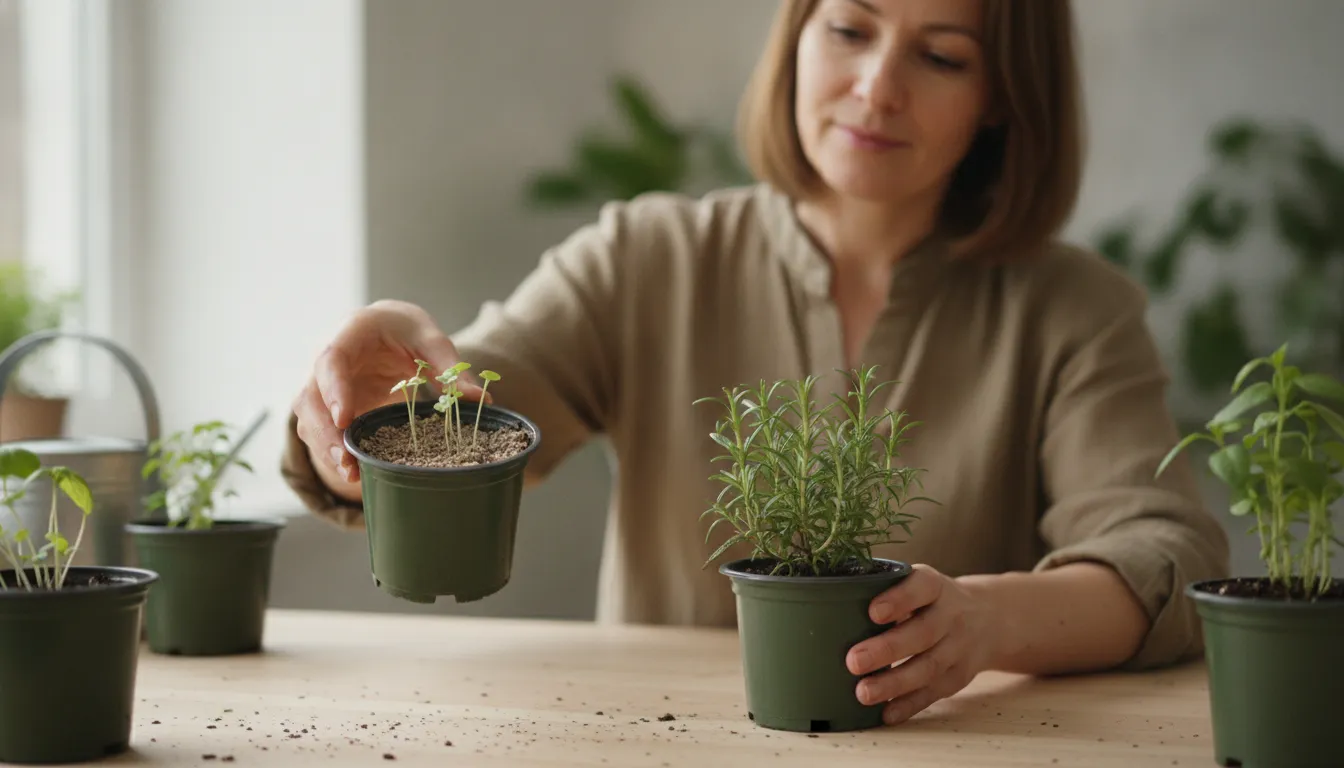
Leaves can add context, but they should not be your only test. Wilting may appear when a plant is dry, yet a wilted plant with moist medium can point to a different root-zone problem. Avoid adding more water until you have checked the medium and container weight.
A moisture meter can help you compare areas of a pot, but its reading is not infallible. The probe may be unreliable, so use it alongside touch, pot weight, and your knowledge of the plant. For consistent results, choose a container with suitable drainage, such as the containers and pots for indoor growing, and observe how quickly its medium dries.
How do plant type, container, and growing medium change watering?
The useful question is not simply how often to water indoor plants. It is whether this plant, in this container, with this medium, has reached the moisture level it prefers. Some plants like soil that stays slightly moist, while others need a moderate dry-down or a longer dry period. Use the table below as a set of decision cues, not a calendar.
| Plant, container, or medium | Moisture preference | Decision cue | Caution |
|---|---|---|---|
| Moisture-loving plants | Constantly moist, but not soggy | Check before the root zone dries substantially. Water when the medium is approaching dry, according to the species. | Moist does not mean waterlogged. Wet soil contains less air, and roots need oxygen to grow well. |
| Moderate dry-down plants | Allow the medium to dry moderately between waterings | Feel below the surface and water after the intended dry-down, then soak the medium thoroughly. | Species and pot size still matter. A small container can dry much sooner than a large one. |
| Succulents and cacti | Longer dry periods than many leafy plants | After the surface feels dry, allow the medium to remain dry for a few more days before watering. | Growth-cycle needs differ, so do not apply one interval to every succulent or cactus. |
| Porous clay containers | Moisture can leave the container through the clay | Check more frequently than you would with a comparable plastic pot. | Do not assume the surface tells the whole story. Confirm moisture deeper in the pot. |
| Fast-draining media | Water moves through quickly and may dry sooner | Check the root-zone moisture and confirm that the pot has at least one large drainage hole. | Drainage is not the same as neglecting moisture retention. Match the medium to the plant. |
Container and medium choices can change the balance. For example, fabric pots dry out faster, so they may call for more frequent checks. If you use coco, review how coco coir moisture retention affects the root zone. You can also compare common growing media before choosing a blend, then use the guide to choose the right growing medium for the plant and container.
These cues work best alongside a direct moisture check. Read the plant's care requirements, feel the medium at the appropriate depth, and adjust after changes to the pot, medium, light, or room conditions. A well-drained medium and a container with a large drainage hole support better decisions, but neither replaces observation.
What is the right way to water indoor plants?
Once the growing medium reaches the right moisture level for the plant, water thoroughly rather than adding a small splash on a fixed calendar. The goal is to moisten the root zone evenly, then allow the container to drain so roots are not left in stagnant water.
- Check before watering. Feel the medium at the depth appropriate for the plant, and consider the pot's weight. A light container usually indicates drier media, while a heavy one suggests that moisture remains. If the medium is still wet, wait and check again instead of watering automatically.
- Apply water slowly and evenly. For top watering, soak the soil thoroughly so water reaches through the root zone. Pouring gradually helps prevent water from rushing down the sides of a dry root ball without wetting the center.
- Let the excess drain. Use a container with a functional drainage opening and allow water to run through into the saucer. Good drainage helps keep air available around the roots. As the University of Minnesota Extension explains, wet soil lacks air while roots need oxygen to grow well: learn more about watering houseplants.
- Empty the saucer. After the container finishes draining, discard the collected water. Do not leave the pot sitting in a full saucer, since that keeps the lower growing medium saturated and can limit root-zone air.
- Use bottom watering when it fits the situation. Set the pot in a shallow reservoir and let the medium wick water upward. Remove it when moisture has reached the top of the medium, then let the container drain fully. This approach can help moisten a very dry root ball evenly, but it still should not leave the pot standing in water.
Explore containers and pots for indoor growing
How should you adjust watering in winter or under grow lights?
Adjust your watering checks when the growing environment changes, rather than keeping the same routine all year. Plants moved indoors for winter may need less water at first while they adapt to different light, temperature, humidity, and airflow. The growing medium may stay damp longer, so check it before adding more water. This is especially important when a plant has moved away from a bright window or into a cooler room.
Grow lights can change the picture in the opposite direction. Brighter or longer lighting can support more active growth, while a dim setup may slow growth and drying. The light itself is only one part of the decision. Temperature, humidity, air movement, container size, and growing medium all influence how quickly moisture leaves the pot. For a useful explanation of the temperature and humidity balance in an indoor garden, compare those conditions with what you observe at the root zone.
Airflow also matters. Ventilation and moving air can increase evaporation from the medium, but do not assume that a fan automatically means a plant needs water. Feel the top few inches of soil and lift the pot when you can. A lighter pot generally indicates drier soil than a heavy one. Hanging pots deserve especially frequent observation because warm air rises around them, and the warmer position can make them dry faster.
After changing a light, fan, room, or hanging position, watch the plant and medium for several checks before changing your routine. Record how quickly the pot becomes lighter or the surface dries, then water according to that evidence and the plant's needs. The indoor growing environment setup guide can help you review the surrounding conditions that affect this observation.
What are the signs of overwatering or underwatering?
Wilting is a useful warning, but it does not identify the cause by itself. A plant in genuinely dry medium may wilt because it lacks available water. However, a wilted plant sitting in moist medium may have lost roots after persistently wet conditions. Check the root zone before adding more water, rather than treating every drooping leaf as proof that the plant needs a drink.
Underwatering is more likely when the growing medium is dry several inches below the surface, the pot feels unusually light, and the plant improves after a thorough watering. Overwatering is more likely when the medium stays wet between checks, drainage is poor, or leaves yellow while the plant continues to look stressed. Wet soil also contains less air, even though roots need oxygen to grow well. These clues can overlap with problems involving light, temperature, pests, or disease, so use them as signals for investigation, not a definitive diagnosis. See the University of Minnesota Extension guidance on watering houseplants for additional context.
A short reset checklist
- Feel the medium below the surface and note whether it is dry, damp, or persistently wet.
- Lift the pot if possible and compare its weight with how it feels after watering.
- Confirm that excess water can drain freely, and empty any saucer that is holding water.
- If the medium is wet and the plant is wilting, pause before watering again and inspect the root zone when appropriate.
- Look up the individual species' needs, then reassess after changing its light, airflow, container, or growing medium.
Keep brief notes as conditions change. A pattern across several checks is more useful than one symptom on one day.
Browse indoor containers and growing supplies
Frequently Asked Questions
How often should you water indoor plants?
Water when the growing medium reaches the dryness level your plant prefers, rather than following a fixed weekly schedule. Check the top few inches of soil, consider the pot's weight, and account for light, temperature, humidity, container size, and growing medium. Watering needs vary with the plant and its conditions. Illinois Extension explains why a calendar schedule usually does not work.
How often should you water indoor plants in winter?
Check the medium before every watering and expect your routine to change as light, temperature, humidity, or airflow changes. Plants moved indoors for winter may need less water at first while they adjust, according to the University of Minnesota Extension. Do not water simply because it is a certain day.
What is the best time to water your indoor plants?
The most useful time is when your moisture check shows that watering is needed. Test the soil about two inches down, then water thoroughly if that zone is dry. The plant's condition matters more than a universal time of day, and a consistent check helps you avoid both premature watering and excessive dry-down.
What are the signs of overwatering indoor plants?
Watch for a plant that wilts even though its medium remains wet, persistent sogginess, or yellowing that does not match normal aging. Wet soil contains less air, and roots need oxygen to grow well. Wilting can also indicate insufficient water, so compare the symptom with soil moisture before changing your routine. See the University of Minnesota's watering guidance for this distinction.
Ready to fine-tune your plant-care setup?
The right container and growing medium can make moisture checks easier to manage for each plant. Browse the available options and choose supplies that fit your current setup.
Tags: