


A vertical indoor garden system grows plants on two or more levels, using height instead of relying only on floor area. The idea sounds simple, but each added tier changes how light, water, airflow, and maintenance work. Before choosing a rack or hydroponic layout, map the space, the plants, and the routine you can reliably manage.
Explore hydroponic growing supplies
How does a vertical indoor garden system work?
A vertical system arranges growing sites in stacked tiers, upright channels, or a tower. Plants occupy the levels, while a support structure holds trays or containers and provides access to light and water. Some designs use a growing medium with hand watering; others circulate nutrient solution through channels, trays, or a reservoir. The system may be passive or use a pump, depending on its design.
Indoor vertical farming is a broad term for growing crops in controlled indoor spaces, often with multiple levels and dedicated equipment. The Virginia Cooperative Extension overview of indoor vertical farms describes common components and considerations for these growing spaces. A small home setup does not need the scale or complexity of a commercial farm, but the same design question applies: can every plant receive suitable light, water, and airflow while remaining reachable?
Unlike a single-level garden, a stacked arrangement can create shade and uneven conditions between tiers. Water delivery also needs to be planned across the full height. A design is successful when it fits the room and its operator, not just when it holds the largest number of plants.
Which vertical layout fits your space and routine?
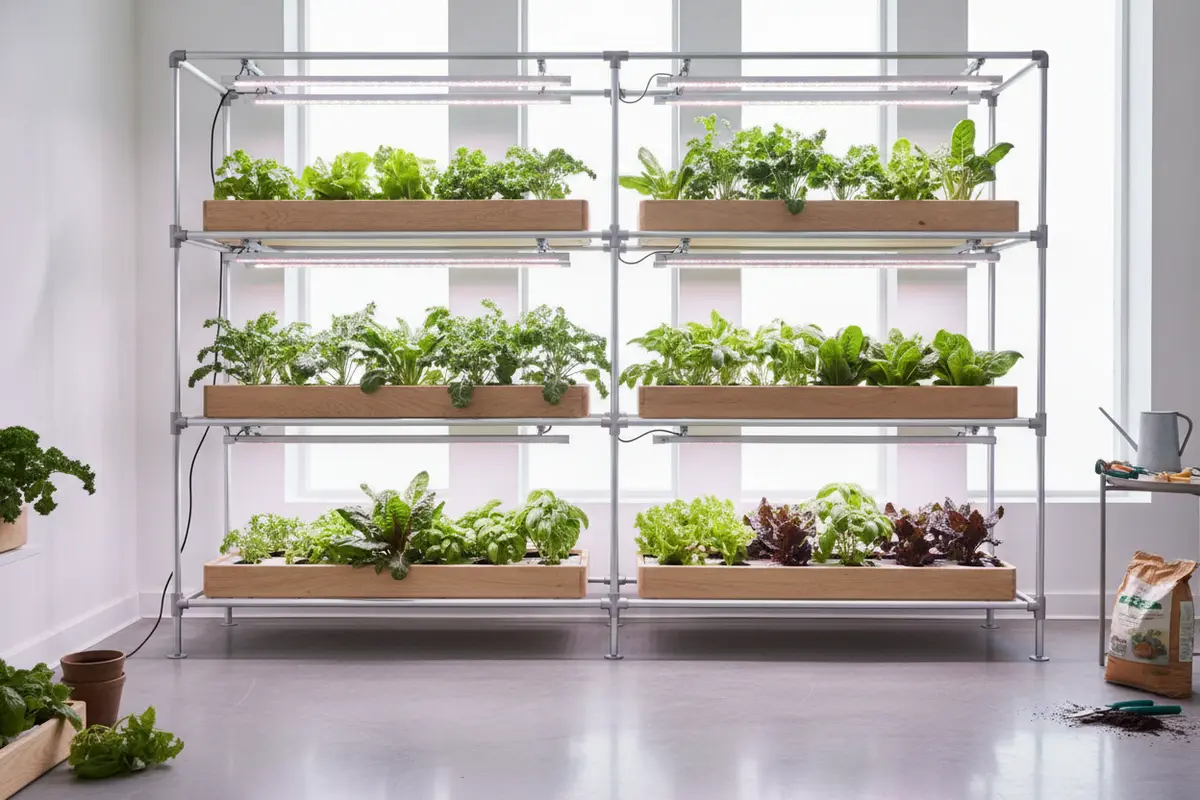
Start with the shape of your available area. A shelving rack is easy to adapt and gives each tier a defined footprint. Upright towers use a smaller floor area, but can be harder to reach and may distribute light differently around the plants. Wall-mounted or channel arrangements can keep the floor clear, though they require secure mounting and careful planning for water management.
| Layout | Best fit | What to plan for |
|---|---|---|
| Multi-tier rack | Several trays or containers in a defined room footprint | Light clearance, shelf access, load capacity, and room for a reservoir |
| Vertical tower | A compact footprint with plants arranged around a central structure | Reach to each planting site, even light exposure, and water flow from top to bottom |
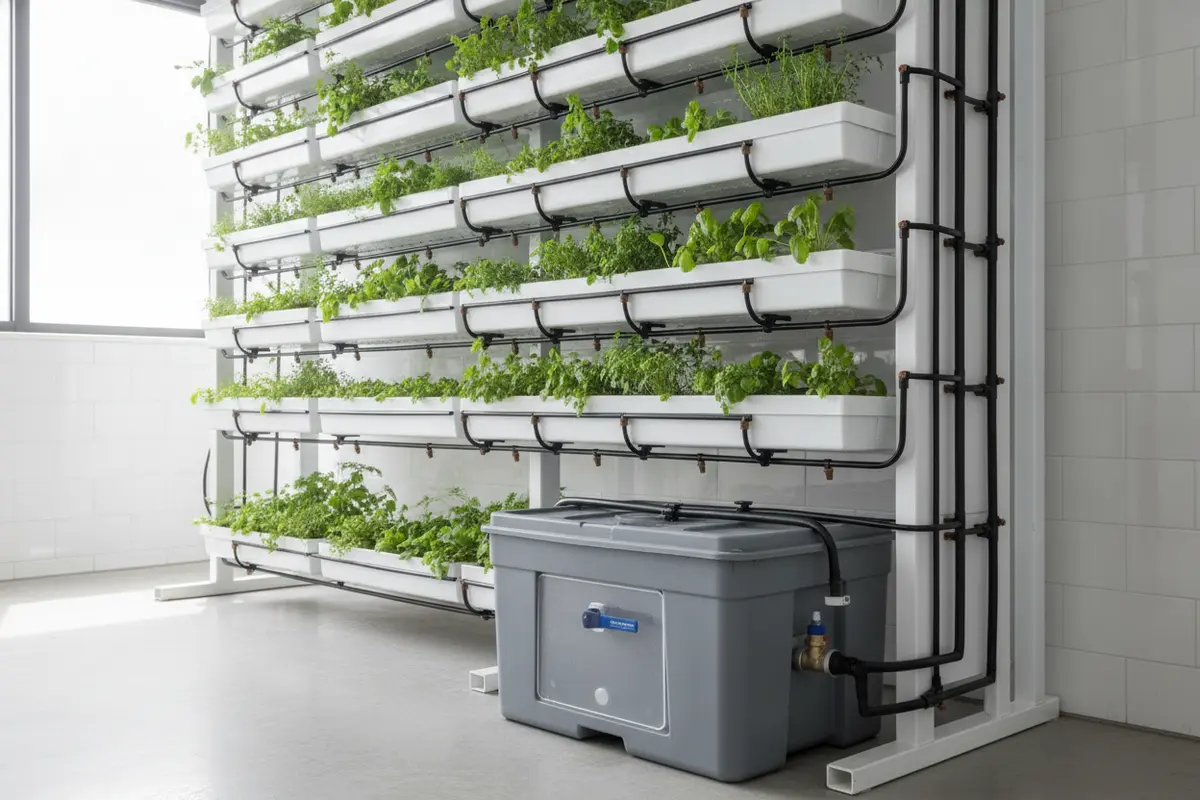
| Vertical channels | Rows of plants connected to a shared irrigation path | Channel slope or flow design, leak access, and cleaning between crop cycles |
| Wall-mounted arrangement | A floor-saving setup where the wall can support the installation | Safe mounting, water protection, lighting position, and access for repairs |
These are design patterns rather than guarantees of performance. Compare the actual dimensions, access points, and irrigation instructions for each system. When considering a rack, measure its full operating footprint, including space for doors to open, a person to work, a reservoir, and any equipment outside the shelves.
What should you measure before choosing a system?
Measure the room before shopping. Record the usable floor area, ceiling height, doorway width, and any obstacles such as windows, outlets, or shelves. Then sketch the proposed system from above and from the side. Include the space needed to stand beside it and remove a tray or reach a plant at the back.
- Tier height: Leave room for the mature plant canopy, the light fixture, and adjustment of the fixture. A rack that fits an empty seedling tray may not fit a mature crop.
- Working clearance: Check whether you can reach every plant without moving the entire structure. Plan access to the back and upper levels.
- Water location: Place the reservoir where you can inspect, refill, and clean it. Keep water handling practical and protect nearby surfaces.
- Electrical access: Plan cable routes and outlets so cords are organized and kept away from splashes. Follow equipment instructions and applicable safety guidance.
- Floor and support: Consider the combined weight of the rack, plants, containers, and water. Confirm the structure is stable and appropriate for the intended load.
Think about the weekly routine as well as the footprint. If you cannot comfortably reach a tier to inspect foliage, check moisture, or clean a tray, that level may become a neglected part of the garden. A smaller, accessible system can be a better starting point than a tall arrangement that is difficult to maintain.
How should you plan lighting across multiple levels?
Each growing level needs a lighting plan. A fixture on one shelf does not automatically serve the plants above and below it. Position lights for the canopy on their own tier, and verify that shelves, trays, and plants do not block light from reaching the intended area. Reflective surroundings can influence light distribution, but they do not replace appropriate fixture placement.
Compare the light fixture’s coverage guidance with the dimensions of each growing area. Check the mounting method, height adjustment, heat management, and electrical requirements. If the system has several shelves, include the cost and space of a separate fixture for each level in your plan rather than treating lighting as an afterthought. A timer can make a planned schedule easier to follow; review the fixture instructions before setting one up.
Plant selection matters too. Crops with different height, growth habits, and light preferences may not be convenient neighbors on the same tier. Group plants with similar needs where possible, and leave enough room to raise or reposition fixtures as plants grow. For additional fixture options, compare the available four-foot T5 grow lights and confirm that any specific light suits your growing area.
Browse hydroponic equipment options
How do you choose an irrigation approach?
Choose irrigation based on the growing method, crop count, and level of monitoring you can provide. Hand watering individual containers offers direct control and a simple layout, but it requires regular attention. A recirculating setup moves solution through connected growing sites and back to a reservoir, which can reduce repeated filling at each plant but adds plumbing, a pump in many designs, and more points to inspect.
Do not assume a particular system saves water or labor in every situation. A review of indoor vertical farming sustainability and feasibility discusses potential water-use efficiencies, but outcomes depend on system design and operation. A separate study of technologies for indoor vertical farming considers resource reuse as part of system design. In a home garden, leaks, clogged emitters, poor return flow, or missed checks can outweigh the intended convenience.
When planning a recirculating arrangement, trace the complete route: from reservoir to the highest or farthest growing site, through each tray or channel, and back to the reservoir. Check that fittings are accessible and that a blockage or leak would be visible. Review options for hydroponic reservoirs and tanks and hydroponic fittings and tubing based on the system’s requirements. A product page’s specifications should guide compatibility; do not mix parts solely because they look similar.
For tray-based layouts, also consider how plants are supported and how excess solution is managed. A net cup may be suitable for some hydroponic configurations, while other growing methods use different containers or media. Make the system design first, then select components that match it.
Which plants are practical for a first vertical garden?
Begin with plants whose size and care fit the available tier height and your experience. Compact leafy greens and herbs are common candidates for small indoor arrangements because their growth habit can suit a limited footprint. Larger plants may need more vertical clearance, stronger support, more root space, or a different layout. These are general planning considerations, not a promise that every variety will thrive in any configuration.
Decide what you want to harvest and how often you want to replant. A single crop type can simplify lighting, spacing, and maintenance decisions. Mixing several types can make better use of the space, but creates different growth rates and care needs on the same structure. Check seed or plant guidance for the varieties you choose, and allow room for mature growth rather than spacing only for seedlings.
Growing medium is another part of the choice. Soil, coco, rockwool, and other media have different handling and irrigation requirements. A system designed for flowing nutrient solution may not suit a container filled with a different medium without modifications. Explore hydroponic systems and supplies alongside the manufacturer’s setup instructions before choosing components.
What equipment and maintenance should you budget for?
Build a complete equipment list before comparing systems. A vertical garden may need a rack or support, containers or channels, growing medium, lights, irrigation components, a reservoir, and monitoring tools. Depending on the room and design, airflow or moisture management equipment may also be useful. The exact list varies; avoid buying add-ons until you know what the room and system require.
- List the structure and verify tier dimensions and support requirements.
- Choose lighting for each growing surface and plan how it will be mounted.
- Specify containers, media, tubing, fittings, and a reservoir that work together.
- Decide how you will inspect water level and solution condition, and what measurements are appropriate for your growing method.
- Leave room in the plan for cleaning materials, replacement parts, and safe access to the system.
Routine maintenance should be part of the design. Inspect connections for drips, look for blocked flow, remove plant debris, and clean growing surfaces according to the equipment and nutrient instructions. If a pump or timer is used, confirm it is operating as intended. Keep a simple log of watering, adjustments, observations, and cleaning so that a change in plant condition can be compared with recent actions.
Vertical systems may concentrate moisture and warm air in a small area. Check the room and plant canopy regularly, and provide suitable air movement without directing an uncomfortable, constant blast at plants. If humidity is difficult to manage, review the room’s conditions before selecting equipment. GroIndoor’s floor and pedestal fan options and dehumidifier filters and parts are examples of equipment categories to assess, not a recommendation that every setup needs them.
Keep measurements specific to your system and crop. Do not treat one pH or nutrient value as universal. Follow the plant, nutrient, and equipment guidance you have chosen, and change one factor at a time when troubleshooting. A pH and temperature meter can be considered when those measurements are relevant to your growing method; use and care for it according to its instructions.
How can you prevent common vertical garden problems?
Many frustrations start with limited access or uneven conditions. Check every tier, not only the plants at eye level. Look for leaves shading lower plants, dry or saturated areas, water that is not returning as expected, loose fittings, and fixtures that have shifted. A consistent inspection route helps you notice differences before you make several changes at once.
- Uneven growth: Compare light position, canopy distance, and shading from neighboring plants across the affected tiers.
- Water not reaching a site: Inspect the tubing, fittings, emitter or channel, and pump operation if present. Follow the system maker’s instructions before taking equipment apart.
- Leaks: Turn off or isolate water flow if safe to do so, protect electrical equipment, and inspect connections and trays. Correct the cause before restarting.
- Hard-to-reach plants: Reconsider tier spacing, container position, or how much of the structure is planted. Ease of inspection is part of good design.
- Persistent moisture concerns: Review watering, airflow, and room conditions together rather than adding equipment without identifying the source.
If plants show symptoms, do not assume a single cause from one visible sign. Growing conditions, pests, disease, and root issues can resemble one another. Isolate the observation, check recent changes, and seek plant-specific guidance when the cause is unclear.
How do you compare vertical systems before buying?
Use a written comparison rather than choosing by plant capacity alone. Confirm what is included and what must be purchased separately. Read the installation and maintenance instructions, and note whether the system requires plumbing, electrical work, special mounting, or particular replacement parts. A system that appears compact may still need substantial clearance around it.
- Set a realistic footprint. Measure the room and include working access and equipment space.
- Choose the plant plan. Identify likely crop size and how many tiers you can inspect comfortably.
- Match light to each level. Check fixture coverage and mounting needs for each growing area.
- Trace water delivery. Understand how solution reaches every plant, how excess is handled, and how leaks can be detected.
- Estimate the routine. Consider inspection, watering, cleaning, and harvest access over the full crop cycle.
- Check compatibility. Verify that the reservoir, tubing, containers, medium, and any pump are intended to work together.
A small trial can be a useful way to learn the space before expanding. Set up one rack or a limited number of growing sites, document what is easy or awkward, and adjust the layout based on actual access and plant response. Expansion is simpler when the first design leaves room for maintenance and troubleshooting.
Compare hydroponic supplies for your setup
Frequently Asked Questions
Does a vertical indoor garden have to use hydroponics?
No. Vertical describes how growing sites are arranged, not one required growing method. Some arrangements use containers and a growing medium, while others use hydroponic channels, trays, or towers. Select a structure and irrigation approach that are designed to work together.
Is a tower better than a shelving rack?
Neither is best for every room. A tower can reduce floor footprint, while a rack gives separate, accessible shelf areas. Compare plant access, light placement, irrigation, stability, and cleaning needs for the specific models and crops you plan to use.
Can every tier share one light?
That depends on the fixture, distance, obstacles, and layout. A light positioned for one level may not adequately serve plants on another. Evaluate coverage for each growing surface and follow the fixture maker’s recommendations.
What is the easiest way to begin?
Measure the space, choose a small crop plan, and start with a layout you can inspect and maintain. Confirm light and water requirements before buying components, and test the system for leaks and access issues before planting.
Plan for access as carefully as capacity
A good vertical indoor garden system makes practical use of height without making plants, lights, or water lines difficult to reach. Compare layouts by their complete footprint, growing conditions, irrigation path, and maintenance demands. Start with a manageable design, observe how it works in your room, and expand only when the routine is sustainable.
Tags: