


Indoor plant pest control works best when you notice a problem early, identify what you are seeing, and choose a response that fits the pest and the plant. A short, repeatable inspection routine is more useful than reaching for a treatment whenever a leaf looks unusual. This checklist explains what to look for, how to isolate a plant, and how to reduce the chance of pests spreading.
Explore a tool for close plant inspections
What should an indoor plant pest control routine include?
Think of pest management as a sequence, not a single product choice. Inspect plants on a regular schedule, confirm a likely pest before acting, separate affected plants when practical, and keep notes on what changes. Then review the result before repeating any treatment. This approach helps avoid treating a symptom that has another cause, such as watering stress, nutrient imbalance, or physical damage.
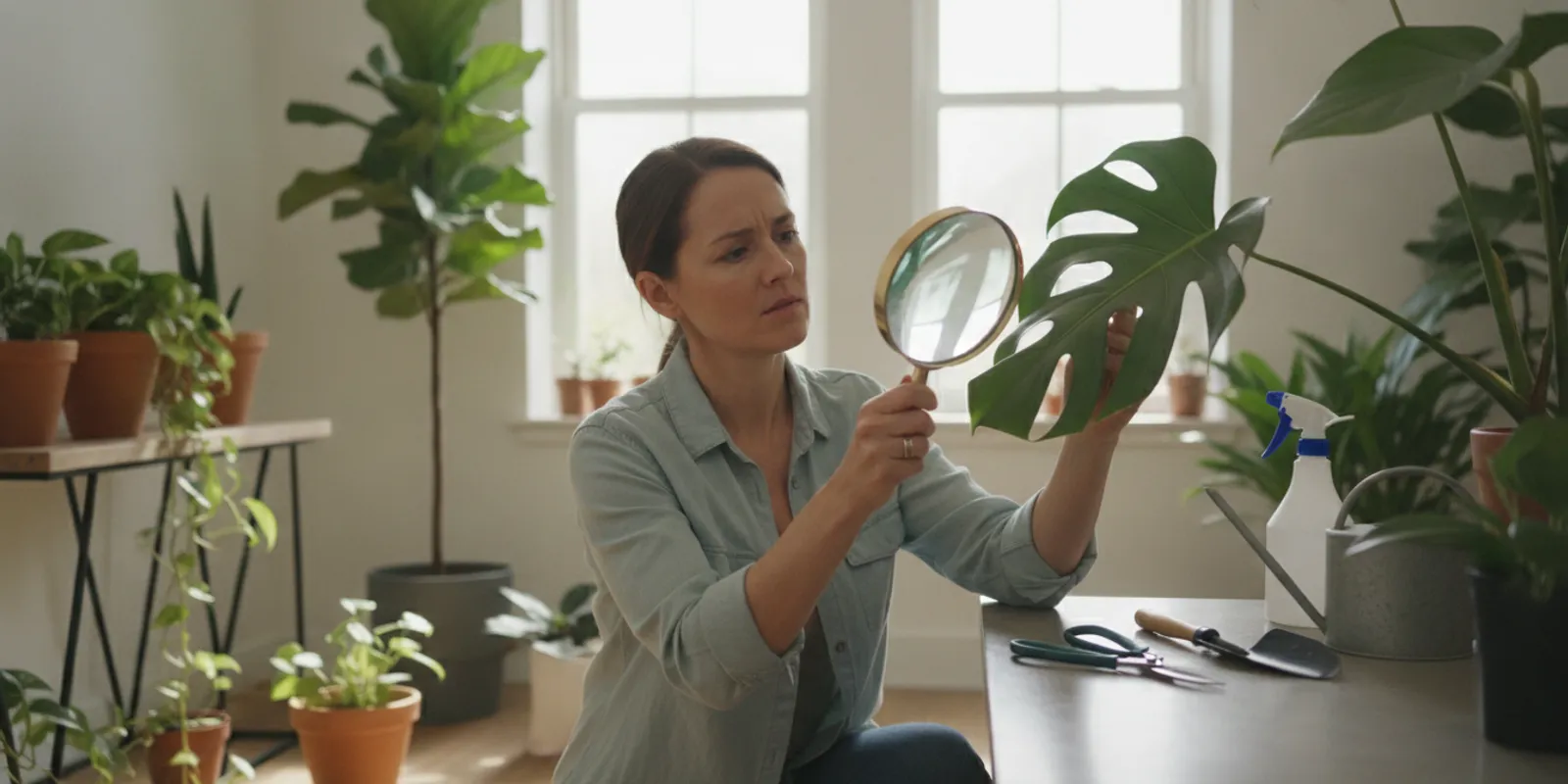
A basic routine can fit into a few minutes per plant. Look at the newest growth and the undersides of leaves, scan stems and leaf joints, check the growing surface and nearby pots, and inspect the surrounding area. If you find suspicious marks or insects, take a clear photo and write down where you found them. A handheld microscope can make small insects and fine webbing easier to examine, but good lighting and a careful visual check are useful starting points.
Keep the routine consistent. Comparing a plant with its own earlier condition can reveal a change that is easy to miss during a one-time glance. For example, note whether speckling is limited to one older leaf or is appearing on several new leaves. That distinction can help you decide whether to keep observing or move to containment and identification.
Where should you look during an inspection?
Many common pests or their signs are easiest to miss when you only look at the top of the plant. Check both sides of leaves, especially along veins and near the stem. Look at growing tips, leaf joints, stems, and the surface of the growing medium. Some signs are tiny, so take your time and use a light at an angle if the space is dim.
- Leaves: Look for stippling, pale or yellow patches, curling, sticky residue, fine webbing, or clusters of small insects.
- Stems and leaf joints: Check for stationary bumps, cottony material, eggs, or insects tucked into protected spots.
- New growth: Compare its shape and color with older growth. Distorted tips or repeated damage deserve a closer look.
- Growing surface and pot: Look for insects moving on the surface, shed skins, or signs of activity around drainage openings.
- Nearby plants and surfaces: Check plants touching the affected one, the bench or shelf, and tools used nearby.
Damage alone does not identify the cause. Fine pale speckles, for instance, can have more than one explanation. Sticky residue, webbing, visible insects, and the pattern of new damage provide additional clues. Avoid deciding on a treatment from one leaf mark. Photograph the evidence and, if possible, inspect it closely before changing the growing routine.
New plants deserve a deliberate check before they join an established group. Examine leaves, stems, and the growing medium when they arrive, and keep them apart from other plants while you watch for signs of trouble. A separate area is easier to manage if your growing space allows it. A grow tent is one example of an enclosed growing space, but any practical separation that does not compromise plant care may help limit contact.
How can you tell whether indoor plant pest control is needed?
Start by distinguishing a living pest or recognizable pest sign from general plant stress. Look for movement, eggs, shed skins, webbing, residue, or repeated fresh injury. Check whether the same pattern appears on more than one plant, and consider whether a recent change in light, watering, airflow, or handling could explain the symptoms. These observations do not replace a confident identification, but they help narrow the next step.
Use a phone camera or a magnifier to record small details. Take one image of the whole plant and one close-up of the affected area. Include the leaf surface and its underside when possible. Record the date and which plants were nearby. If you cannot identify the problem, seek a reliable identification resource or knowledgeable help before selecting a pesticide.
The University of Alaska Fairbanks Cooperative Extension's guide to houseplant pests and control emphasizes identification as an important first step. Clemson Cooperative Extension also describes practical inspection and control considerations in its guide to common houseplant insects and related pests. Use reputable, subject-specific guidance when you need help comparing signs.
Do not assume that an insect seen near a pot is feeding on the plant. Nor should every yellow leaf trigger pest treatment. Confirming a likely cause first can prevent needless applications and make it easier to judge whether your response is working.
What should you do when you find a suspected infestation?
Act in a calm order. First, avoid moving the plant through the growing area or brushing it against its neighbors. If you can do so without spreading insects, move it to a separate spot. Keep its tools and runoff apart from other plants where practical. Mark the plant or make a note so it is not accidentally returned to the group before you reassess it.
- Record what you see. Photograph the plant and close details. Note the date, affected parts, and nearby plants.
- Limit contact. Separate the plant if feasible, avoid sharing tools, and wash your hands after handling it.
- Identify before treating. Compare visible insects and damage with a credible identification guide. Ask for help if the signs remain unclear.
- Choose a proportionate response. Consider the plant, pest, growing method, and product label. Do not mix or apply products in a way the label does not permit.
- Recheck and record. Follow the label's directions for any repeat application, then inspect for both remaining pests and new plant stress.
For a small, accessible plant, physically removing heavily affected leaves may be an option if the plant can tolerate it. Bag discarded material and do not leave it beside healthy plants. Some pests can be dislodged by a careful water spray; Clemson's guidance notes that repeated sprays can help control spider mites. Protect the growing area from unwanted runoff, and check that the plant and its growing system can handle the water before using this approach.
A hand sprayer can help direct water to a particular plant, but the tool does not determine whether a treatment is suitable. GroIndoor carries items such as a compact hand sprayer; use plain water or any product only in a way appropriate to the plant and, for pesticides, exactly as directed on the label.
Which response fits the situation?
There is no single response for every pest, plant, or growing setup. The comparison below is a decision aid, not a product prescription. Begin with identification and choose the least disruptive reasonable step. Follow the product label whenever you use a treatment, including directions about the plants and sites where it may be used, protective measures, application, and re-entry.
| Response | When it may fit | What to check |
|---|---|---|
| Closer inspection and monitoring | Signs are uncertain, limited, or not clearly progressing. | Look for the pest itself and compare dated photos. Recheck nearby plants. |
| Isolation and sanitation | A plant has a credible pest concern or is newly acquired. | Reduce plant-to-plant contact, keep tools separate, and dispose of debris carefully. |
| Physical removal or water spray | The plant and suspected pest are suitable for a careful physical approach. | Consider plant sensitivity, runoff, growing method, and whether the pest is actually reached. |
| Label-directed pest product | The pest is identified and the label covers the intended plant and use site. | Read the whole label first. Check application limits, protective steps, and repeat timing. |
| Expert identification or advice | Symptoms continue, identification is uncertain, or the plant is valuable or sensitive. | Bring clear photos, notes, and details of recent care and any products already used. |
Product pages can help you review what type of supply is available, but a product name does not establish that it is suitable for a particular plant or pest. For example, GroIndoor lists products marketed for plant care and pest management, including Dyna-Gro Pure Neem Oil, BioSafe ZeroTol HC, and SNS 209 Systemic Pest Control Concentrate. These are examples of listings, not blanket recommendations. Confirm that a product's current label allows the intended plant, growing environment, and use before purchase or application.
Do not combine products, raise concentrations, or apply a product more often than its label allows. More is not automatically more effective, and an unsuitable application can harm plants or people. If you grow edible plants, use only products whose labels permit that crop and follow harvest and handling directions. When the label does not clearly answer a question, do not guess.
How can you prevent pests from returning?
Prevention is mostly careful movement, clean handling, and regular observation. It cannot guarantee a pest-free growing area, but it can make new problems easier to catch and reduce avoidable spread.
- Inspect incoming plants. Look closely before placing them near established plants. Keep them separate when practical while you monitor.
- Keep a stable routine. Check plants on set days rather than waiting for obvious damage. Include leaf undersides and new growth.
- Clean tools between plants. Remove plant debris and follow an appropriate cleaning method for the tool. Store clean tools away from used material. A product such as HYCLEAN Line & Equipment Cleaner is an equipment-cleaning listing; consult its label to confirm its intended use and directions.
- Reduce unnecessary contact. Avoid crowding plants so leaves are easy to inspect and plants are less likely to brush together during care.
- Manage debris promptly. Remove fallen leaves and keep plant waste from accumulating beside healthy plants.
- Track changes. Record pest signs, care changes, and any treatment. This can help distinguish a recurring issue from a new one.
Keep cleaning and treatment steps distinct. A cleaner intended for equipment is not automatically appropriate for plant surfaces, and a pest-control product is not automatically a sanitizer. Read product directions and use each item only for its stated purpose. If a plant is in a hydroponic system, consider the system as well as the foliage: protect reservoirs and other components from unintended material, and follow directions that apply to the growing method. GroIndoor's hydroponics supplies collection is a place to review equipment, not a substitute for label guidance.
A simple calendar can make prevention manageable. Choose one regular day to inspect the entire growing area, then take a quick look at nearby plants whenever you water or otherwise tend them. Use the more complete check to examine leaf undersides, stems, pot edges, and growing surfaces. The shorter checks help you notice fresh changes between those reviews. Adjust the routine to the size of your collection, but keep the order similar so that no group of plants is routinely skipped.
After pruning or handling a plant with suspected pests, clean up fallen material before moving on to another plant. Keep used debris separate from clean supplies, and avoid setting tools on a shared work surface without cleaning them. If you use reusable containers or trays, inspect them when empty and clean them according to the material and product instructions. Good housekeeping does not replace pest identification, but it reduces clutter that can hide signs and makes repeat inspections easier.
Also review the environment without making abrupt changes based on pest concerns alone. Crowded foliage can be harder to inspect, while sudden changes to light, watering, or airflow can create new plant stress and complicate diagnosis. Make adjustments for a clear reason, change one factor at a time when possible, and keep a note of the date. That way, you can tell whether a new symptom followed a care change or continued independently.
How do you know whether your response is working?
Set a check-in based on the product label or the observation plan you chose, rather than repeatedly changing tactics every day. Compare new photos with your first record. Look for fresh damage, visible living pests, and whether the affected area is expanding. Old leaf damage may remain after the original cause is addressed, so judge progress by new signs and the plant's overall condition, not by expecting marked leaves to look new again.
If the problem worsens, spreads, or remains uncertain, revisit the identification. Check whether the chosen response matched the suspected pest and whether it was used as directed. Avoid repeating an application just because there is no immediate cosmetic improvement. Seek additional guidance when needed, especially before using another product or changing several growing conditions at once.
Keep a simple record with four details: date, plant or area, signs observed, and action taken. Add a follow-up observation. Over time, this helps reveal whether issues cluster around incoming plants, shared tools, or a particular area, and makes it easier to explain the problem when asking for help.
Browse hydroponic growing supplies
Frequently Asked Questions
How often should I inspect indoor plants for pests?
Choose a regular interval that fits the number of plants and the growing space, and add an inspection whenever you bring in a new plant or notice a change. A brief, consistent check is easier to compare over time than occasional rushed inspections. Look under leaves as well as across the top of the plant.
Should I treat a plant as soon as I see leaf damage?
Not necessarily. Leaf damage can have several causes, and old damage may remain after the cause is gone. Look for a pest or additional signs, check the pattern across the plant, and identify the likely cause before applying a treatment.
Can I use the same pest product on every indoor plant?
No. Product labels specify where and how a product may be used. Confirm that the label includes the intended plant and use site, and follow all application, protection, and repeat-use directions. If the label is unclear, ask a qualified source rather than assuming the product is suitable.
What should I do if I cannot identify the pest?
Keep the plant separated if practical, take clear photos of the whole plant and close-up signs, and write down when the problem began and what has changed. Use an authoritative identification guide or ask a knowledgeable local resource for help before choosing a treatment.
Does isolation always stop pests from spreading?
Isolation can reduce contact between plants, but it is not a guarantee. Continue inspecting nearby plants, avoid sharing unclean tools, and handle the affected plant carefully. Keep monitoring even after the plant is moved.
What is the simplest checklist to follow?
Inspect regularly, examine leaf undersides and new growth, document suspicious signs, separate an affected plant when possible, identify the pest before choosing a response, and follow product labels exactly. Recheck the plant and nearby area, then record what changed. A steady, evidence-led routine helps you make better decisions without treating every symptom as the same problem.
Tags: