


Fungus gnats are easiest to manage before adults are flying around the grow space. To learn how to prevent fungus gnats in hydroponics, focus on the conditions that let them settle in: persistently damp exposed media, decaying plant material, and places that go unchecked. A simple routine of moisture management, sanitation, and monitoring can reduce those opportunities without changing a sound growing system.
Explore hydroponic growing supplies
What is the prevention goal?
The goal is not to keep every part of a hydroponic setup dry. Plants need water, and many systems rely on a reservoir or regularly irrigated root zone. Instead, prevent unnecessary wetness and organic debris in areas where adult gnats can lay eggs and larvae can develop. Pay particular attention to the surface of growing media, spilled nutrient solution, floor edges, trays, and damp material left beneath containers.
Fungus gnats are small flies associated with moist growing media and decomposing organic matter. Adults may be noticed near plant bases, while the immature stages remain in the media. Seeing one adult does not prove a large infestation, but repeated sightings are a reason to inspect the root-zone environment. Avoid treating every flying insect as a fungus gnat; check where it gathers and whether the media is staying wet between normal irrigation events.
Prevention works best as a sequence: remove favorable conditions, watch for activity, then respond early if evidence appears. That is more useful than applying a control on a calendar without checking whether gnats are present.
Which parts of a hydroponic space need attention?
Walk the entire growing area rather than looking only at the plant canopy. Gnats can be supported by small, overlooked wet spots. Check the media surface around each plant, the outside of containers, trays beneath systems, drain lines, corners near reservoirs, and any place where leaves or roots have collected. Also inspect stored media and tools before bringing them into the active area.
- Exposed growing media: Look for algae, decaying fragments, and a surface that remains wet long after irrigation.
- Trays and channels: Remove standing spills and plant debris. Check corners and seams where moisture can linger.
- Reservoir area: Keep the lid and surrounding floor clean. A reservoir itself is not the same thing as exposed, damp media, so identify the actual breeding or resting area before acting.
- Tools and containers: Clean off attached media and plant residue before moving equipment between spaces.
- Room edges: Inspect beneath benches, near drains, and along walls where water or organic matter may accumulate.
A brief inspection after routine work is often easier than a major cleanup later. Keep a small record of where adults appear and which areas remain damp. Patterns help distinguish a one-time visitor from a persistent source.
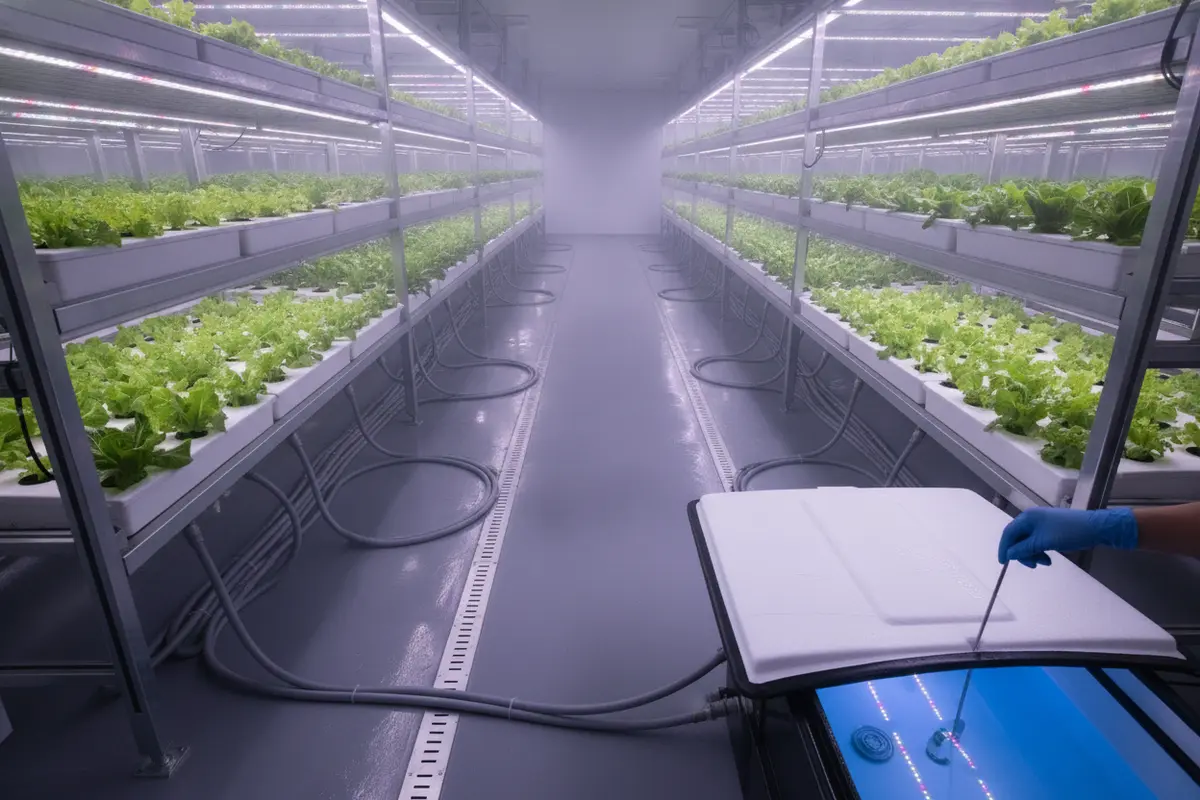
Make the walk-through systematic. Start at one side of the room and move in the same direction each time, checking plant surfaces first, then containers, trays, plumbing, and the floor. This reduces the chance of repeatedly overlooking the same hidden spot. In a multi-level setup, inspect both upper and lower shelves; runoff from a higher level can collect below and create a separate issue. If you find a wet area, note whether it appears after irrigation, after reservoir maintenance, or without an obvious trigger. That simple detail can point toward a loose fitting, overflow, or cleanup gap.
How can moisture management reduce risk?
Manage moisture according to the crop, system, and growing medium. Do not withhold water from plants simply to make the room dry. Instead, prevent unintended wet patches and adjust irrigation only when the plant and system can safely tolerate it. The useful question is whether exposed surfaces and debris stay wet longer than they need to.
- Find the source. Look for leaks, splash from irrigation, blocked drainage, or water collecting in trays. Correct the cause rather than repeatedly wiping up the same puddle.
- Restore drainage. Confirm that runoff can leave the area as designed. Empty collection trays when needed and check that lines are not kinked or obstructed.
- Keep the root zone appropriate. Follow the needs of the chosen system and medium. Do not apply a blanket dry-down rule; roots can be harmed when water management is changed without regard to their requirements.
- Reduce splash. Direct irrigation into the intended root zone and avoid wetting nearby surfaces unnecessarily. Check fittings and tubing if water lands outside the container.
- Recheck after changes. Inspect the same locations later to see whether the area is drying as expected and whether plant condition remains normal.
For a setup with a separate tank, check its cover, fittings, and surrounding floor. Keep lids in place where the system design allows, and correct drips around connections. A hydroponic reservoir should be considered alongside the connected plumbing, rather than as a substitute for checking the media and floor.
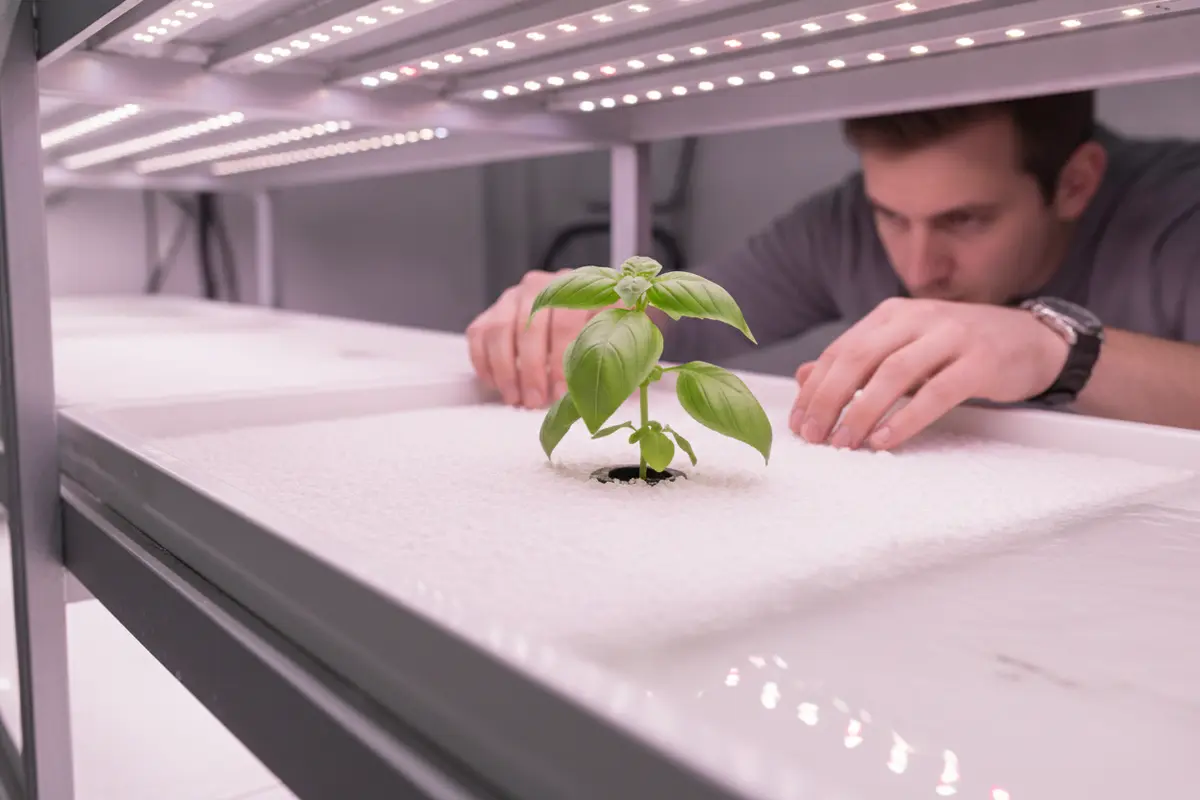
The right check depends on the system. In a drip setup, watch emitters and tubing during a full irrigation cycle, because a small misdirected stream may be invisible when the pump is off. In a tray-based setup, look for pooling at low points and confirm that runoff can move away. In systems with net cups, inspect any exposed medium around the plant base and clean away plant fragments without disturbing roots. For all systems, distinguish intended moisture inside the root zone from unintended dampness on surrounding surfaces.
How should you keep growing media and surfaces clean?
Remove dead leaves, fallen flowers, algae, and spilled media as soon as practical. Decaying plant matter can hold moisture and provide a suitable environment for small pests. Dispose of debris outside the grow area, then clean the surface beneath it. Do not leave a pile in a corner or a tray while waiting for the next full room cleanup.
Growing media differs in how it holds water and organic material. The prevention routine should fit the medium. Inspect the top of each container and clear loose debris without disturbing roots. If using a medium that is exposed at the surface, avoid allowing old plant fragments to build up there. With reusable components, follow their material-specific cleaning instructions between crop cycles.
Use clean containers and keep unused media sealed or otherwise protected from pests and spills. When setting up a new system, rinse away loose debris from the work area and check that containers drain as intended. Products such as coco growing medium and mesh-bottom pots are examples of different supplies growers may use; their presence does not remove the need to monitor the actual moisture and cleanliness of the setup.
For routine upkeep, distinguish a quick surface cleanup from a complete system sanitation. This guide is about preventing conditions that support gnats, not a step-by-step system teardown. Avoid mixing cleaning products or applying a disinfectant to plants or media unless the product label specifically permits that use. Rinse or dispose of materials only as directed by the relevant instructions.
What should you monitor before gnats become a problem?
Monitoring gives you an early signal and helps you check whether prevention measures are working. Use sticky cards as a simple adult-monitoring aid where appropriate, placing them near the root zone and away from direct contact with plants, irrigation, or moving equipment. Keep placement consistent so you can compare observations from one check to the next. A card is a monitoring tool, not proof by itself of the source or a stand-alone solution.
Check cards and plants on a regular schedule. Note the date, approximate number of adults, and location. If counts increase in one area, inspect the media and nearby damp surfaces first. If cards remain clear but a plant shows stress, do not assume gnats are the cause. Check root condition, watering, and other environmental factors as well.
Look for larvae in the moist upper layer of media when there is a sound reason to inspect. Do not dig around healthy roots unnecessarily. If confirmation is needed, use an appropriate monitoring method for the specific medium and avoid confusing harmless organisms with pests. A small inspection microscope can help examine tiny organisms, but visual magnification does not replace correct identification.
Air movement may help surfaces dry more evenly, but strong airflow is not a pest treatment and should not stress plants or scatter debris. Check that air circulates around the growing area, including low spots, without directing a fan so forcefully that it disturbs growing media. Choose placement based on the room layout; floor and pedestal fans are one equipment category to consider when planning air movement.
Make the monitoring record specific enough to guide the next action. Instead of writing only “gnats seen,” record the nearest plant or bench, whether the card was at canopy or root-zone height, and whether the media or floor was wet at the time. If you check weekly, compare the same interval and card locations. A few adults on one card after moving equipment may not mean the whole room is affected; a repeated rise at the same location deserves a closer look. Avoid moving the cards each time, since changing position makes comparisons less useful.
Pair adult monitoring with a visual check, but keep each tool in its role. The card can reveal where adults are active. The inspection can reveal standing water, decaying material, and possible larvae. Neither on its own establishes the full cause. If you find insects that do not match the expected appearance or pattern, pause before treating and seek identification help rather than relying on a guess.
Browse hydroponic equipment and growing supplies
Which prevention actions should you prioritize?
When time is limited, work from the conditions most likely to matter. First remove wet organic debris and standing spills. Then fix a leak or drainage problem. Next, improve routine inspection and monitoring. Do not start with multiple pest products at once, because that can obscure what is helping and may create avoidable exposure or plant injury.
| Action | Best time to use it | What to check |
|---|---|---|
| Remove plant debris and spilled media | During routine daily or weekly upkeep, and whenever debris is found | Trays, container tops, floor edges, and beneath equipment |
| Correct leaks and standing water | As soon as a drip, spill, or drainage issue appears | Fittings, tubing, channels, and collection areas |
| Inspect exposed media | At regular plant checks and after irrigation changes | Persistently wet surfaces, algae, and decaying material |
| Monitor adult activity | On a repeatable schedule, with consistent card placement | Changes in counts and the location where adults gather |
| Use a labeled control if needed | After identifying a likely pest issue and checking the product directions | Allowed crop, application site, dose, safety precautions, and repeat interval |
For spills or equipment surfaces, select a cleaner suitable for the material and follow its label. A product listing such as line and equipment cleaner is not a recommendation to apply it to plants or growing media. Verify the intended application before use.
Use a hydroponic fittings and tubing inspection as part of leak prevention. Replace or reconnect components according to their instructions, and recheck the area after the system runs. If a spray bottle is part of your routine, a small hand sprayer can be used for appropriate labeled tasks, but spraying indiscriminately can spread water and does not prevent gnats by itself.
Choose the next action based on what you actually found. If the issue is a single puddle, correct the source and recheck. If there is old plant matter on several container surfaces, add a cleanup step to the normal plant check. If adult sightings rise while visible moisture sources are absent, examine stored media, hidden corners, and the identity of the insect. This prioritization avoids treating every situation as if it requires the same response.
What should you do if you spot fungus gnats?
Respond in stages. First confirm that the insects are likely fungus gnats and identify where adults are gathering. Then inspect that location for persistently damp media, debris, leaks, or standing water. Remove what you can safely remove and correct the condition that is maintaining moisture. Continue monitoring to see whether activity declines.
If the infestation appears to involve larvae, choose a control method specifically labeled for the crop and growing situation. Read the full label for allowed application sites, protective equipment, dose, repeat timing, and any restrictions. Do not assume that a product appropriate for ornamental media is automatically appropriate for every hydroponic crop or reservoir.
The University of California Statewide Integrated Pest Management Program notes that drenches for fungus gnat larvae should be applied to the top inch of soil and cautions against excessive spray that can move an insecticide too deeply into growing media. That guidance is specific to the stated setting, so check the product label and crop directions before using any treatment in a hydroponic system. See the UC IPM fungus gnat guidance.
Do not pour a treatment into a reservoir or apply it to roots unless the label explicitly allows that use. Avoid combining products or increasing a dose to try to get faster results. If the source is uncertain or the problem persists despite correcting moisture and debris, seek advice from a qualified local extension or pest-management professional familiar with the crop and system.
How can you make prevention part of the normal routine?
Use a short checklist tied to existing work, not a complicated new schedule. During each plant check, look at the media surface and remove visible debris. When irrigation runs, look for leaks or splash. During a weekly room check, inspect under trays, around reservoirs, and near drains. Check monitoring cards at the same time and write down unusual changes.
- Each plant check: Look for adults, inspect the media surface, and remove dead material.
- After irrigation: Check for unintended runoff, leaks, and water collecting outside the intended root zone.
- Weekly: Inspect low and hidden areas, clean up residues, and review monitoring notes.
- Between cycles: Remove old plant matter and clean reusable equipment as its manufacturer directs before setting up again.
Consistency matters more than a single intensive cleanup. A few minutes of inspection can reveal a recurring leak or wet corner while it is still easy to correct. If a change does not improve the observations, reconsider the source rather than adding more interventions.
Keep the routine stable when possible. Use the same inspection route, review the same monitoring locations, and record noteworthy changes in a brief log. If another person shares the work, agree on what counts as a finding worth noting, such as a recurring puddle or a clear increase in adults. A consistent record makes handoffs clearer and can prevent the same leak or debris pocket from being rediscovered without a lasting correction.
Explore hydroponic growing supplies
Frequently Asked Questions
Can fungus gnats come from a hydroponic reservoir?
Do not assume the reservoir is the source just because gnats appear nearby. Inspect exposed media, plant debris, damp trays, and leaks around the tank and plumbing. Keep the reservoir covered where the system design permits, and check the actual location where adults gather or larvae may be present.
Should I let my hydroponic plants dry out to prevent gnats?
No. Do not dry out a root zone without considering the system and plant requirements. Focus instead on preventing extra wetness in exposed media, removing decaying material, and correcting spills or drainage problems while maintaining suitable water for the plants.
Do sticky cards get rid of fungus gnats?
Sticky cards can help monitor adult activity and show where numbers may be changing. They do not address larvae or correct damp media and debris. Use them alongside inspection and moisture management, not as the only prevention step.
When should I consider a treatment?
Consider one after identifying a likely fungus gnat problem and checking the product label for your crop, system, and application site. Correct wet debris and leaks first, and follow all directions and safety precautions. If the identification or appropriate treatment is unclear, seek qualified local guidance.
Preventing fungus gnats in hydroponics comes down to keeping the growing area orderly, reducing unnecessary damp debris, and noticing changes early. Inspect the same key locations consistently, then make targeted corrections that protect both the plants and the system.
Tags: