


How Perlite Vermiculite Hydroton Helps You Choose a Medium
The phrase perlite vermiculite hydroton describes three widely used growing media. They do not perform the same job.
Shop hydroponic growing supplies at GroIndoor
Perlite opens a mix for more air and drainage. Vermiculite holds moisture and nutrients. Hydroton, also called expanded clay pebbles, provides a durable structure for roots in hydroponic and aquaponic systems. Choose among them by matching the material to the plant, container, irrigation pattern, and root-zone conditions.
This guide explains what each medium does, where it fits, and how to combine the right properties without relying on a one-size-fits-all recipe. It also covers particle size, pH, reuse, sanitation, and the practical signs that a growing medium is holding too much or too little water.
What Do Perlite, Vermiculite, and Hydroton Do?
A growing medium has four important jobs: it helps supply roots with water, oxygen, nutrients, and physical support. The balance between those jobs changes with particle size and material structure. Fine particles create smaller pores that hold water. Coarse particles create larger spaces that allow air and excess water to move through the root zone.
Perlite, vermiculite, and Hydroton therefore solve different problems. Perlite is primarily an aeration and drainage component. Vermiculite is primarily a moisture and nutrient-holding component. Hydroton is primarily a structural component for systems that deliver water and nutrients separately from the medium.
The University of California Agriculture and Natural Resources explains that soil-mix components differ in water retention, air space, drainage, and physical behavior. That framework is useful for evaluating soilless media as well as traditional container mixes.
Review the University of California guide to common soil-mix components for additional background on how particle size affects a root zone.
Perlite adds air space
Perlite is a lightweight material made from expanded volcanic glass. Its coarse, irregular particles create larger air spaces in a container mix. That structure helps excess water drain away and can reduce compaction as the mix settles. Perlite is often useful when a container stays wet for too long or when roots need more oxygen between irrigations.
Perlite does not supply a complete nutrient program. It also does not hold as much water as finer materials. Treat it as a structural amendment that changes how a mix handles water, rather than as a complete growing medium by itself.
Vermiculite holds moisture
Vermiculite is a layered mineral that can hold water and retain some nutrients. Its finer structure generally creates smaller pores than perlite, so it keeps moisture available for longer. That quality can help with seed starting or with container mixes that dry too quickly.
Vermiculite is not a substitute for drainage. A mix that already stays wet may become harder to manage if too much moisture-holding material is added. Use it to address a specific drying problem, then observe the root zone rather than following a fixed ratio.
Hydroton supports roots in soilless systems
Hydroton is expanded clay formed into lightweight, porous pellets. The pellets create an open framework that supports the plant while allowing water and air to move around the roots. Hydroton is especially suited to hydroponic and aquaponic systems, where nutrient solution and irrigation design provide much of what a traditional soil mix would otherwise supply.
The pellets are durable and can be reused when they are cleaned and sanitized appropriately. Their performance still depends on the system. A well-draining medium cannot compensate for a water level, irrigation schedule, or reservoir design that keeps roots constantly saturated.
When Is Perlite the Right Choice?
Choose perlite when a container mix needs more air space, faster drainage, or better resistance to compaction. It is a strong fit for a dense mix that remains wet after watering. Especially when the plant and container would benefit from a quicker return of oxygen to the root zone.
Perlite can also help maintain structure as a mix settles. Because the particles are lightweight and coarse, they preserve channels for air and water. The tradeoff is that a high proportion can make a container dry faster than expected. Match the amount to the container size, plant, ventilation, temperature, and irrigation routine.
Benefits of perlite
- More aeration: Coarse particles create larger spaces for air around the roots.
- Faster drainage: Open structure helps excess water move out of the container.
- Lower weight: Perlite can add structure without making a container as heavy as dense mineral media.
- Stable structure: It resists the rapid breakdown and compaction associated with some organic components.
- Neutral starting point: Perlite is commonly treated as a relatively inert, neutral component, so the nutrient program can be managed separately.
When perlite is a poor fit
Perlite may not be the best answer when the root zone is already drying too quickly or when the watering routine cannot keep up with rapid drainage. It can also be awkward in very small containers if the particles float or shift during watering. Wetting the material before mixing reduces dust, and handling it gently helps preserve the intended particle distribution.
If you reuse perlite, remove old roots and clean it thoroughly. Do not reuse material from a problem root zone without a sanitation plan. The goal is not simply to add more drainage. The goal is to create a repeatable balance between water and oxygen.
When Is Vermiculite the Right Choice?
Vermiculite is a useful choice when a container mix loses moisture too quickly or when seeds need a more consistently moist environment. Its layered structure absorbs water and can retain some nutrients, giving roots or developing seedlings more time between irrigations.
That same quality requires restraint. A moisture-holding amendment can reduce the air available to roots if the mix is already fine, the container drains slowly, or watering is too frequent. Vermiculite works best when it addresses a known moisture problem within a mix that still has enough coarse structure for air exchange.
Vermiculite for seed starting
Vermiculite can help cover seeds or support a seed-starting mix because it holds moisture around developing roots. New material is also generally clean and lightweight. Keep it evenly moist rather than saturated, and use containers with drainage openings so excess water can leave the root zone.
As seedlings develop, reassess the medium. A seed-starting environment may need more moisture retention than an established plant in a larger container. The best material choice can change as the root system and irrigation routine change.
Vermiculite versus perlite
Perlite and vermiculite are often compared because they are both lightweight mineral amendments. Their functions point in opposite directions. Perlite increases air space and drainage. Vermiculite increases moisture retention and can hold some nutrients. If a mix dries too fast, vermiculite may help. If it stays wet or compacted, perlite may be more appropriate.
Combining them can create a middle ground, but there is no universal ratio that fits every plant. Start with a small adjustment, monitor how quickly the container dries, and change one variable at a time. This approach makes it easier to identify whether the material or the irrigation schedule is causing the problem.
How Does Hydroton Work in Hydroponic Systems?
Hydroton provides a coarse, reusable framework for roots. Expanded clay pellets leave open spaces between one another, allowing nutrient solution and air to move through the container. The pellets also hold plants upright in baskets, beds, and other hydroponic setups.
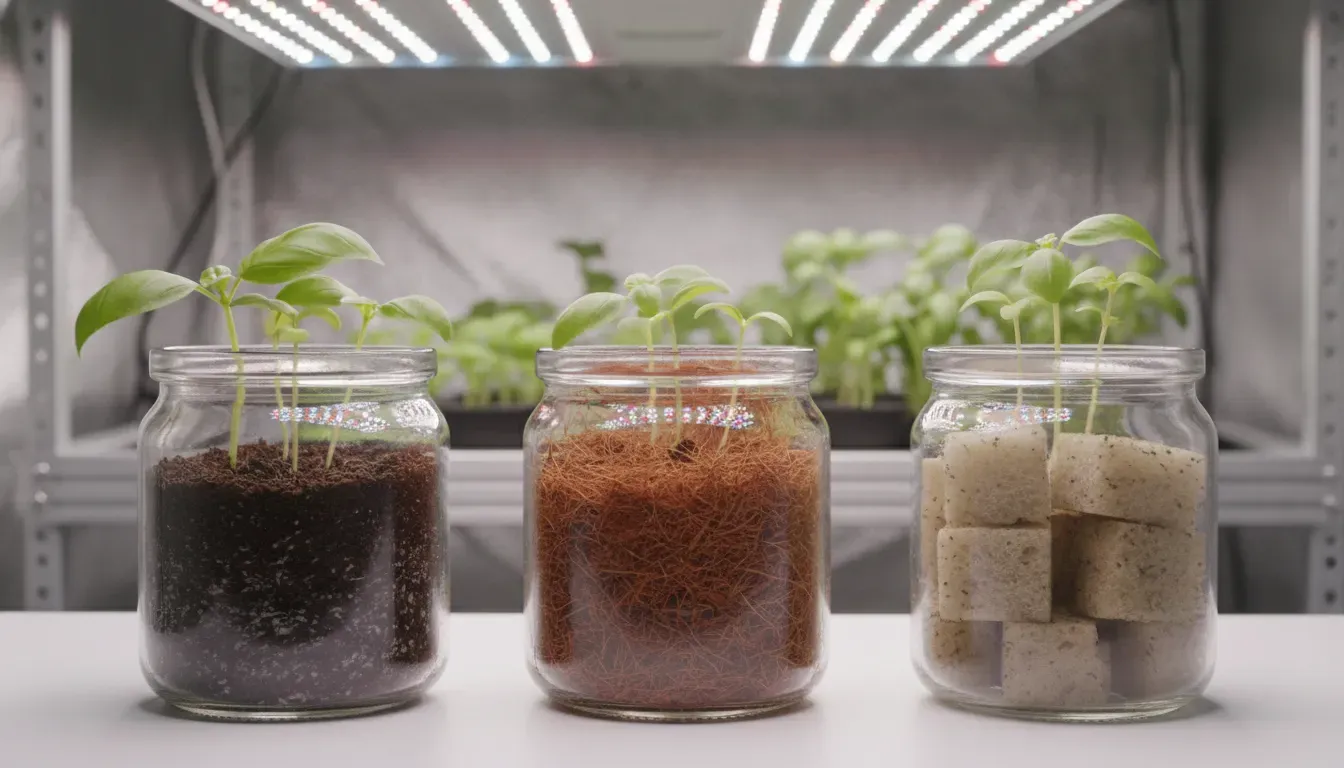
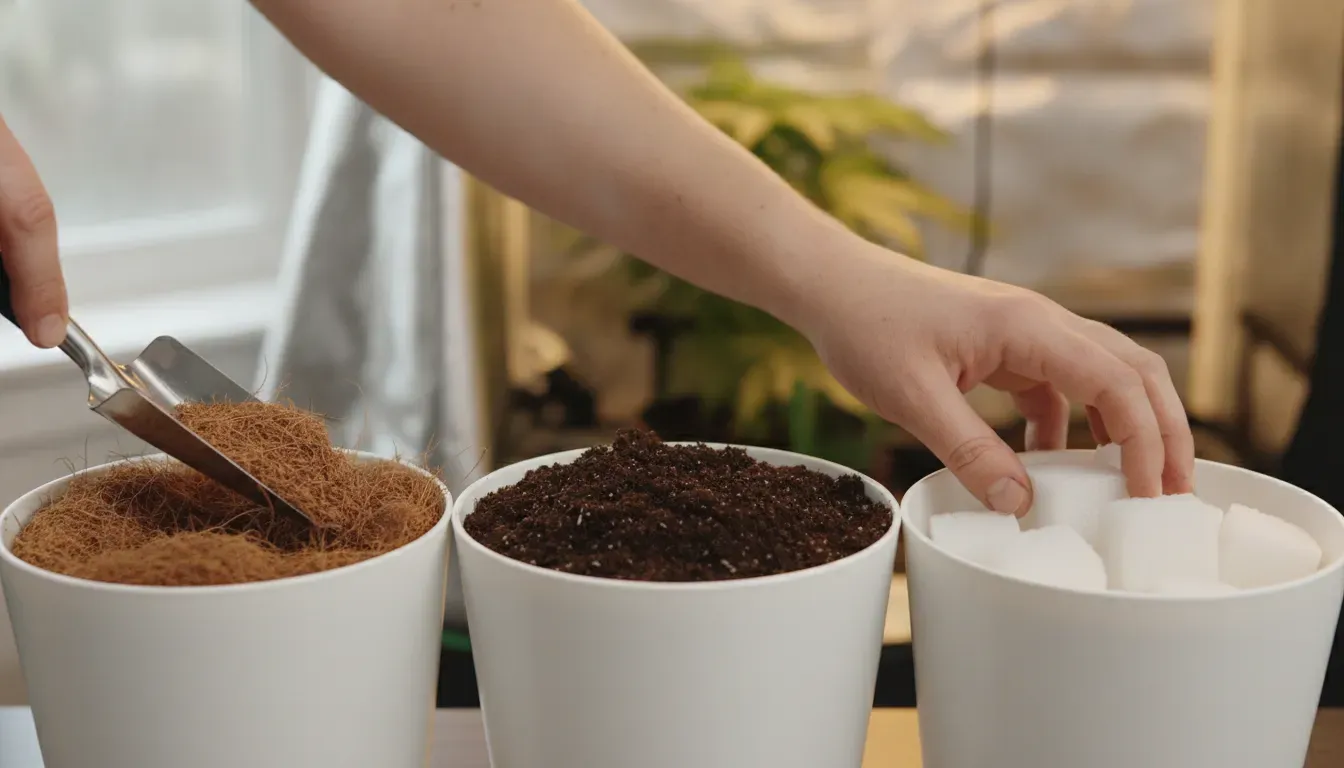
For a wider look at how common media differ, compare soil, coco coir, and rockwool in GroIndoor's growing-media guide. That comparison helps place Hydroton alongside other media choices without treating one material as universally best.
Hydroton does not act like a water reservoir in the same way as vermiculite. Instead, it supports a system that supplies moisture and nutrients through irrigation or a reservoir. The spaces between pellets help roots receive oxygen when the system is designed and timed correctly. If the water level remains too high, the open medium alone will not prevent saturation.
Hydroton in flood-and-drain and drip systems
In a flood-and-drain system, nutrient solution periodically rises through the medium and then recedes. The receding water leaves air space between irrigation events. In a drip system, solution enters from above and drains through the pellets. In both cases, the medium works with the irrigation design rather than replacing it.
Hydroton is also used in aquaponic systems. Its durable surface can provide places for beneficial microorganisms to colonize, although biological performance depends on the entire system. Keep light out of the reservoir and exposed nutrient solution because medium choice alone does not prevent algae.
How to prepare Hydroton for use
- Rinse the pellets: Remove loose dust and fines before placing them around roots or in a system.
- Inspect the container: Confirm that baskets, drains, and reservoir levels support the intended water movement.
- Place the plant securely: Use enough pellets to hold the stem and root mass without crushing the roots.
- Monitor the first irrigations: Check drainage, water level, root moisture, and plant stability before settling into a routine.
- Clean between cycles: Remove old roots and sanitize the reusable pellets using a method appropriate for the system.
For readers new to system design, GroIndoor's hydroponic growing system guide provides broader context before you choose a root-support medium.
How Do Perlite Vermiculite Hydroton Compare?
The clearest comparison is based on the job each medium performs. Perlite is the drainage and aeration choice. Vermiculite is the moisture and nutrient-holding choice. Hydroton is the structural choice for open, recirculating, or otherwise soilless systems. The right answer depends on the plant and the way water reaches the roots.
| Medium. | Main role. | Water behavior. | Best fit. | Important caution. |
|---|---|---|---|---|
| Perlite. | Adds air space and drainage. | Holds less moisture than finer media. | Container mixes that stay wet or compacted. | Can dry a mix too quickly if overused. |
| Vermiculite. | Holds moisture and some nutrients. | Retains water for longer. | Seed starting and mixes that dry too fast. | Can reduce aeration when the mix stays saturated. |
| Hydroton. | Supports roots with an open structure. | Lets solution drain through the root zone. | Hydroponic, aquaponic, drip, and flood-and-drain systems. | Requires correct irrigation and water-level management. |
Can you combine perlite, vermiculite, and Hydroton?
Perlite and vermiculite can be combined in a container mix when the goal is to balance air space with moisture retention. Hydroton is usually selected for a different system design, where coarse pellets support roots and irrigation provides the nutrient solution. It can sometimes be used alongside other components, but combining materials should serve a clear structural or water-management purpose.
Think in terms of root-zone outcomes. If the mix stays wet, add structure that increases air space. If it dries too quickly, add a measured amount of moisture-holding material. If the system uses a reservoir or timed irrigation, choose a medium that supports water movement and root stability. Change one component at a time so the result is easy to evaluate.
Compare reusable hydroponic growing media at GroIndoor
How Do You Choose the Right Growing Medium?
Use the following decision process before filling a container or system. It keeps the choice tied to measurable conditions instead of a generic recommendation.
- Start with the plant's moisture needs. Determine whether the plant and your routine favor faster drainage or longer moisture availability. A plant that dries quickly may benefit from a moisture-holding component, while a plant in a slow-draining container may need more coarse structure.
- Match the medium to the watering method. Hand watering, drip irrigation, flood-and-drain, and reservoir systems deliver water differently. Perlite and vermiculite change a container mix. Hydroton supports a system built around frequent movement of water and air.
- Check root-zone oxygen. Watch for a container that remains heavy and wet, slow drainage, or a root zone that dries before the next planned irrigation. These observations are more useful than choosing by material name alone.
- Account for pH and nutrients. Inert media do not replace a complete nutrient program. Track irrigation water and nutrient solution according to the needs of the plant and system. Material properties can influence management, but they are only one part of root-zone chemistry.
- Plan for cleanup and reuse. Hydroton is durable and reusable when cleaned appropriately. Perlite may be reused after sanitation. Vermiculite is more fragile, so assess its condition and intended use before carrying it into another cycle.
- Make a small adjustment first. Change a measured portion of the mix or alter the irrigation schedule, then observe drainage and moisture over time. Small tests reduce the risk of correcting one problem by creating another.
As a quick rule, use perlite for more air and drainage. Vermiculite for more moisture and nutrient holding, and Hydroton for durable root support in hydroponic or aquaponic systems. The best choice is the one that creates the root-zone conditions your plant and irrigation method can consistently maintain.
Find the right growing supplies at GroIndoor
Frequently Asked Questions
Is it okay to use perlite and vermiculite together?
Yes. Combining perlite and vermiculite can balance air space with moisture retention in a container mix. Perlite supports drainage and aeration, while vermiculite holds more water. Adjust the blend to the plant, container, and irrigation pattern, then monitor how quickly the mix dries.
Does vermiculite do the same thing as perlite?
No. Perlite primarily improves air space and drainage. Vermiculite primarily holds moisture and some nutrients. Perlite is more useful when a mix stays wet or compacted, while vermiculite is more useful when a mix dries too quickly or needs more consistent moisture.
Is Hydroton good for hydroponic systems?
Hydroton is a common choice for hydroponic systems because its expanded clay pellets support roots while allowing water and air to move through the root zone. It works best with an irrigation and reservoir design that manages moisture, oxygen, and nutrient delivery together.
Should Hydroton be reused?
Hydroton can be reused when the pellets remain intact and are cleaned and sanitized appropriately between growing cycles. Remove old roots and inspect the material before reuse. Do not carry unresolved root-zone problems into a new system simply because the medium is durable.
Find growing media and hydroponic supplies at GroIndoor
How Perlite Vermiculite Hydroton Helps You Choose a Medium
The phrase perlite vermiculite hydroton describes three widely used growing media. They do not perform the same job.
Shop hydroponic growing supplies at GroIndoor
Perlite opens a mix for more air and drainage. Vermiculite holds moisture and nutrients. Hydroton, also called expanded clay pebbles, provides a durable structure for roots in hydroponic and aquaponic systems. Choose among them by matching the material to the plant, container, irrigation pattern, and root-zone conditions.
This guide explains what each medium does, where it fits, and how to combine the right properties without relying on a one-size-fits-all recipe. It also covers particle size, pH, reuse, sanitation, and the practical signs that a growing medium is holding too much or too little water.
What Do Perlite, Vermiculite, and Hydroton Do?
A growing medium has four important jobs: it helps supply roots with water, oxygen, nutrients, and physical support. The balance between those jobs changes with particle size and material structure. Fine particles create smaller pores that hold water. Coarse particles create larger spaces that allow air and excess water to move through the root zone.
Perlite, vermiculite, and Hydroton therefore solve different problems. Perlite is primarily an aeration and drainage component. Vermiculite is primarily a moisture and nutrient-holding component. Hydroton is primarily a structural component for systems that deliver water and nutrients separately from the medium.
The University of California Agriculture and Natural Resources explains that soil-mix components differ in water retention, air space, drainage, and physical behavior. That framework is useful for evaluating soilless media as well as traditional container mixes.
Review the University of California guide to common soil-mix components for additional background on how particle size affects a root zone.
Perlite adds air space
Perlite is a lightweight material made from expanded volcanic glass. Its coarse, irregular particles create larger air spaces in a container mix. That structure helps excess water drain away and can reduce compaction as the mix settles. Perlite is often useful when a container stays wet for too long or when roots need more oxygen between irrigations.
Perlite does not supply a complete nutrient program. It also does not hold as much water as finer materials. Treat it as a structural amendment that changes how a mix handles water, rather than as a complete growing medium by itself.
Vermiculite holds moisture
Vermiculite is a layered mineral that can hold water and retain some nutrients. Its finer structure generally creates smaller pores than perlite, so it keeps moisture available for longer. That quality can help with seed starting or with container mixes that dry too quickly.
Vermiculite is not a substitute for drainage. A mix that already stays wet may become harder to manage if too much moisture-holding material is added. Use it to address a specific drying problem, then observe the root zone rather than following a fixed ratio.
Hydroton supports roots in soilless systems
Hydroton is expanded clay formed into lightweight, porous pellets. The pellets create an open framework that supports the plant while allowing water and air to move around the roots. Hydroton is especially suited to hydroponic and aquaponic systems, where nutrient solution and irrigation design provide much of what a traditional soil mix would otherwise supply.
The pellets are durable and can be reused when they are cleaned and sanitized appropriately. Their performance still depends on the system. A well-draining medium cannot compensate for a water level, irrigation schedule, or reservoir design that keeps roots constantly saturated.
When Is Perlite the Right Choice?
Choose perlite when a container mix needs more air space, faster drainage, or better resistance to compaction. It is a strong fit for a dense mix that remains wet after watering. Especially when the plant and container would benefit from a quicker return of oxygen to the root zone.
Perlite can also help maintain structure as a mix settles. Because the particles are lightweight and coarse, they preserve channels for air and water. The tradeoff is that a high proportion can make a container dry faster than expected. Match the amount to the container size, plant, ventilation, temperature, and irrigation routine.
Benefits of perlite
- More aeration: Coarse particles create larger spaces for air around the roots.
- Faster drainage: Open structure helps excess water move out of the container.
- Lower weight: Perlite can add structure without making a container as heavy as dense mineral media.
- Stable structure: It resists the rapid breakdown and compaction associated with some organic components.
- Neutral starting point: Perlite is commonly treated as a relatively inert, neutral component, so the nutrient program can be managed separately.
When perlite is a poor fit
Perlite may not be the best answer when the root zone is already drying too quickly or when the watering routine cannot keep up with rapid drainage. It can also be awkward in very small containers if the particles float or shift during watering. Wetting the material before mixing reduces dust, and handling it gently helps preserve the intended particle distribution.
If you reuse perlite, remove old roots and clean it thoroughly. Do not reuse material from a problem root zone without a sanitation plan. The goal is not simply to add more drainage. The goal is to create a repeatable balance between water and oxygen.
When Is Vermiculite the Right Choice?
Vermiculite is a useful choice when a container mix loses moisture too quickly or when seeds need a more consistently moist environment. Its layered structure absorbs water and can retain some nutrients, giving roots or developing seedlings more time between irrigations.
That same quality requires restraint. A moisture-holding amendment can reduce the air available to roots if the mix is already fine, the container drains slowly, or watering is too frequent. Vermiculite works best when it addresses a known moisture problem within a mix that still has enough coarse structure for air exchange.
Vermiculite for seed starting
Vermiculite can help cover seeds or support a seed-starting mix because it holds moisture around developing roots. New material is also generally clean and lightweight. Keep it evenly moist rather than saturated, and use containers with drainage openings so excess water can leave the root zone.
As seedlings develop, reassess the medium. A seed-starting environment may need more moisture retention than an established plant in a larger container. The best material choice can change as the root system and irrigation routine change.
Vermiculite versus perlite
Perlite and vermiculite are often compared because they are both lightweight mineral amendments. Their functions point in opposite directions. Perlite increases air space and drainage. Vermiculite increases moisture retention and can hold some nutrients. If a mix dries too fast, vermiculite may help. If it stays wet or compacted, perlite may be more appropriate.
Combining them can create a middle ground, but there is no universal ratio that fits every plant. Start with a small adjustment, monitor how quickly the container dries, and change one variable at a time. This approach makes it easier to identify whether the material or the irrigation schedule is causing the problem.
How Does Hydroton Work in Hydroponic Systems?
Hydroton provides a coarse, reusable framework for roots. Expanded clay pellets leave open spaces between one another, allowing nutrient solution and air to move through the container. The pellets also hold plants upright in baskets, beds, and other hydroponic setups.
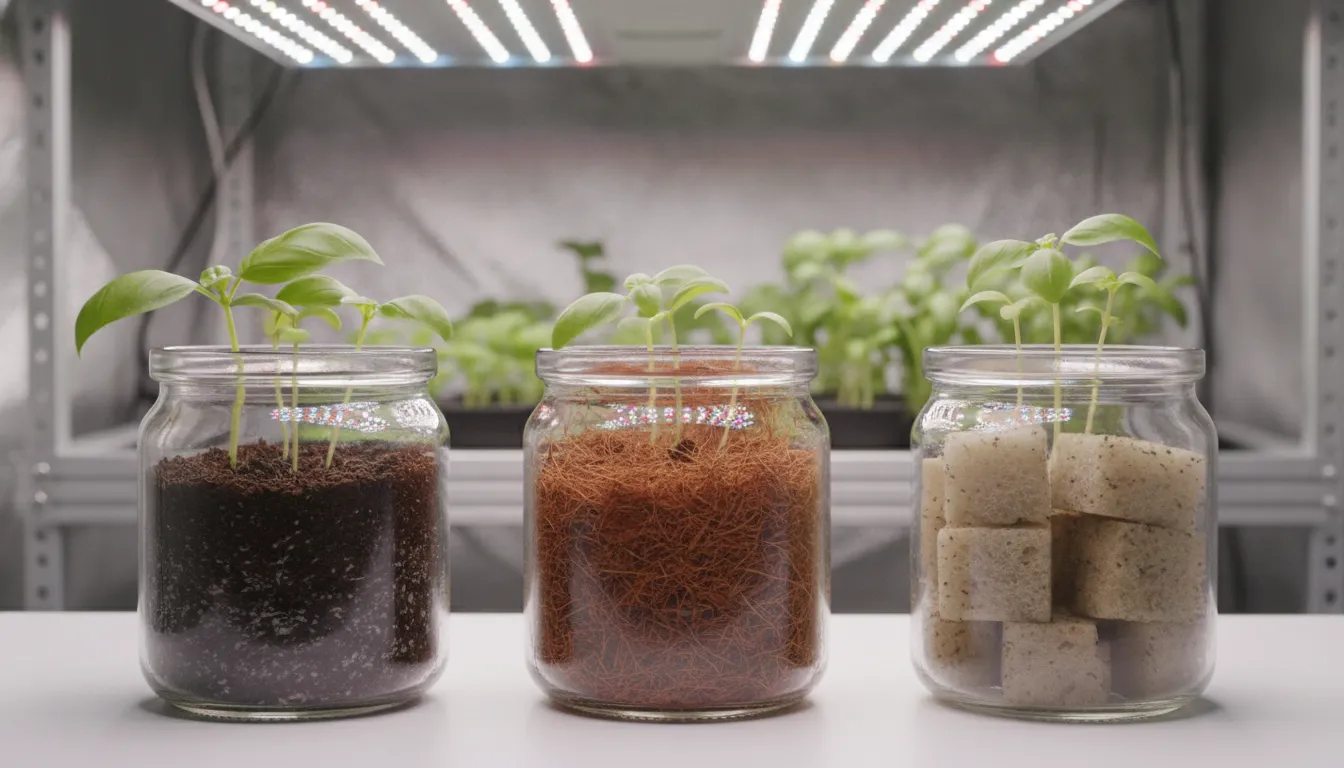
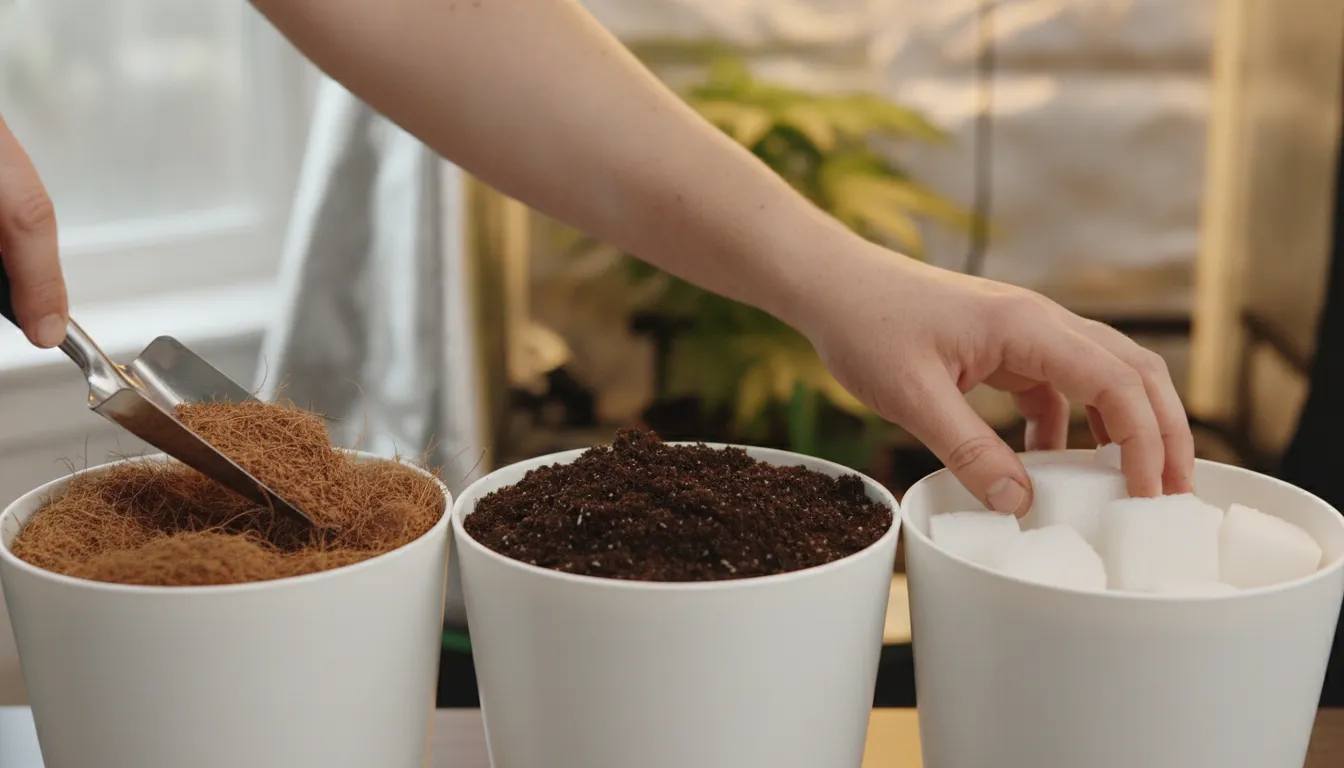
For a wider look at how common media differ, compare soil, coco coir, and rockwool in GroIndoor's growing-media guide. That comparison helps place Hydroton alongside other media choices without treating one material as universally best.
Hydroton does not act like a water reservoir in the same way as vermiculite. Instead, it supports a system that supplies moisture and nutrients through irrigation or a reservoir. The spaces between pellets help roots receive oxygen when the system is designed and timed correctly. If the water level remains too high, the open medium alone will not prevent saturation.
Hydroton in flood-and-drain and drip systems
In a flood-and-drain system, nutrient solution periodically rises through the medium and then recedes. The receding water leaves air space between irrigation events. In a drip system, solution enters from above and drains through the pellets. In both cases, the medium works with the irrigation design rather than replacing it.
Hydroton is also used in aquaponic systems. Its durable surface can provide places for beneficial microorganisms to colonize, although biological performance depends on the entire system. Keep light out of the reservoir and exposed nutrient solution because medium choice alone does not prevent algae.
How to prepare Hydroton for use
- Rinse the pellets: Remove loose dust and fines before placing them around roots or in a system.
- Inspect the container: Confirm that baskets, drains, and reservoir levels support the intended water movement.
- Place the plant securely: Use enough pellets to hold the stem and root mass without crushing the roots.
- Monitor the first irrigations: Check drainage, water level, root moisture, and plant stability before settling into a routine.
- Clean between cycles: Remove old roots and sanitize the reusable pellets using a method appropriate for the system.
For readers new to system design, GroIndoor's hydroponic growing system guide provides broader context before you choose a root-support medium.
How Do Perlite Vermiculite Hydroton Compare?
The clearest comparison is based on the job each medium performs. Perlite is the drainage and aeration choice. Vermiculite is the moisture and nutrient-holding choice. Hydroton is the structural choice for open, recirculating, or otherwise soilless systems. The right answer depends on the plant and the way water reaches the roots.
| Medium. | Main role. | Water behavior. | Best fit. | Important caution. |
|---|---|---|---|---|
| Perlite. | Adds air space and drainage. | Holds less moisture than finer media. | Container mixes that stay wet or compacted. | Can dry a mix too quickly if overused. |
| Vermiculite. | Holds moisture and some nutrients. | Retains water for longer. | Seed starting and mixes that dry too fast. | Can reduce aeration when the mix stays saturated. |
| Hydroton. | Supports roots with an open structure. | Lets solution drain through the root zone. | Hydroponic, aquaponic, drip, and flood-and-drain systems. | Requires correct irrigation and water-level management. |
Can you combine perlite, vermiculite, and Hydroton?
Perlite and vermiculite can be combined in a container mix when the goal is to balance air space with moisture retention. Hydroton is usually selected for a different system design, where coarse pellets support roots and irrigation provides the nutrient solution. It can sometimes be used alongside other components, but combining materials should serve a clear structural or water-management purpose.
Think in terms of root-zone outcomes. If the mix stays wet, add structure that increases air space. If it dries too quickly, add a measured amount of moisture-holding material. If the system uses a reservoir or timed irrigation, choose a medium that supports water movement and root stability. Change one component at a time so the result is easy to evaluate.
Compare reusable hydroponic growing media at GroIndoor
How Do You Choose the Right Growing Medium?
Use the following decision process before filling a container or system. It keeps the choice tied to measurable conditions instead of a generic recommendation.
- Start with the plant's moisture needs. Determine whether the plant and your routine favor faster drainage or longer moisture availability. A plant that dries quickly may benefit from a moisture-holding component, while a plant in a slow-draining container may need more coarse structure.
- Match the medium to the watering method. Hand watering, drip irrigation, flood-and-drain, and reservoir systems deliver water differently. Perlite and vermiculite change a container mix. Hydroton supports a system built around frequent movement of water and air.
- Check root-zone oxygen. Watch for a container that remains heavy and wet, slow drainage, or a root zone that dries before the next planned irrigation. These observations are more useful than choosing by material name alone.
- Account for pH and nutrients. Inert media do not replace a complete nutrient program. Track irrigation water and nutrient solution according to the needs of the plant and system. Material properties can influence management, but they are only one part of root-zone chemistry.
- Plan for cleanup and reuse. Hydroton is durable and reusable when cleaned appropriately. Perlite may be reused after sanitation. Vermiculite is more fragile, so assess its condition and intended use before carrying it into another cycle.
- Make a small adjustment first. Change a measured portion of the mix or alter the irrigation schedule, then observe drainage and moisture over time. Small tests reduce the risk of correcting one problem by creating another.
As a quick rule, use perlite for more air and drainage. Vermiculite for more moisture and nutrient holding, and Hydroton for durable root support in hydroponic or aquaponic systems. The best choice is the one that creates the root-zone conditions your plant and irrigation method can consistently maintain.
Find the right growing supplies at GroIndoor
Frequently Asked Questions
Is it okay to use perlite and vermiculite together?
Yes. Combining perlite and vermiculite can balance air space with moisture retention in a container mix. Perlite supports drainage and aeration, while vermiculite holds more water. Adjust the blend to the plant, container, and irrigation pattern, then monitor how quickly the mix dries.
Does vermiculite do the same thing as perlite?
No. Perlite primarily improves air space and drainage. Vermiculite primarily holds moisture and some nutrients. Perlite is more useful when a mix stays wet or compacted, while vermiculite is more useful when a mix dries too quickly or needs more consistent moisture.
Is Hydroton good for hydroponic systems?
Hydroton is a common choice for hydroponic systems because its expanded clay pellets support roots while allowing water and air to move through the root zone. It works best with an irrigation and reservoir design that manages moisture, oxygen, and nutrient delivery together.
Should Hydroton be reused?
Hydroton can be reused when the pellets remain intact and are cleaned and sanitized appropriately between growing cycles. Remove old roots and inspect the material before reuse. Do not carry unresolved root-zone problems into a new system simply because the medium is durable.
Tags: