


A hydroponic system is a way to grow plants without soil by delivering water and dissolved nutrients directly to the root zone. For beginners, the best first setup is not necessarily the most advanced option. It is the system that fits your available space, crop choice, maintenance routine, and comfort with monitoring water and nutrients.
Explore GroIndoor hydroponic systems and supplies
This guide compares the most common system types, explains what each one needs, and gives you a practical way to choose your first setup without buying equipment you do not need. It also covers the supporting equipment that turns a container, water, and plants into a dependable indoor garden.
For many first-time growers, deep water culture (DWC) is the simplest hydroponic system to learn. DWC uses a reservoir, net pots, growing media, and an air pump or air stone to keep roots supplied with oxygen. Drip, ebb and flow, NFT, and aeroponic systems can be better fits when you want specific crop support, more automation, or a larger growing area.
What should beginners know before choosing a hydroponic system?
A beginner hydroponic system must provide five essentials: water, nutrients, light, oxygen, and physical support for the plant. The system design determines how those essentials reach the roots, how often you must check them, and how quickly a small mistake can affect the crop.
- Water: The reservoir or channel must hold enough solution for the crop and allow you to check the level.
- Nutrients: Plants need a complete hydroponic nutrient solution rather than plain water alone.
- Light: Indoor plants need sufficient natural or artificial light for photosynthesis.
- Oxygen: Roots need oxygen in the root zone, especially when they remain in or near water.
- Support: Net pots, trellises, and an inert growing medium keep stems and roots positioned correctly.
Hydroponics can be used indoors or outdoors, and it can support leafy greens, herbs, tomatoes, cucumbers, peppers, and other crops. University of New Hampshire Extension explains that home systems range from simple containers to recirculating channels, while the University of Minnesota Extension identifies herbs and leafy greens as practical crops for small indoor systems.
Before comparing system types, write down four decisions: what you want to grow, how much room you have, how often you can check the system, and how much equipment you want to manage. Those answers matter more than a product label or a long feature list.
Which hydroponic system is easiest for a first setup?
Deep water culture is usually the easiest first hydroponic system because its parts are easy to understand and the root zone is accessible. Plants sit in net pots above a reservoir, with roots extending into the nutrient solution. An air pump and air stone add oxygen to the water, and the grower checks solution level, pH, nutrient strength, and plant response.
DWC is a strong fit for lettuce, basil, other herbs, and compact leafy crops. A single-reservoir design keeps the learning curve manageable. You can see the water level, inspect the roots when needed, and replace or adjust the solution without tracing several lines or valves.
The main tradeoff is that the reservoir cannot be ignored. If the water level drops too far, roots can dry out. If the air pump stops, oxygen availability can fall. Warm, stagnant water can also create root-health problems. A simple system is not a system that requires no care.
Small-scale DWC can be built around a clean, food-safe container, net pots, an appropriate medium, an air pump, tubing, an air stone, nutrients, and a light. A ready-made kit may reduce assembly work, while a modular setup gives you more control over component selection. Either route can work if the container is sized for the mature plant and leaves room for maintenance.
How do DWC, ebb and flow, drip, NFT, and aeroponics compare?
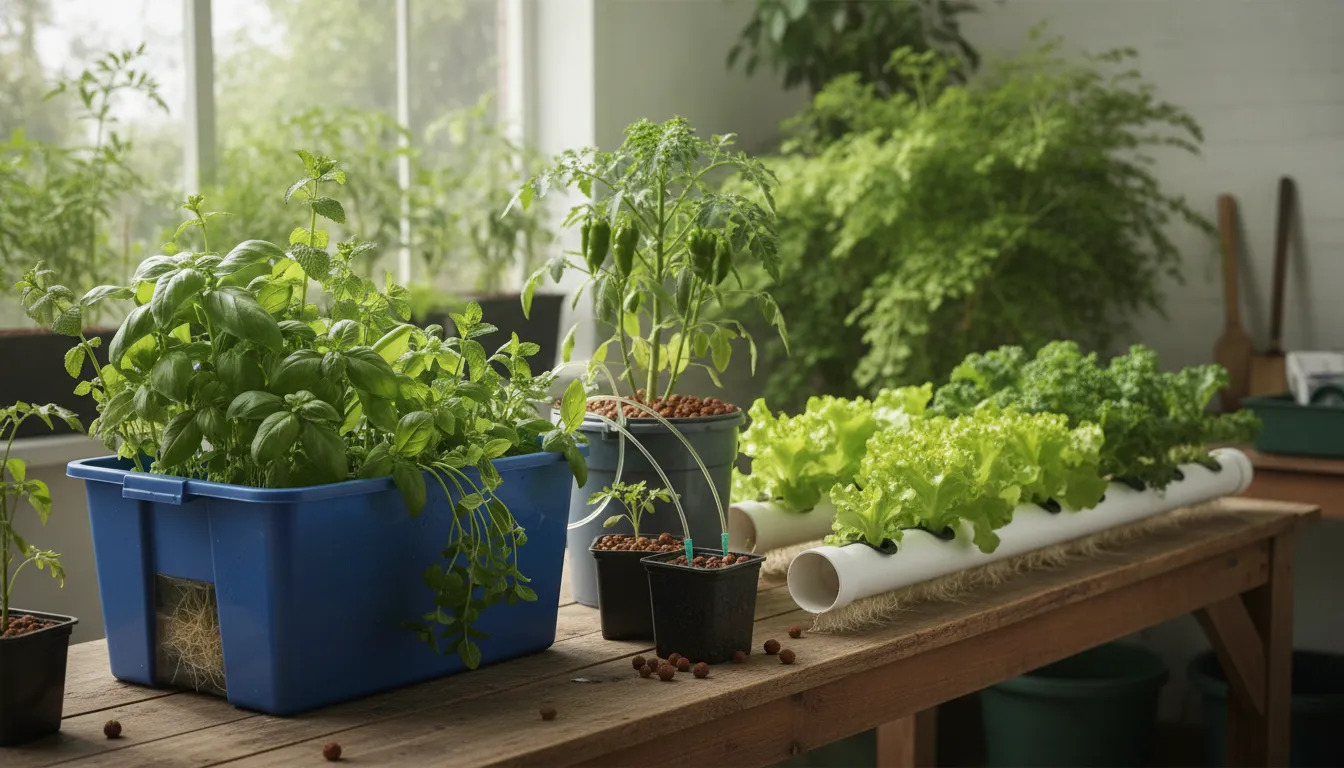
Each hydroponic method solves the same basic problem, giving plant roots water, nutrients, and oxygen without soil. The difference is how the nutrient solution moves. Use the comparison below to narrow your choices, then confirm that the system matches your crop and available time.
| System | How it works | Beginner strengths | Main tradeoff |
|---|---|---|---|
| DWC | Roots sit in an aerated nutrient reservoir. | Simple layout, accessible roots, easy to observe. | Needs reliable aeration and water-level checks. |
| Ebb and flow | A pump periodically floods a tray, then drains it back to a reservoir. | Good oxygen exchange and flexible container layout. | More parts to time, route, and clean. |
| Drip | Emitters deliver nutrient solution to each plant or growing medium. | Works with many crops and allows targeted watering. | Lines and emitters can clog or require balancing. |
| NFT | A thin stream of solution flows through a sloped channel past the roots. | Efficient for herbs and leafy greens in a planned layout. | Flow interruptions can affect exposed roots quickly. |
| Aeroponics | Roots hang in an enclosed space and receive a fine nutrient mist. | High oxygen exposure and precise root-zone delivery. | More sensitive to pump, nozzle, and power problems. |
Oklahoma State University Extension groups hydroponic systems into liquid and aggregate approaches. That distinction helps explain why DWC and NFT feel different from drip and ebb and flow. In a liquid system, the solution directly surrounds or passes the roots. In an aggregate system, an inert medium supports the roots while the solution is delivered around it.
Shop hydroponic equipment for your planned system
Deep water culture: the straightforward starting point
Choose DWC when you want a low-complexity introduction and plan to grow compact plants. It is especially useful for learning how nutrient strength, pH, water level, and oxygen affect plant response. Start with one reservoir or a small number of sites so you can identify cause and effect.
Ebb and flow: flexible, but more mechanical
Ebb and flow, also called flood and drain, uses a pump and timer to move solution into a tray and then return it to the reservoir. The periodic flooding wets the growing medium, and the draining interval allows air into the root zone. It can support multiple containers and larger plants, but the pump, drain, timer, and tray need to work together.
Drip systems: useful for individual plant control
Drip systems send solution through tubing and emitters to individual plants. This makes them adaptable to different container sizes and growing media. They also require attention to flow, because a blocked or uneven emitter can leave one plant drier than the others. A filter and regular line checks can make maintenance more predictable.
NFT: efficient for leafy crops
Nutrient film technique uses a shallow, continuous or scheduled flow through a channel. It can make good use of horizontal or vertical space for lettuce and herbs. Because roots may be exposed to air between the solution and the channel, a failed pump or blocked channel can become important quickly. Use NFT when you can monitor flow consistently and keep the channel level.
Aeroponics: advanced root-zone delivery
Aeroponic systems suspend roots and spray them with nutrient solution. The design can provide high oxygen availability, but it depends on reliable pressure, clean nozzles, and consistent timing. It is usually better as a later step for a grower who already understands nutrient management and can respond quickly to interruptions.
What does a beginner hydroponic system need?
A first setup needs more than a reservoir. Build a component list around the system type, then buy only the parts that serve that design. This approach keeps the initial investment controlled and makes troubleshooting easier.
- Container or reservoir: Select a clean, light-resistant container sized for mature plants. Avoid materials that can leach unwanted substances into the solution.
- Net pots or plant sites: Match the opening and pot size to the plant and container lid.
- Growing medium: Choose an inert medium that anchors the plant and manages air and moisture. Options can include clay pebbles, rockwool, coco coir, or other hydroponic media suited to the system.
- Hydroponic nutrients: Use a complete product according to its label directions. Do not assume that adding more nutrient will correct a weak-looking plant.
- Air pump and air stone: These are central to DWC and can help maintain oxygen in a reservoir.
- Water pump, tubing, and fittings: Ebb and flow, drip, NFT, and aeroponic designs use different flow requirements. GroIndoor's water pump collection is a useful place to compare available pump types.
- Light: An indoor setup needs an appropriate light source, mounting height, and coverage area. Browse LED grow lights when natural light is not sufficient.
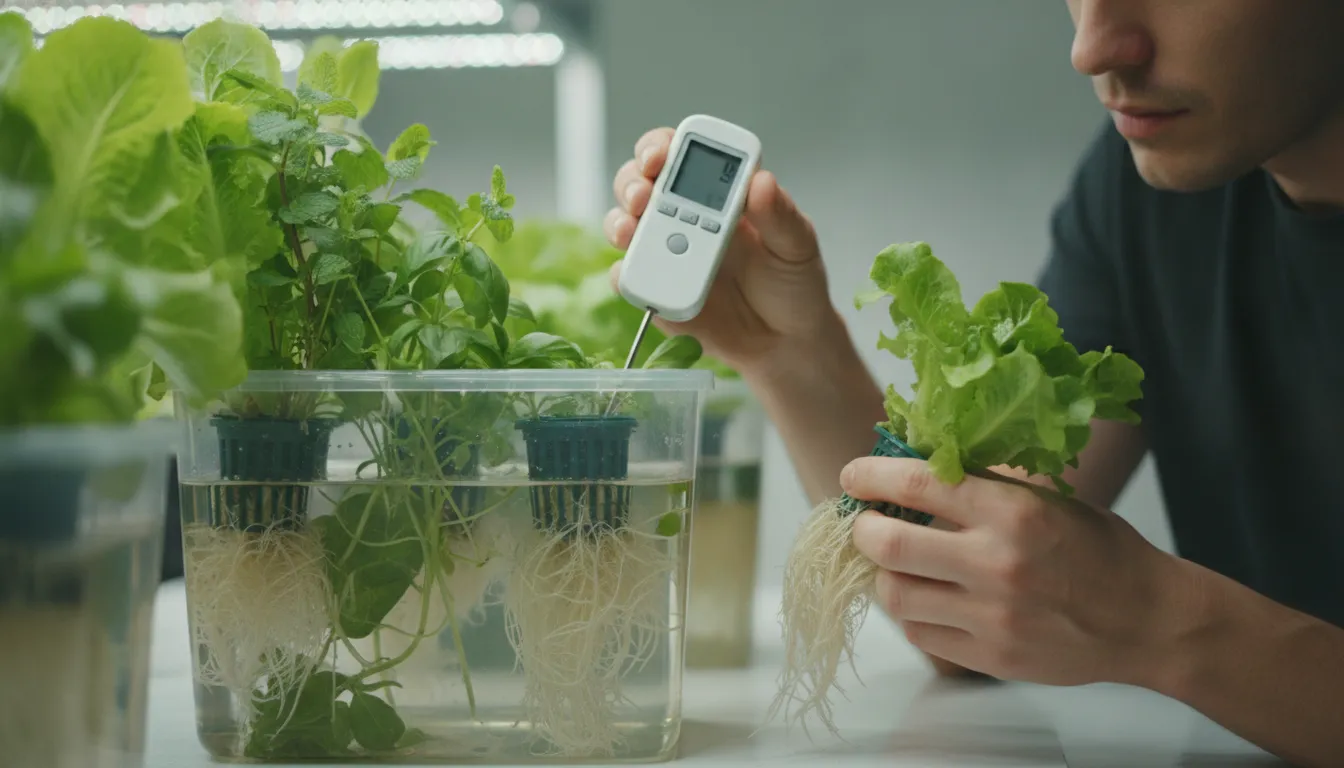
- pH and EC meters: These readings help you understand acidity and nutrient concentration. They are more useful when you measure consistently and record the result.
- Cleaning supplies: Keep the reservoir, tubing, pump, and work area clean between solution changes and growing cycles.
Growing media support the plant but do not replace nutrients. GroIndoor's hydroponic grow media collection can help you compare media options before you choose a system. For a simple first run, avoid combining several unfamiliar components that make it difficult to identify what changed.
How should beginners budget for a hydroponic setup?
Think of hydroponic cost in three layers: the core system, the environment around it, and the tools that make monitoring easier. A small DWC setup usually has fewer components than an aeroponic or multi-channel system. However, the cost of a dependable light, meter, pump, reservoir, and nutrient supply can matter more than the system label.
- Simple starting setup: One small DWC reservoir, a few plant sites, basic aeration, suitable media, nutrients, and a light. This is the best fit when you want to learn the fundamentals.
- Flexible intermediate setup: A larger DWC or drip arrangement with better access, stronger environmental control, and additional monitoring tools. This supports more plants but adds maintenance.
- Advanced or expanded setup: Multiple channels, flood tables, automation, stronger pumps, or aeroponic components. This can improve capacity or control, but each added component creates another point to inspect.
Do not budget only for the first purchase. Reserve time and supplies for nutrient solution changes, replacement tubing, cleaning, meter calibration, and light or pump adjustments. If the system will sit in a living area, also consider noise, spills, splash protection, and access to a grounded power source.
For many beginners, the best value is a system that can be observed easily rather than one with the most automation. A transparent or accessible reservoir, labeled tubing, and a simple maintenance log can teach more than a complicated controller that you do not yet understand.
Which crops are best for a beginner hydroponic system?
Leafy greens and herbs are often the most forgiving starting crops because they grow compactly, mature relatively quickly, and place fewer demands on structural support than large fruiting plants. Lettuce, basil, mint, and similar herbs can work well in DWC, NFT, or small drip systems when light, water, and nutrients are managed consistently.
Tomatoes, cucumbers, and peppers can also be grown hydroponically, but their mature size, root volume, support needs, and water use make them more demanding. If you choose a fruiting crop first, plan the light, trellis, reservoir, airflow, and root support before planting. Do not place a vigorous plant in a container sized only for a seedling.
Match the crop to the system instead of forcing every crop into the same design. A small NFT channel can suit leafy greens, while a supported drip or ebb-and-flow arrangement may be more practical for larger plants. The right match reduces stress on both the grower and the equipment.
How do you maintain a first hydroponic setup?
Hydroponic maintenance is a short routine repeated consistently. Check the water level, inspect the pump or air supply, look for leaks, and observe the leaves and roots. Measure pH and nutrient strength on a schedule appropriate for your system and crop, then record the result before making gradual adjustments.
- Top up the reservoir when the level falls, using the method recommended for the nutrient product and system.
- Check tubing, emitters, air stones, and pump operation for blockages or unusual noise.
- Look for algae, sediment, discoloration, leaks, or salt buildup.
- Keep the light at a suitable distance and make sure the plant canopy receives even coverage.
- Clean components at solution changes and between growing cycles.
- Use separate clean tools for measuring and mixing, and follow product labels for handling.
pH and EC are related but different measurements. pH describes acidity, while EC provides an indication of dissolved nutrient concentration. GroIndoor's pH and EC management guide explains how to use both readings together. For cleaning procedures, see this hydroponic system cleaning guide.
Find hydroponic nutrients and monitoring supplies for your setup
If a plant shows stress, change one variable at a time when possible. A sudden adjustment to light, nutrient concentration, water level, and airflow makes it difficult to learn what helped. Simple records can turn a confusing problem into a repeatable troubleshooting process.
How do you choose the right first hydroponic system?
Choose DWC if you want the simplest learning path and plan to grow compact leafy crops or herbs. Choose drip when individual plant delivery and flexible containers matter most. Choose ebb and flow when you want a tray-based system and can manage a pump and drain cycle. Choose NFT for a planned channel of greens, and choose aeroponics only when you are ready for closer equipment monitoring.
Use this final checklist before you buy or assemble your first setup:
- Confirm the mature crop size and the number of plants.
- Measure the exact floor, shelf, or tent space available.
- Choose one system design rather than mixing several designs at once.
- List the reservoir, support, media, nutrient, light, pump, and monitoring needs.
- Plan how you will access and clean the reservoir.
- Make sure the pump, air supply, and power setup can be checked every day.
- Start with a crop that fits your experience and maintenance time.
- Keep a simple log for water level, pH, EC, adjustments, and observations.
The best first hydroponic system is the one you can understand, reach, clean, and monitor consistently. Start with a manageable design, learn how your plants respond, and expand only after the first routine feels predictable.
Browse GroIndoor's hydroponic collection to plan your first setup
Frequently asked questions
Can a beginner start with DWC?
Yes. DWC is a practical starting point because the reservoir, plant sites, air supply, and root zone are easy to understand. Begin with a small number of plants and monitor water level, pH, nutrient strength, and aeration consistently.
What is the easiest plant to grow hydroponically?
Leafy greens and herbs are often easier first crops than large fruiting plants because they grow compactly and need less structural support. Lettuce and basil are common examples, but the best choice still depends on your light, space, and system.
Do hydroponic systems need a growing medium?
Many systems use an inert growing medium to anchor the plant, even though the medium does not supply the main nutrients. Net pots, rockwool, coco coir, clay pebbles, and similar media can support plants when matched to the system.
How often should a beginner check a hydroponic system?
Check the water level, pump or air supply, leaks, and plant condition regularly. The exact schedule depends on the reservoir, crop, room conditions, and system design. Consistent checks are more useful than relying on a fixed schedule that ignores actual water use.
Is aeroponics a good first hydroponic system?
Aeroponics can be effective, but it usually requires closer attention to pumps, nozzles, timing, and power. A beginner may find DWC, drip, or a simple ebb-and-flow system easier to learn before moving to aeroponics.
Sources: University of Minnesota Extension: Small-scale hydroponics; University of New Hampshire Extension: Hydroponics at Home; Oklahoma State University Extension: Hydroponics.
Tags: