


Staring at rows of nutrient bottles on shelves often leaves new indoor growers feeling overwhelmed by the chemical codes and numbers. Crafting the perfect diet for your soilless garden is one of the most vital steps toward a heavy, high-quality harvest. While traditional soil gardens rely on natural organic matter to feed crops, a hydroponic system places the plant's entire diet in your hands. Using a high-quality hydroponic nutrients formula gives you full control over exactly what your indoor crops consume at every stage of their life.
Browse GroIndoor's extensive inventory of hydroponic nutrients and plant supplements to maximize your harvest.Hydroponic nutrients are water-soluble mineral solutions that deliver essential elements directly to plant roots in soilless environments. The three-digit N-P-K ratio on every nutrient bottle represents the weight percentages of nitrogen, phosphorus, and potassium, which are the primary macronutrients required to support healthy indoor plant development and maximize yields.
Understanding these nutritional foundations is easier than it looks. Many new hobbyists feel intimidated by the science, but once you learn the core roles of each macronutrient, you can unlock faster growth rates and larger yields. To build an elite hydroponic garden, you must start by mastering the basics of plant nutrition.
What Are Hydroponic Nutrients and N-P-K Ratios?
Hydroponic nutrients are specialized fertilizer blends designed to dissolve completely in water, providing plants with immediate access to essential elements without soil. The N-P-K ratio represents the specific concentration of nitrogen, phosphorus, and potassium in the bottle, allowing growers to target specific growth phases and prevent plant deficiencies.
Unlike traditional soil fertilizers, hydroponic nutrients must be highly refined and water-soluble. Soil contains organic microbes that break down complex materials over time, but hydroponic systems require minerals that are immediately bioavailable in ionic form. If you use standard soil fertilizers in a hydroponic reservoir, they will fail to dissolve, clog your pumps, and starve your crops.
The roles of nitrogen, phosphorus, and potassium
Plants require sixteen essential elements to survive, but the three primary macronutrients are nitrogen, phosphorus, and potassium. Each of these elements plays a distinct and irreplaceable role in plant biology:
- Nitrogen (N): This element is the primary engine of vegetative growth. Nitrogen is a core component of chlorophyll, the green pigment that plants use to convert sunlight into energy during photosynthesis. It is also essential for amino acid production and protein synthesis, which build the physical structure of leaves, stems, and shoots.
- Phosphorus (P): Phosphorus is the energy transfer agent within plant cells. It plays a major role in the production of adenosine triphosphate (ATP), which stores and moves energy throughout the plant. It is highly concentrated in young tissue, making it critical for early root development, seed germination, and the formation of heavy blooms or fruits later in the growth cycle.
- Potassium (K): Potassium acts as a regulator for critical plant processes. It controls the opening and closing of stomata, which are the microscopic pores on leaves that manage water vapor and carbon dioxide exchange. Potassium also strengthens cell walls, improves drought resistance, activates key enzymes, and helps move sugars and starches to where they are needed most.
How to read a hydroponic nutrient label
Every commercial fertilizer displays three bold numbers on the front of the bottle, such as 3-1-2 or 0-50-30. These numbers represent the percentage by weight of nitrogen, phosphate, and potash in that order. For example, a 100-ounce bottle of a 3-1-2 formula contains exactly 3 ounces of actual nitrogen, 1 ounce of available phosphate, and 2 ounces of soluble potash, while the remaining volume consists of water, secondary minerals, and chelating agents.
To achieve balanced nutrition, growers often use multi-part liquid nutrient lines. A classic industry standard is the General Hydroponics FloraSeries, which consists of FloraGro (2-1-6), FloraBloom (0-5-4), and FloraMicro (5-0-1). By mixing these three bottles in different ratios, you can customize the N-P-K profile of your water to match your crop's exact requirements without buying dozens of different fertilizers. Another highly concentrated single-part option is Dyna-Gro Foliage-Pro (9-3-6), which provides a stable 3-1-2 ratio perfect for leafy greens, herbs, and vegetative crops.
Understanding these numbers is the first step toward building a precise feeding strategy. For a complete overview of everything you need to get started, browse our complete hydroponics equipment collection.
How Do N-P-K Ratios Change Across Plant Growth Stages?
Plants require shifting N-P-K ratios as they transition from young seedlings into mature, fruiting crops. Seedlings require very mild, diluted formulas; vegetative plants need high-nitrogen blends to support leaf and stem elongation; and blooming plants require high-phosphorus and potassium concentrations to stimulate bud sites and maximize harvest weights.
Feeding your plants the same nutrient ratio throughout their entire life is one of the most common mistakes in indoor gardening. A vegetative plant fed a high-phosphorus bloom formula will suffer from stunted leafy growth, while a flowering crop fed excess nitrogen will produce weak, leafy stems instead of heavy flowers. To maximize efficiency, you must adjust your reservoir mix as your plants mature.
Seedling and clone phase: Gentle, low-strength feeding
During the first two weeks of life, young seedlings and rooted clones have incredibly delicate root systems. They do not require high levels of nutrients because the seed or cutting contains enough initial energy to begin development. Feeding them full-strength nutrients at this stage will scorch their roots and kill the young plant.
For seedlings, growers should use a very mild, diluted nutrient solution. The electrical conductivity (EC) of your water should stay between 0.4 and 0.8, which is roughly one-quarter of the strength used for mature plants. Many growers use a light dose of a micronutrient-rich base like General Hydroponics FloraMicro or a specialized seedling formula to encourage early root branching without overwhelming the young plant.
Vegetative growth: Nitrogen-rich formulations
Once your plants establish a strong root system and begin producing rapid leaf growth, they enter the vegetative stage. This is the phase where the plant builds its physical framework, branching out to create sites for future flowers or fruit. To support this fast cellular division, vegetative plants require an abundance of nitrogen.
The ideal N-P-K ratio during vegetative growth typically follows a 3-1-2 or 2-1-2 pattern. This ensures the plant has enough nitrogen to produce lush, deep-green foliage and sturdy stems. Formulas like Dyna-Gro Foliage-Pro (9-3-6) or Fox Farm Grow Big (6-4-4) are excellent choices for this stage. Maintaining high nitrogen levels ensures your crop builds a massive canopy capable of capturing light efficiently under your LED grow lights.
Flowering and bloom phase: High phosphorus and potassium
When you transition your indoor garden into the flowering or fruiting stage, the plant's metabolic goals change completely. It stops focusing on leaf and stem growth and diverts its energy toward producing buds, flowers, and fruits. During this transition, the demand for nitrogen drops significantly, while the demand for phosphorus and potassium spikes.
To support this high-energy bloom phase, growers switch to fertilizers with low nitrogen and high phosphorus and potassium ratios, such as a 1-3-2 or 0-2-2 profile. High phosphorus levels trigger the formation of flowering sites, while potassium aids in starch transport and cell swelling to density your harvest. Products like Roots Organics Terp Tea Bloom (3-8-3) or a heavy soluble booster like Grow More Hula Bloom (0-50-30) are specifically formulated to push your crops to their absolute limit during the final weeks before harvest.
| Growth Stage | Ideal N-P-K Focus | Target EC Range | Core Purpose | Example Formulations |
|---|---|---|---|---|
| Seedling / Clone | Low & Balanced (1-1-1) | 0.4 to 0.8 | Encourage early root structure and minimize shock | Diluted FloraMicro (5-0-1) |
| Vegetative Growth | High Nitrogen (3-1-2) | 1.2 to 1.6 | Build rapid leaf canopy, thick stems, and robust branches | Dyna-Gro Foliage-Pro (9-3-6) |
| Flowering / Bloom | High P & K (1-3-2) | 1.6 to 2.2 | Stimulate flower site development and maximize fruit weight | Roots Organics Terp Tea Bloom (3-8-3) |
| Late Bloom Booster | Ultra-High P & K (0-5-3) | 1.8 to 2.4 | Swell fruit density and enhance natural terpene profiles | Grow More Hula Bloom (0-50-30) |
What Are the Key Hydroponic Plant Supplements and Additives?
While base N-P-K nutrients provide the essential framework for plant survival, specialized plant supplements optimize specific biological pathways. Key additives like Cal-Mag prevent secondary mineral deficiencies, mycorrhizae enhance root surface area and nutrient uptake, and root stimulants accelerate early root branching for faster overall growth.
Base nutrients are designed to keep your plants alive, but elite growers use supplements to make them thrive. Think of base nutrients as your plant's daily meals, and supplements as targeted vitamins that boost immune function, speed up digestion, and increase athletic performance. Incorporating these additives into your feed schedule can make a massive difference in your final harvest quality.
Cal-Mag (Calcium and Magnesium): Crucial for coco and RO water
Calcium and magnesium are classified as secondary macronutrients, but they are just as vital as N-P-K in a hydroponic environment. Calcium is the structural glue that binds plant cell walls together, ensuring strong stems and preventing blossom-end rot in crops like tomatoes. Magnesium is the central atom in the chlorophyll molecule, making it absolutely essential for light absorption and energy production.
In hydroponics, Cal-Mag deficiencies are incredibly common for two reasons. First, reverse osmosis (RO) filtration removes all natural calcium and magnesium from source water, leaving a completely blank slate. Second, inert media like coco coir have negative electrical charges that naturally bind calcium, locking it away before the plant can absorb it. Adding a high-quality supplement like Botanicare Cal-Mag Plus is a mandatory step to keep your root zone balanced and prevent leaf chlorosis.
Mycorrhizae and beneficial bacteria: The foundation of root health
In a sterile hydroponic system, there are no natural soil microbes to protect roots from pathogens. This leaves your plants vulnerable to devastating diseases like root rot (Pythium). To combat this, growers introduce beneficial microorganisms to colonize the root zone and establish a protective barrier against infection.
Mycorrhizal fungi form a symbiotic relationship with plant roots, physically growing into the root cells and extending microscopic threads (hyphae) far into the surrounding water. This effectively increases the root system's surface area by up to 1,000%, allowing the plant to absorb water and phosphorus much more efficiently. Brands like Great White Mycorrhizae or NPK Industries RAW Solubles provide concentrated blends of beneficial microbes that keep your roots clean, white, and highly efficient.
Root stimulants: Speeding up early root development
The speed of your plant's vegetative growth is directly limited by the size of its root system. A plant cannot build a massive leafy canopy if it does not have the root network required to drink water and take in minerals. Root stimulants are specialized additives formulated with kelp extracts, humic acids, and B-vitamins that stimulate rapid lateral root branching.
Using a root stimulant during the seedling and vegetative stages helps your crops transition faster, reducing the time your lights must run before the flowering phase. This increases energy efficiency and shortens your overall crop cycle. These stimulants also help plants recover from transplant shock, ensuring they never miss a beat when moved to larger systems.

How Can You Avoid Nutrient Burn and Maintain a Healthy Hydroponic Garden?
To avoid nutrient burn, growers must monitor reservoir electrical conductivity and pH levels daily, begin feeding schedules at half-strength, and flush the system weekly. These practices prevent excess fertilizer salts from accumulating in the root zone, ensuring a stress-free environment for healthy growth.
Because hydroponic nutrients are highly concentrated and immediately bioavailable, it is very easy to overfeed your crops. In a soil garden, soil particles buffer the root zone and slow down nutrient uptake, but in a hydroponic system, any mistake in your reservoir is delivered directly to your plants within minutes. Overfeeding leads to a condition known as nutrient burn.
The early signs of nutrient burn include a deep, almost unnaturally dark green color in the leaves, followed by the yellowing and browning of the very tips of the leaves. As the burn progresses, the leaf margins will curl downward, a symptom known as clawing, and the leaf tissue will become dry, crispy, and eventually die. If left unchecked, nutrient burn will destroy your canopy and ruin your yields.
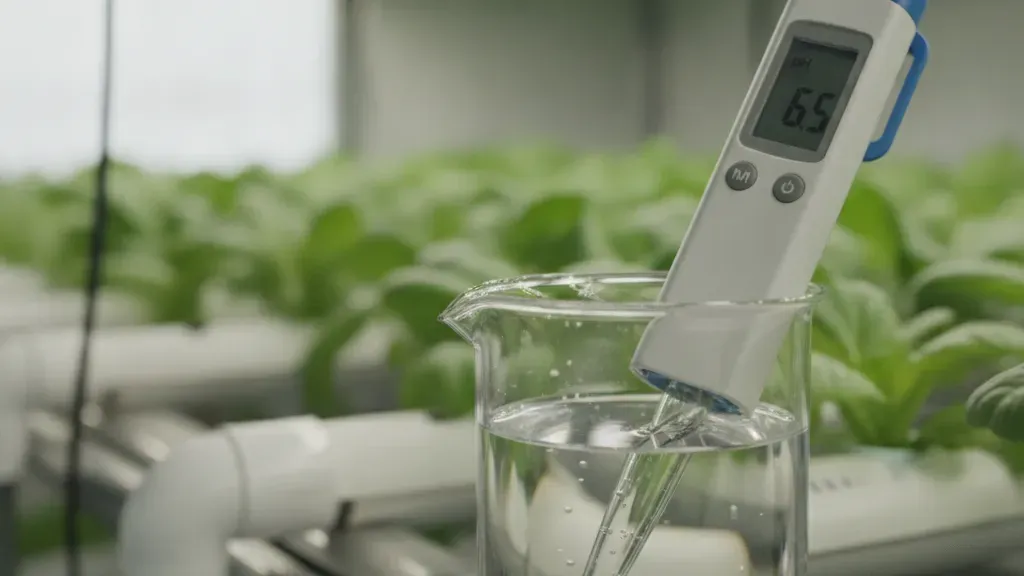
Monitoring your reservoir pH is essential for preventing nutrient lockout and burn. A properly calibrated pH meter like the PHOTOBIO Advanced Quantum PAR Meter helps you maintain the ideal 5.5 to 6.5 range where all minerals remain bioavailable.
Step-by-step checklist to prevent and fix nutrient burn
Maintaining a healthy, burn-free hydroponic garden requires a disciplined routine. If you notice the early signs of overfeeding, follow these five steps immediately to protect your crops:
- Measure EC or PPM Daily: Use a high-quality, calibrated electrical conductivity (EC) pen to monitor the salt concentration of your reservoir water every single day. If the EC rises while the water level drops, your plants are drinking water faster than they are consuming nutrients, indicating that your reservoir mix is too strong.
- Start at Half-Strength: Nutrient manufacturers often print aggressive feeding charts designed to sell more products. Always start new feeding schedules at 50% of the recommended dosage and slowly increase the strength only if your plants show signs of needing more food.
- Maintain Ideal pH Levels: Keep your reservoir pH strictly between 5.5 and 6.5. If the pH drifts outside this range, certain minerals become chemically locked out, while others become overly abundant, which can trigger localized toxicity and mimic nutrient burn symptoms.
- Flush the Reservoir Weekly: Over several days, plants absorb water and minerals at different rates, leading to an imbalance of residual salts in your tank. Drain your reservoir once a week and run clean, pH-balanced water through your system for 24 hours to clear out these salt buildups before mixing a fresh batch of nutrients.
- Dilute the Solution Immediately: If you observe burnt, crispy leaf tips, immediately drain a portion of your reservoir and refill it with fresh, dechlorinated water to lower the overall EC. This dilutes the mineral concentration and allows the root zone to recover from osmotic stress.
 Shop our premium selection of hydroponic nutrients and starter kits to give your indoor crops the perfect diet today.
Frequently Asked Questions
Common questions about hydroponic nutrients cover reading labels correctly, recognizing overfeeding symptoms, supplementing essential minerals, and choosing the right fertilizer type. Each answer below addresses a specific concern that new indoor growers face when building their first nutrient feeding schedule.
How do I read a hydroponic nutrient label?
A hydroponic nutrient label is read as three hyphenated numbers representing the weight percentage of Nitrogen, Phosphorus, and Potassium in that specific formula. For example, a label displaying 3-1-2 contains 3% nitrogen, 1% phosphate, and 2% potash. The remaining percentage consists of water, secondary macronutrients, trace micronutrients, and stabilizers that help keep the minerals dissolved in liquid form.
What are the symptoms of nutrient burn in hydroponics?
The primary symptoms of nutrient burn in hydroponics are yellow or brown crispy leaf tips, leaf margin curling, and downward leaf clawing. This occurs when the mineral concentration in the reservoir is too high, forcing the plant to transpire excess salts to its outer margins. If left untreated, the burn will spread inward across the leaves, causing them to dry up, crumble, and fall off.
Why is Cal-Mag necessary in hydroponic systems?
Cal-Mag is necessary in hydroponics because inert media like coco coir naturally bind calcium, and reverse osmosis water lacks these essential secondary minerals. Adding a Cal-Mag supplement like Botanicare Cal-Mag Plus prevents leaf yellowing, blossom-end rot, and stunted growth. It ensures your plants have a steady supply of calcium for strong cell walls and magnesium for active photosynthesis.
Can I use organic soil nutrients in a hydroponic system?
No, you should not use thick organic soil nutrients in a hydroponic system because they can clog drip lines, create foul odors, and breed harmful reservoir bacteria. Hydroponics requires highly bioavailable, refined, or water-soluble nutrients that remain suspended in water. Organic nutrients designed for soil rely on slow-acting soil microbes to break down, which does not happen fast enough in a soilless reservoir. For a full list of system-compatible products, browse our hydroponics collection.
Choosing the Perfect Nutrition Plan for Your Grow Room
Mastering hydroponic plant nutrition comes down to matching the right N-P-K ratio to each growth stage, incorporating targeted supplements like Cal-Mag and mycorrhizae, maintaining proper pH and EC levels, and preventing nutrient burn through consistent reservoir monitoring. A disciplined feeding schedule directly translates into faster growth, heavier yields, and healthier plants.
Mastering hydroponic plant nutrition is the ultimate milestone that separates novice growers from elite indoor gardeners. By understanding N-P-K ratios, choosing the right additives, and monitoring your reservoir daily, you can provide your crops with the perfect diet to unlock their full genetic potential. Always prioritize root health and remember that when it comes to concentrated minerals, less is often more.
If you are ready to upgrade your garden, GroIndoor is your ultimate partner. We carry one of the largest inventories of premium hydroponic nutrients, supplements, and starter kits to support your indoor garden from seed to harvest. Explore our full hydroponic nutrients collection today and give your plants the exact diet they need to thrive.
Tags: