


Algae rarely appears because of one dramatic mistake. More often, a small leak of light, a damp surface, or leftover nutrients gives it the conditions it needs to establish. Since algae spores and cells are common in growing environments, prevention depends on removing those opportunities rather than waiting for a visible green film.
Browse hydroponic systems and supplies
The most reliable way to learn how to prevent algae in hydroponics is to block light from the reservoir. Keep equipment and surfaces clean, avoid stagnant or excess water, and monitor nutrient solution conditions. Algae needs water, light, and mineral nutrients to grow, so controlling those inputs is the foundation of prevention. UConn Extension explains the environmental conditions that support algae.
Before choosing a treatment, inspect where light, moisture, and nutrients meet in your system. That simple check reveals why algae starts in the first place and points to the most effective correction.
What Causes Algae in Hydroponics?
Algae are simple organisms that can appear wherever water, light, and mineral nutrients meet. Their spores and cells are already common in growing environments, so an algae problem does not necessarily mean your system was started incorrectly. The practical question is whether your setup gives those organisms enough light, moisture, and nutrients to multiply. The University of Connecticut's greenhouse guidance identifies water, light, and mineral nutrients as the basic requirements for algae growth. While also noting that warm temperatures and high humidity can support it.
In a hydroponic system, the most common warning sign is green growth on an exposed reservoir surface. Inside tubing, around a net pot, or on persistently wet growing media. Light is especially important. A reservoir that allows light to reach the nutrient solution creates a better environment for algae. Which is why the University of Washington recommends using a container that excludes light. Check the reservoir lid, seams, tubing, and openings around plant sites rather than looking only at the main container.
Moisture and nutrients can also reach places outside the reservoir. Runoff, puddled water, wet trays, plant debris, and excess humidity create additional surfaces to inspect. Warm conditions that help plants grow may also encourage algae, so prevention depends on managing the whole growing area, not only the solution.
This algae-specific guide focuses on identifying those conditions and preventing recurrence. It is different from a general DWC guide that explains reservoir operation or a nutrient guide that covers feeding fundamentals. If you are choosing equipment, start with a light-blocking hydroponic reservoir, then use the checks in this article to keep light and standing moisture from turning ordinary system conditions into an algae source. Prevention is the grower's first line of defense, according to the University of Connecticut guidance.
University of Washington guidance on eliminating algae and University of Connecticut algae management guidance provide the source material for these conditions.
How to Prevent Algae in Hydroponics by Blocking Light
Light exclusion is one of the most direct ways to reduce algae risk. Algae needs water, light, and mineral nutrients to grow, so a reservoir that is opaque and fully covered removes one of those conditions. The University of Washington recommends using a hydroponic reservoir container that excludes light: learn more about light exclusion for algae prevention.
Inspect every path where light can enter
Start with the reservoir itself. Hold a bright light near the outside of the container and look for thin spots, translucent plastic, cracked lids, or uncovered seams. A dark exterior is useful, but do not assume it is opaque. Check the lid around each net pot, fill port, inspection opening, and air-stone line. A narrow gap can expose the nutrient solution beneath it.
Next, follow the tubing from the reservoir to the pump, return line, and grow sites. Clear tubing can transmit light directly into the solution, especially when it runs beside a grow light. Replace it with opaque tubing where appropriate, or shield exposed sections with a secure, removable cover that still allows inspection and cleaning. Do not pinch, kink, or permanently seal a line just to block light.
Close net-pot gaps and exposed solution
Net pots often leave a ring of open space around the plant site. Use a properly sized lid, collar, or light-blocking insert to cover that gap without restricting the stem or airflow. Also inspect unused openings and empty sites. Cover them so the solution surface is not illuminated between plantings.
Finally, look for spills, low water levels, and splashing that leave a thin film of nutrient solution on the lid or inside an exposed channel. Wipe those areas during routine checks and correct the source of the exposure. For more reservoir-specific guidance, see GroIndoor's light-blocking hydroponic reservoir guide. Blocking light works best as a complete system check, not as a single patch over the most visible algae.
How Do Clean Reservoirs and Equipment Stop Algae?
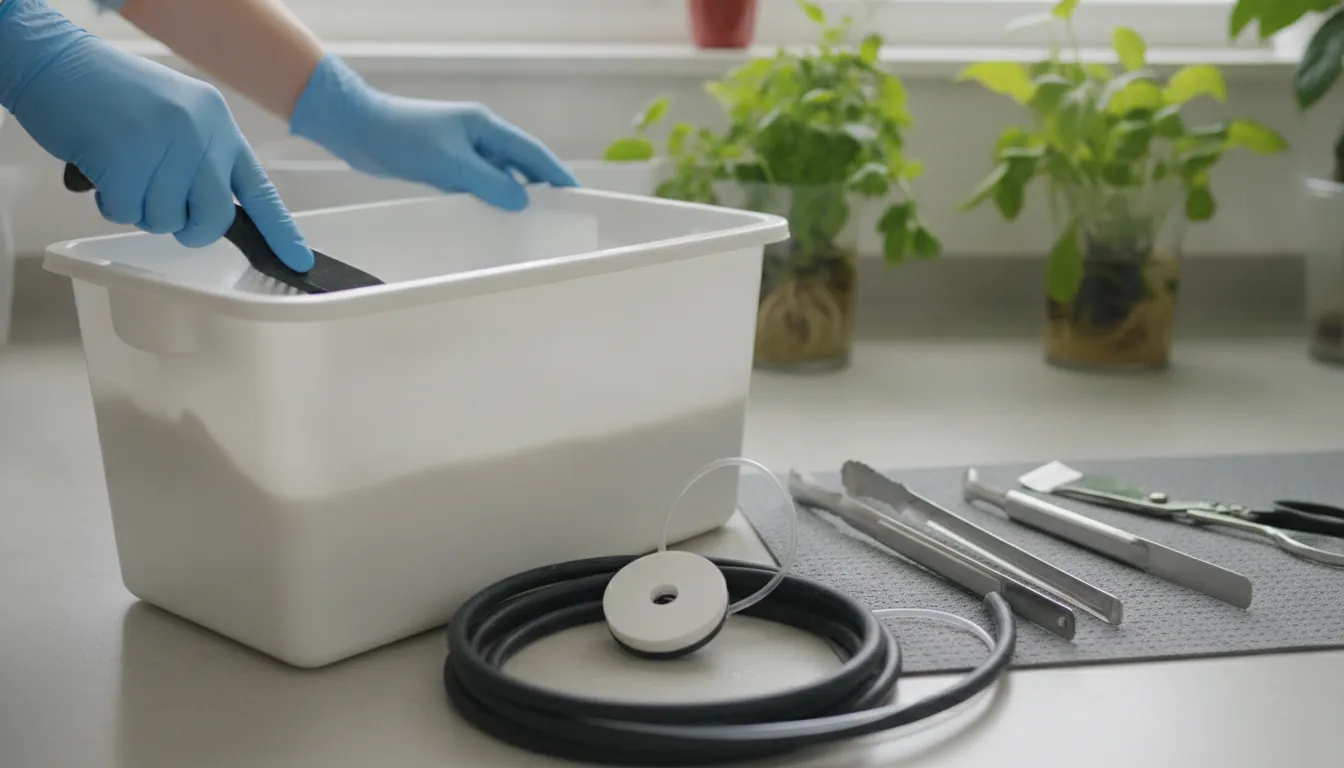
Clean equipment does more than improve appearance. It removes places where algae can persist, limits available debris, and makes it easier to spot a new problem before it spreads through the system. A practical routine starts with inspection, then moves to cleaning, sanitation, and careful reuse.
Inspect every place that holds water
Look beyond the main reservoir. Check drain lines, fittings, pump areas, trays, net-pot openings, floor edges, and any container where water can stand. The University of Connecticut recommends checking standing-water areas because they can support algae growth. Its guidance also notes that water sources, structures, and growing-media surfaces may all need attention when algae is present: UConn algae management guidance.
Remove residue before sanitizing
Drain the system and remove visible film, slime, mineral residue, and plant matter from accessible surfaces. Scrubbing is important because a sanitizer is not a substitute for removing buildup. For a practical maintenance reference, see cleaning a hydroponic reservoir. Rinse away loosened material so it does not move into a pump or return line.
Keep plant debris, fallen leaves, and unwanted plants out of trays and around the growing area. These materials can provide nutrients for algae. Also reduce puddled water and correct leaks or poor drainage instead of repeatedly wiping the same wet spot.
Sanitize before reusing equipment
Clean and sanitize pots, trays, tools, tubing, and removable reservoir parts before reuse. Follow the product label for any disinfectant, including contact time, dilution, rinsing, and plant-safety instructions. A measured approach matters because algae management may require a combination of sanitation and environmental changes, not a single aggressive treatment.
After reassembly, inspect the system again for trapped debris and confirm that water moves as intended. Keep a short maintenance record between crop cycles. Reusing equipment only after it has been cleaned, sanitized, and fully rinsed makes prevention more consistent and helps identify the source if algae returns.
How Do Circulation, Aeration, and Airflow Help?
Water movement and room airflow address different parts of the same problem. Inside the system, circulation and aeration help you notice and manage stagnant areas. Around the system, ventilation and gentle air movement help control excess moisture and condensation. Neither replaces light exclusion or sanitation, but both make algae-friendly conditions easier to spot and correct.
Check for stagnant water first
Inspect the reservoir, channels, trays, tubing, and low points around the growing area for standing water. The University of Connecticut recommends checking areas with standing water because they can become sites of algae growth. Look for a surface film, green residue, unusual odor, or a mat that could restrict water movement. Algae can also clog pumps or form mats on water surfaces in irrigation systems, according to Oklahoma State University Extension. If flow seems reduced, stop and inspect the affected part rather than assuming the pump needs more power.
Aeration and circulation should be judged by the result: nutrient solution should move as intended. Roots should not sit in an overlooked stagnant pocket, and no section of the system should remain wet without a clear purpose. For background on how components fit together, review this deep water culture setup. Follow the equipment maker's instructions for cleaning and operation, and do not invent a pump schedule or specification that your system does not provide.
Reduce condensation and excess moisture
Water movement does not solve a humid room by itself. Check for wet floors, persistently damp surfaces, dripping lines, and condensation on nearby walls or equipment. Excess moisture from improper irrigation or misting should be reduced. Proper ventilation helps lower greenhouse moisture, while horizontal airflow fans can help regulate temperatures and reduce excess condensation, according to UConn's algae-management guidance.
Use airflow to dry surfaces without blasting delicate plants or spreading contaminated water. Correct leaks, adjust misting or irrigation practices, and remove puddles promptly. Then repeat the inspection after changes are made. A simple routine of checking flow, standing water, condensation, and damp surfaces helps prevent a small algae-friendly pocket from becoming a system-wide cleanup.
Explore hydroponic supplies for your setup
How Should You Manage Nutrients, Moisture, and Water Conditions?
Light is only one part of the algae equation. Algae also needs water and mineral nutrients, so an exposed, nutrient-rich area can become a growth point even when the main reservoir looks clean. The University of Connecticut notes that warm temperatures, high humidity, and fertigation that support crops can also support algae. The goal is not to remove everything plants need. It is to prevent excess moisture and nutrients from collecting where they are not useful.
Use the table below as a practical inspection guide. Check the reservoir, channels, trays, floor, and nearby surfaces rather than focusing only on the plant roots.
| Algae risk signal. | What to inspect. | Practical response. |
|---|---|---|
| Green film or cloudy growth near nutrient solution. | Exposed solution, reservoir seams, tubing, and areas receiving light. | Block light, remove visible residue during cleaning, and check whether the cover or fittings leave gaps. |
| Heavy nutrient buildup or rapid algae return. | Mixing practices, overfertilization, runoff, and residue around emitters or trays. | Follow the nutrient product directions, avoid adding more than the crop requires, and clean runoff instead of letting it remain on surfaces. |
| Green patches on the floor or under equipment. | Puddled water, leaking connections, blocked drains, and low spots. | Remove standing water, repair the source, and improve drainage or access so the area can dry between irrigation events. |
| Persistent dampness or condensation. | Humidity, airflow, misting, and warm areas around the system. | Reduce unnecessary misting and excess moisture. Use appropriate ventilation and airflow to limit condensation without stressing the crop. |
For a consistent routine, begin with monitoring hydroponic nutrient solution and record visible changes alongside your normal observations. The same solution-care habits can help you spot excess residue before it becomes an algae problem. If water chemistry may be contributing, review hydroponic solution pH and EC management rather than guessing or making repeated adjustments. These checks support prevention, which UConn identifies as the grower's first line of defense, while its guidance specifically recommends avoiding excessive fertilization, runoff, and puddled floor water.
What Should You Do If Algae Is Already Growing?
When algae is visible, treat it as a system issue rather than a surface stain. Work through the source methodically so you remove the existing growth and reduce the conditions that allowed it to spread.
1. Isolate the light first
Inspect the reservoir, lid, tubing, fittings, net-pot gaps, and any exposed nutrient solution. Cover or replace light-leaking parts, while keeping access points practical for inspection and maintenance. Algae can return quickly if light continues reaching the solution, so light isolation should happen before you spend time scrubbing.
2. Remove visible growth and clean affected surfaces
Pause the system if necessary, then remove mats, slime, and buildup from accessible surfaces. Check the reservoir, channels, trays, pump area, tubing, growing media, and nearby standing water. UConn Integrated Pest Management guidance notes that algae management may require attention to the water source, structures, and growing-media surfaces, not just the most visible patch. Review the source guidance on treating multiple surfaces before restarting.
Discard heavily fouled disposable media when appropriate, and clean reusable pots and trays before putting them back into service. Remove plant debris as well, since residue can provide nutrients that support renewed growth. If the algae has formed a dense surface layer on media, handle it carefully because a crust can interfere with water penetration.
3. Check the water source and restart cautiously
Inspect incoming water, reservoirs, lines, and any area where water can sit. If growth repeatedly returns after cleaning, the water source or a hidden section of the system may be reintroducing it. A home hydroponic system guide can help you review the major components and identify places that deserve closer inspection.
Sanitation may be appropriate between cycles, and hydrogen peroxide has been studied and used for sanitizing hydroponic systems and irrigation lines. However, the cited research also reports that high concentrations can harm plants. Do not improvise a dose, combine chemicals, or apply a sanitation product to a live root zone without checking its label and crop compatibility. Many algicides are not labeled for direct plant treatment, and some products can suppress plant growth even without obvious plant injury. Prevention remains safer than relying on algicide, especially for edible crops. Read the research on hydrogen peroxide in hydroponic systems before choosing a treatment approach.

Review hydroponic systems and supplies for your setup
A Simple Algae-Prevention Routine for Hydroponic Growers
A repeatable routine catches small algae risks before they become a reservoir, tray, or media problem. Prevention is the first line of defense, and effective management combines sanitation with environmental adjustments rather than relying on a single treatment. Use the same inspection points each time so changes are easier to notice.
- Daily: inspect exposed water and surfaces. Look at the reservoir, tubing, fittings, tray bottoms, media surfaces, and any area where water may stand. Check standing-water areas for algae, then remove plant debris and address visible puddling. Confirm that covers and access points still exclude unnecessary light. If you find a new film or green tint, note where it appeared instead of waiting for it to spread.
- Weekly: clean the environment around the system. Wipe down reachable surfaces and review irrigation or misting practices for excess moisture. Improve ventilation where practical, since proper ventilation helps reduce moisture. Check for runoff, condensation, and damp corners that stay wet between irrigation events. Keep the growing area free of debris that can provide nutrients for algae. Follow the equipment maker's directions whenever cleaning or disinfecting system components.
- Between cycles: reset before reusing. Empty the system, remove residue, and clean and sanitize pots and trays before their next use. Inspect the water source, lines, reservoir, supports, and media-facing surfaces rather than cleaning only the most visible part. Empty growing areas should be cleaned and disinfected between crop cycles. Use disinfectants carefully and according to their labels, keeping plant safety in mind.
Record what you see and which condition changed. If algae returns, use those notes to find a recurring light, moisture, or sanitation gap. For equipment and replacement components, browse GroIndoor's hydroponic systems and supplies collection.
Sources: University of Connecticut Integrated Pest Management.
Frequently Asked Questions
Can algae grow in a covered hydroponic reservoir?
Yes. A cover reduces exposure, but algae can still develop where light reaches the nutrient solution, such as around net-pot openings, tubing, seams, or uncovered fittings. Inspect those points and block stray light while keeping necessary access for plant care and maintenance.
How often should I clean a hydroponic reservoir to prevent algae?
Use a consistent cleaning schedule rather than waiting for visible growth. Inspect the reservoir and nearby standing-water areas during routine checks, remove plant debris promptly, and clean and sanitize pots, trays, and equipment before reuse. The right interval depends on your system, crop, and operating conditions.
Does better airflow stop algae in hydroponics?
Airflow does not replace light exclusion or sanitation, but it can help manage the moisture that supports algae. Check for condensation, excess humidity, puddled water, and poorly ventilated areas. Improve ventilation and circulation where moisture remains trapped, while also checking that the reservoir and lines are not stagnant.
Should I use hydrogen peroxide to remove algae?
Hydrogen peroxide has been used to sanitize irrigation lines and hydroponic systems between uses, but concentration and application matter. High concentrations can harm plants, so follow the product label and system-specific guidance. For an active problem, isolate the light source, remove visible buildup, clean affected surfaces, and treat the system cautiously between crop cycles. Read the cited study.
Why does algae keep returning after I clean the system?
Cleaning one visible patch may not address the source. Algae spores and cells are common in growing environments, and growth can return when water, light, and mineral nutrients meet. Recheck reservoir light leaks, tubing, media surfaces, water sources, standing water, runoff, excess fertilization, and plant debris, then correct the underlying conditions.
Get started with a better-controlled hydroponic setup
Light leaks, buildup, and standing water are easier to manage when your system supports consistent reservoir care. Review the equipment and supplies that can help you maintain a cleaner growing environment, then shop hydroponic systems and supplies that fit your setup. Choose practical tools for light exclusion, circulation, sanitation, and routine maintenance so prevention stays part of your regular process.
Tags: