


A crowded grow tent is a recipe for powdery mildew and weak, leggy stems.
Shop grow tents sized for a healthier, easier-to-manage indoor garden.
Many new growers try to squeeze in one extra pot and end up losing the whole crop to poor airflow. Success starts with matching your plant count to your tent size and light power.
How many plants fit in a grow tent depends on your tent size and how you train your garden. In a small 2x2 foot tent, you can usually fit between one and four plants. A standard 4x4 foot tent can hold four to 16 plants, while larger 8x8 foot setups often support 16 to 30 plants or more. You must balance your plant count with light and air to prevent etiolation, which is when stems stretch and weaken due to shading. According to Virginia Tech experts, plant density affects how much light your crop can catch and use to grow. Planning your space helps every plant get what it needs to produce a heavy yield without being too crowded.
Finding the right balance between plant count and space is the first step toward a successful indoor harvest. The quick chart below gives practical starting ranges for every common tent footprint.
How many plants fit in a grow tent? Quick chart
Plant capacity ranges from one to four plants in a 2x2 tent to roughly 25 to 64 plants in a 10x10. Your ideal count depends on mature canopy size, containers, light coverage, airflow, and access.
Picking how many plants fit in a grow tent is a key step for any indoor grower. You must match the size of your tent with the needs of your crops. A tent that is too full can lead to poor air flow and wet air. This may cause mold or pests to spread. A tent with too few plants might waste light and power. Most home growers find the right count depends on the final size of each plant. For most setups, you can fit between one and sixteen plants in a standard tent.
Planning your tent layout
The plan of your garden is just as vital as the tent itself. You should think about how big your plants will be when they are full grown. Small herbs like basil or mint do not need much room. Large food plants like peppers or tomatoes need more space to spread out. If you use small pots, you can fit more plants in the same area. But small pots mean you must water and feed them more often. This can take up a lot of your time each day.
You also need to think about how you will reach each plant. If your tent is deep, you need a path to the back to check on your crops. Cramming in too many plants makes it hard to spot bugs or leaf spots. Good plant spacing and density help keep your garden healthy. When plants touch each other, the air stays still and wet. This can cause leaves to rot or stems to grow weak. Good space lets fresh air move around every leaf.
How many plants can your tent hold?
Most grow tents come in standard sizes measured in feet. To find your limit, first find the square feet of your floor. A 4x4 tent has 16 square feet of space. A 2x2 tent has only 4 square feet. The table below shows the best range for your specific tent size. These numbers assume you are growing medium-sized plants in 3-gallon or 5-gallon pots. Use these as a guide to start your first indoor garden.
| Tent Size (ft) | Square Feet | Small Plants (1-2 Gal) | Large Plants (5+ Gal) |
|---|---|---|---|
| 2x2 | 4 | 4 | 1 |
| 2x4 | 8 | 8 | 2 |
| 3x3 | 9 | 6 | 2 |
| 4x4 | 16 | 16 | 4 |
| 5x5 | 25 | 20 | 6 |
| 8x8 | 64 | 30 | 16 |
| 10x10 | 100 | 50 | 25 |
Impact of pot size on plant count
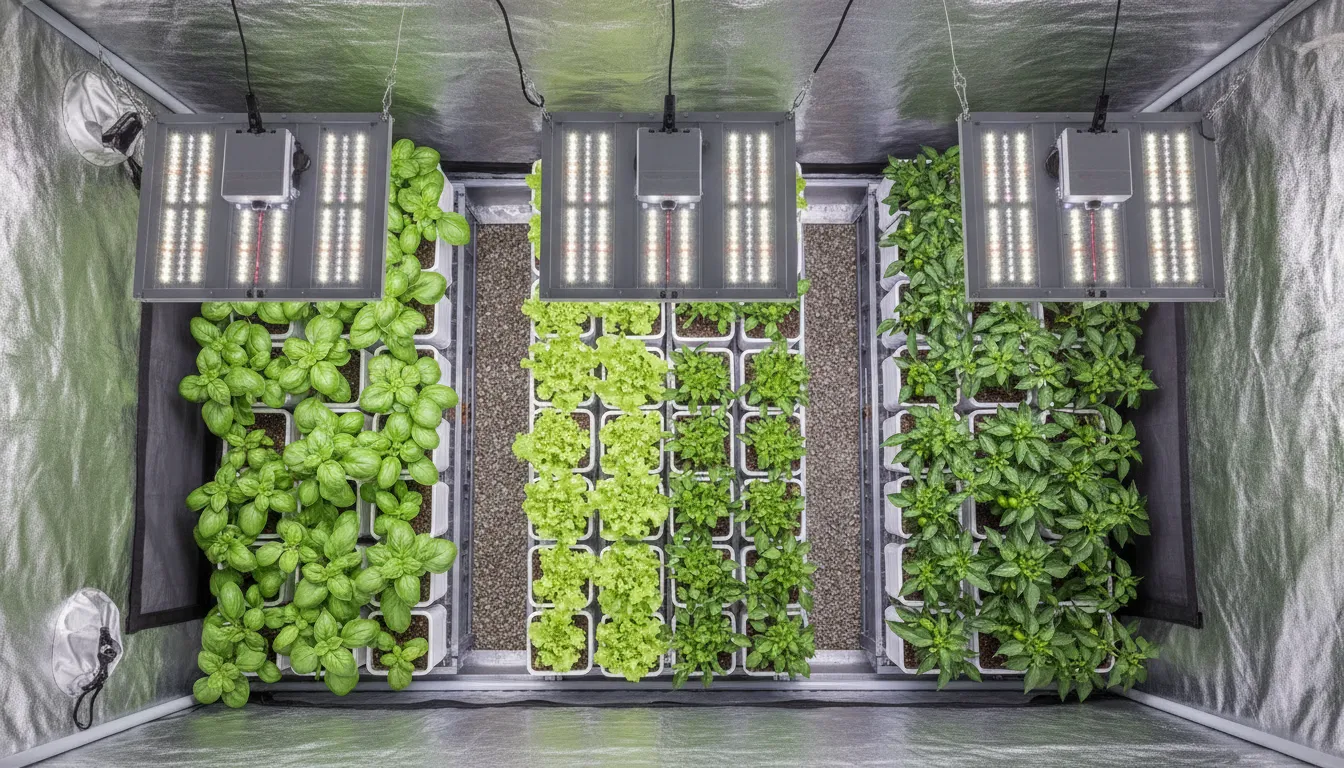
Your choice of pot size will change how many plants fit in a grow tent. A one-gallon pot is small and lets you pack many plants close together. This is common for "sea of green" methods where you grow many small plants at once to save time. A five-gallon pot is much bigger. It allows the roots to grow deep and wide. Big roots lead to big plants, so you will need to grow fewer of them to avoid crowding the tent.
Roots need enough room to take in water and food. If pots are too small for the plant, the growth will slow down. Studies from Virginia Tech show that plant density affects light catch and final weight. If you want big harvests, give each plant the room it needs to get light. In a 4x4 tent, four large plants in 7-gallon pots can fill the space just as well as sixteen small ones. Choose the count that fits your goal.
Light coverage and plant health
Light is the key part of indoor growing. Each plant needs enough light to grow strong and make fruit or flowers. If you have too many plants, the ones on the edges might not get enough light. This causes them to stretch and become thin and weak. Most LED grow lights have a set area they cover well. If you go past that area, your plants will not grow as fast.
Make sure your light matches your tent size and plant count. A light made for a small 2x2 tent will not work for a big 4x4 tent. If you add more plants, you may need a second light to cover the extra space. Knowing the light coverage for your plant count helps you pick the right gear. Keeping the light at the right height also helps. If the light is too close, you might burn the top leaves. If it is too far, the plants will grow tall and spindly. Good light levels ensure your plants stay short, bushy, and full of life.
Small grow tents: 2x2, 2x4, and 3x3
Small grow tents generally fit one to eight plants. A 2x2 works best for one large or up to four small plants, while a 2x4 can support roughly two large or eight small plants.
Choosing the right tent size is the first step for any indoor grower. Small tents are great for new growers or those with small rooms. They let you control the growing space without a huge cost. When you ask how many plants fit in a grow tent, you must look at the floor area. A 2x2 tent offers four square feet of space. In a 2x2 grow tent, you can often fit 1 to 4 plants. The end count depends on how big you want each plant to get before you harvest.
Capacity for the 2x2 tent
A 2x2 tent is the smallest common size. It works well for a single large plant or a few smaller ones. If you use small pots, you can fit up to four. But keep in mind that plants need room to breathe. Proper air flow and fans are key when you pack plants into a small space. Good air flow helps stop mold and keeps the air fresh. It also helps light reach the lower leaves of each plant.
Light is the most vital part of plant growth. It is often the thing that limits how much you can grow. Experts at Oklahoma State University say light is the top factor for plant growth. If you put too many plants in a 2x2, they will shade each other. This shading can make stems grow too long and thin. This happens because the plants are trying to reach for more light to stay healthy.
Managing the 2x4 and 3x3 layout
If you have a bit more room, a 2x4 or 3x3 tent is a good choice. A 3x3 tent provides nine square feet of room. In this size, you can usually grow 2 to 6 plants. A 2x4 tent has a similar area but a different shape. The long shape of a 2x4 makes it easy to reach every plant. It is also a good shape for using two lights side by side. You can check our guide on small grow tent plant capacity to see which kits work best for these sizes.
When you plan your layout, think about the size of your pots. Large pots mean you can grow fewer plants. Small pots let you fit more, but they need more care. Roots need plenty of space to grow and find food. If the pots are too small, the roots cannot grow well. This can limit how much water and food the plants can take in. Always leave enough space between pots so you can check each plant.
Tips for high plant count
High plant count means putting many plants in a small area. This can lead to a bigger harvest, but it takes more work. You should aim for about 1 to 4 plants for each square meter. If you go above this, you risk having too many plants. Crowded plants fight for light, water, and food. This fight can lower the total weight of your harvest. It can also cause damp air to build up, which may lead to bugs or disease.
- Use a trellis net to keep branches spread out and open to light.
- Trim lower leaves that do not get enough light to help air flow.
- Check the heat and damp air every day to keep the room stable.
- Choose plant types that stay short and bushy for small tents.
A good rule is to start with fewer plants until you learn the space. You can always add more in your next grow. Using the right grow tents from a trusted shop will help you get the best start. Make sure your tent has strong poles to hold your lights and fans. This keeps the canvas tight and gives you the most floor space for your pots.
Medium grow tents: 4x4 and 5x5
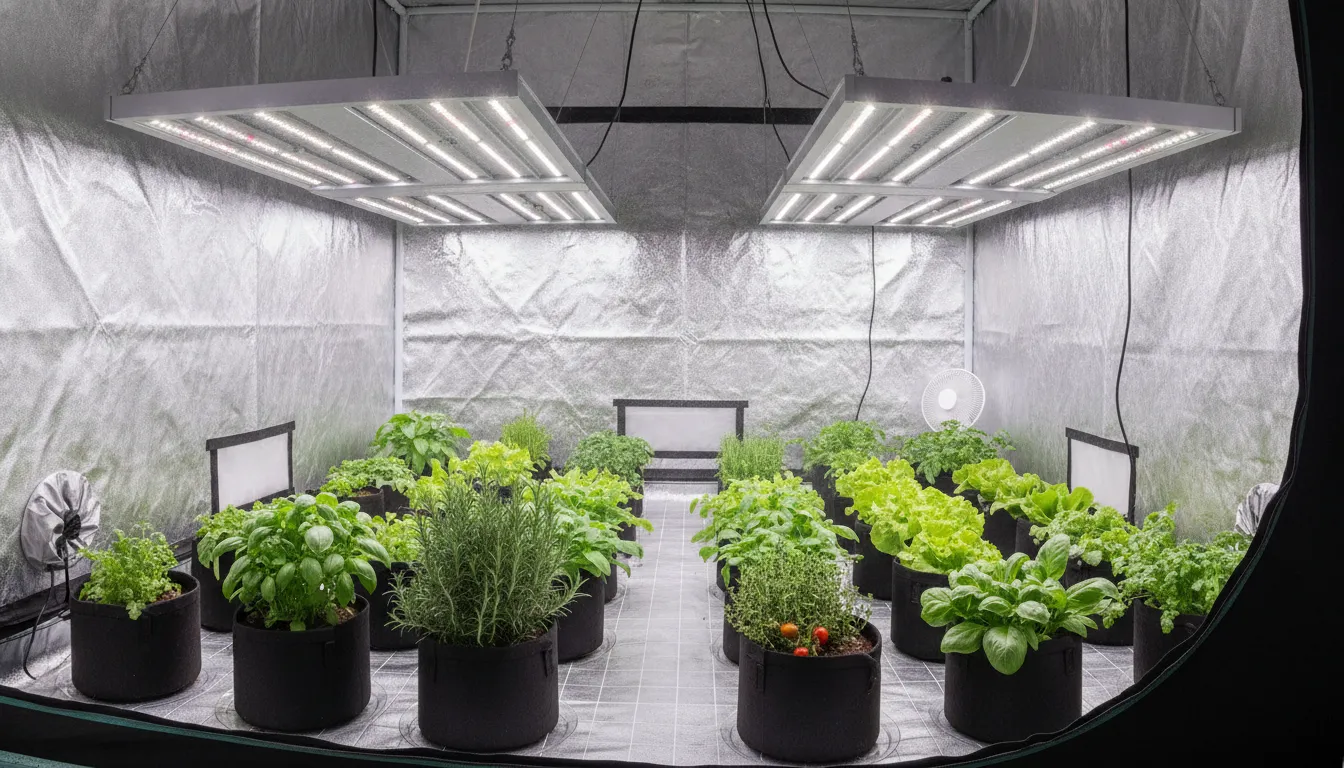
A 4x4 tent commonly fits four large or up to sixteen small plants. A 5x5 offers more canopy and equipment room, supporting roughly six large or up to twenty small plants.
Medium grow tents are the top choice for home growers. These tents offer a good mix of floor space and ease of use. They give you enough room for a small garden but do not take up a whole room. When you plan your space, you must think about how many plants fit in a grow tent of this size. Most growers find that a 4x4 or 5x5 tent gives them the best results for their work and cost.
Plant count in 4x4 tents
A 4x4 grow tent gives you 16 square feet of floor space. This is a common size for a 1000 watt light setup. In this space, you can often grow 4 to 16 plants. The final count depends on your grow plan. If you use a Sea of Green style, you can fit more small pots. Large bushes will need much more room. You can learn more in our 4x4 grow tent setup guide to see what fits your goals.
Space is key for healthy growth. If you pack too many plants in, they will fight for light. This can lead to tall, weak stems as plants reach for the lamp. High plant spacing and density can also make it hard to reach the back of the tent. You need a path to water and prune your crop without hurting the leaves. Tents with side doors make this much easier for the grower.
Yield in 5x5 spaces
Moving up to a 5x5 tent gives you 25 square feet of floor area. This is a big jump over the 4x4 model. In a 5x5 tent, you can grow 6 to 20 plants with ease. The extra space lets you use larger pots. This helps roots grow deep and strong. Per Virginia Tech research, root space and plant food are vital for health. Large beds or pots ensure your garden stays lush and green.
You must also plan for light reach. A 5x5 tent needs a strong light to reach the corners. You can set up light for many plants by using a wide light bar. Good light levels help with plant mass and fruit growth. Without enough light, the lower leaves may die off. This waste of light can hurt your total harvest. Keep your lights at the right height to avoid hot spots in the center.
Air and plant health
Air flow is even more vital in these larger tents. When you have many plants, they release a lot of water into the air. This can cause damp air and mold. You must use a fan to pull old air out and fresh air in. Oklahoma State University notes that light and air are the main things that limit growth. Keeping a clean breeze moving through the leaves will stop pests and rot.
Good plans make your garden work well. Start with a small number of plants if you are new. This lets you learn how they grow and fill the space. You can always add more in your next run. Remember that it is better to have four big, healthy plants than ten small, sick ones. A clear plan will help you get the most out of your medium grow tent every time.
Large grow tents: 8x8 and 10x10
Large tents can support many plants, but aisles and equipment reduce usable growing area. Plan an 8x8 for about sixteen to thirty plants and a 10x10 for up to forty or more only when lighting and ventilation scale with it.
Large grow tents like the 8x8 and 10x10 models give you lots of room for indoor crops. An 8x8 tent has 64 square feet of floor space. A 10x10 tent has 100 square feet. These big tents allow for many plants and complex setups that small ones cannot fit. You can find these large grow tents at GroIndoor to start your big project.
Capacity for large tents
In an 8x8 tent, you can often grow between 16 and 30 or more plants. This count depends on your grow method and how big you want each plant to get. A 10x10 tent can hold even more, often fitting 40 or more plants. High plant density can lead to plant shading. This causes stems to stretch thin as they look for light, which can hurt your harvest.
To get the best results, you must balance plant count with the total space. Proper plant density helps each plant get enough light and food. Crowding too many plants into a large tent will make it hard for light to reach the lower leaves. This reduces the total weight of your crop. It is better to have fewer healthy plants than many weak ones.
Zones and walking aisles
One common error in large tents is filling every inch with plants. You need to plan for zones and walking paths to reach your crop. A 10x10 tent is too deep to reach the center from the outside. You must leave paths so you can water, prune, and check for bugs. These aisles take up floor space, so your real growing area is less than the total tent size.
Dividing your tent into zones can also help. You might use one side for young plants and the other for those in bloom. This helps you track growth and give the right care to each group. Planning your plant spacing and density ahead of time ensures you have enough room to work with ease.
Lights and airflow needs
Large tents need many strong lights to cover the whole area. One light will not be enough for an 8x8 or 10x10 area. You will need to optimize light for multiple plants by using a grid of LEDs or other lamps. Good light overlap ensures that plants in the corners get as much light as those in the center.
Airflow is also a major factor in large setups. With more plants, the tent will have more heat and moisture. You need a strong fan system to pull out old air and bring in fresh air. Good airflow and ventilation are key to preventing mold and keeping your plants healthy. These tools help you manage the tent environment even with many plants.
Compare grow tent sizes and choose a layout that gives every plant room to thrive.
How to calculate your ideal plant count
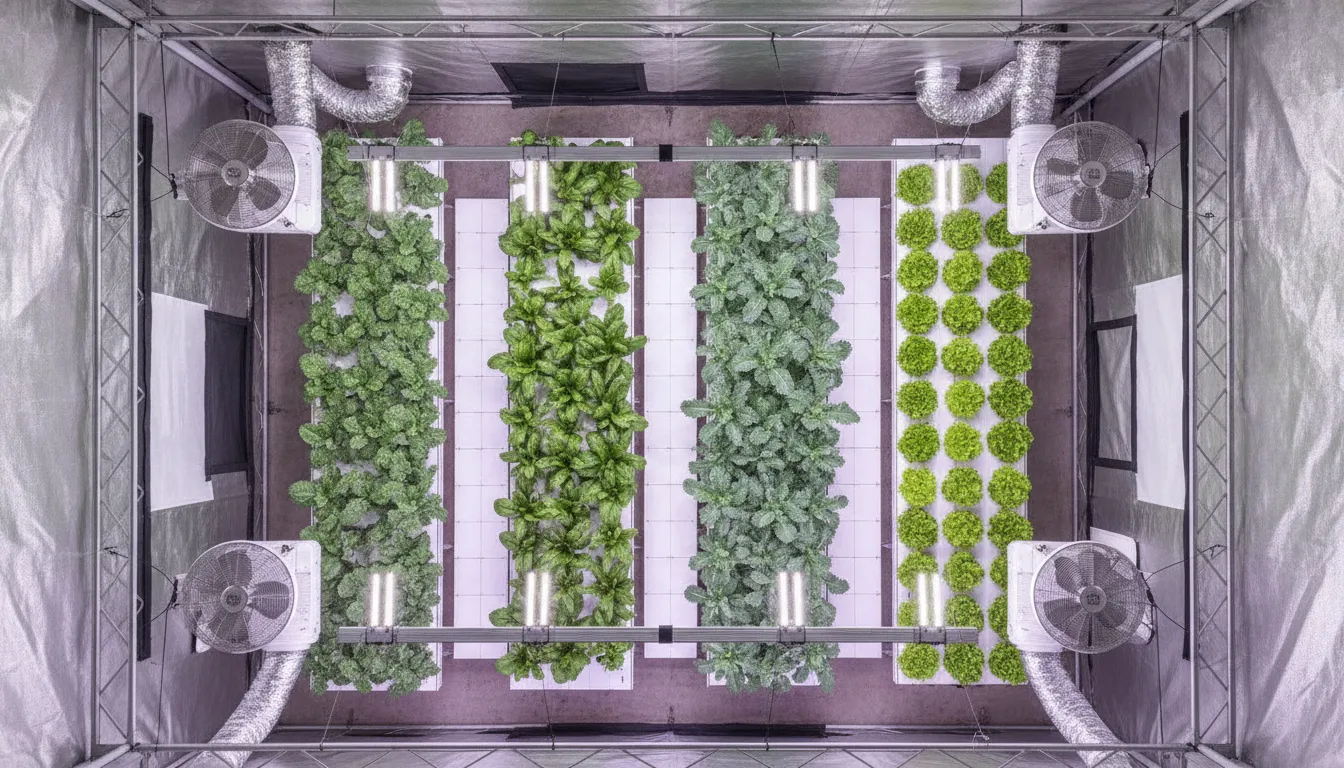
To calculate plant count, divide usable canopy area by the mature footprint of each plant. Then reduce the count to reserve room for fans, containers, and access.
Planning your grow space is about more than just filling every inch of floor. To know how many plants fit in a grow tent, you must balance the space with the needs of each plant. High plant density can lead to shading. This often causes etiolation, where stems stretch and weaken as they reach for light. Using a simple math path helps you avoid these issues and keeps your garden healthy.
Assess your floor space
The first step is to find your total used space. Most Grow Tents range from 2x2 feet to large 10x20 setups. But the tent size is not your only limit. You must also think about the pots you use. Large pots take up more floor space but allow for bigger root zones. If your pots are too close, roots may struggle to get the water and nutrients they need. Proper planning ensures each plant has the space it needs to thrive without crowding its neighbors.
Check your grow method
Your choice of grow method changes your plant count. Some growers use a Sea of Green style with many small plants. Others prefer a Screen of Green with a few large plants. Plant density is tied to how much light each leaf can catch. If you want more growth, you need to match your plant count to your light spread. This helps each plant reach its best form during the bloom phase.
- Measure your tent floor space. Start by finding the exact square footage of your grow space. A 4x4 tent has 16 square feet of floor, but you will not use all of it for pots.
- Select your pot size. Find the width of the pots you plan to use. Standard 5-gallon pots are about 12 inches wide, which helps you see how many will fit in a row.
- Define your training plan. Decide if you will top your plants or let them grow tall. Trained plants need more side space to branch out and catch light.
- Subtract space for tools. Leave room for floor fans, humidifiers, or heaters. These tools are vital for indoor plant growth and take up floor space.
- Find the full canopy width. Guess how wide your plants will be at harvest. Most indoor plants need 12 to 18 inches of space to prevent leaf touch and mold.
- Map out a walkway. Ensure you can reach the plants in the back of the tent. A small path or gap between rows makes daily care much easier for you.
Account for access and airflow
Air must flow freely around your plants to prevent pests and rot. If you pack too many plants into one tent, the humidity will rise too high. This creates a risk for mold on your flowers. Keeping a small gap between each pot lets your fans move air through the leaves. This helps your plants breathe and stay strong until harvest day.
What determines how many plants fit?
Mature canopy width, light coverage, container size, training method, airflow, and access determine the right plant count. Floor area alone does not provide a reliable answer.
To find the best count for your space, you must look at how your gear and your goals work together. Plant limit is not just about floor space. It is also about how much light, air, and root room each plant can get. To plan well, you should start by thinking about plant spacing and density based on your own grow style. Every factor from your pot size to your light spread will change the final result.
Canopy width and plant training
The mature size of your plants is the main factor in your tent layout. Some plants grow tall and thin, while others spread out wide. If you let your plants grow to their full width, you will be able to fit fewer of them. This is a key part of knowing how many plants fit in a grow tent as they reach the flowering stage. If you choose a large, bushy strain, a single plant might fill a small tent on its own.
Many indoor growers use training methods to control plant shape and save space. By bending or pruning branches, you can keep the canopy flat and even. This allows you to pack more plants into the same area without them shading each other. But if the canopy gets too thick, it can block light from reaching the lower leaves. This will slow down your growth and lead to a smaller harvest because the bottom of the plant stays soft and weak.
Light coverage and intensity
Light is the most vital part of plant growth and is often the main thing that limits your count. According to Oklahoma State University, light drives photosynthesis and biomass production. You must ensure your light coverage reaches every leaf from the center to the corners. Without enough light, even the best soil or food will not help your plants grow. A weak light source will always cap your total yield no matter how many plants you start with.
When you have too many plants in one tent, the outer ones may not get the light strength they need. This often leads to etiolation, where stems stretch and become weak as they reach for light. Using high-quality LED lights can help because they offer an even spread and low heat. This makes it easier to keep your plants healthy even when they are close together. You should check the PAR map for your light to see how the strength drops off at the edges of your tent.
Container size and root space
The size of your pots or beds also limits how many plants you can host. Plants compete for water and food below the soil just as much as they do for light above it. When you use large pots, you give roots more room to expand. This leads to larger and stronger plants that can handle more stress. But these big pots take up more floor space, which lowers your total plant count.
If you choose smaller pots, you can fit more plants, but you will need to feed and water them more often. Research from Virginia Tech shows that small root zones can limit a plant's access to what they need. You must balance the plant count with the amount of soil or water needed. This keeps them healthy through the whole cycle. Overcrowding pots can lead to salt buildup and pH swings that hurt your roots.
- Airflow: Dense plants block air, which can cause high humidity and mold.
- Access: You need enough room to reach the back plants for pruning and feeding.
- Vertical Space: Tall plants might get too close to your lights and suffer from heat stress.
Use the 4x4 grow tent setup guide to plan your light, ventilation, and usable floor space.
Why airflow and access limit plant count
Airflow and access set a practical ceiling on plant count. Every leaf needs moving air, and every plant needs to remain reachable for watering, inspection, and care.
Airflow and working access often set a lower practical plant limit than floor area. Leave gaps between mature canopies, keep intake and exhaust paths clear, and make sure you can reach every plant for watering and inspection.
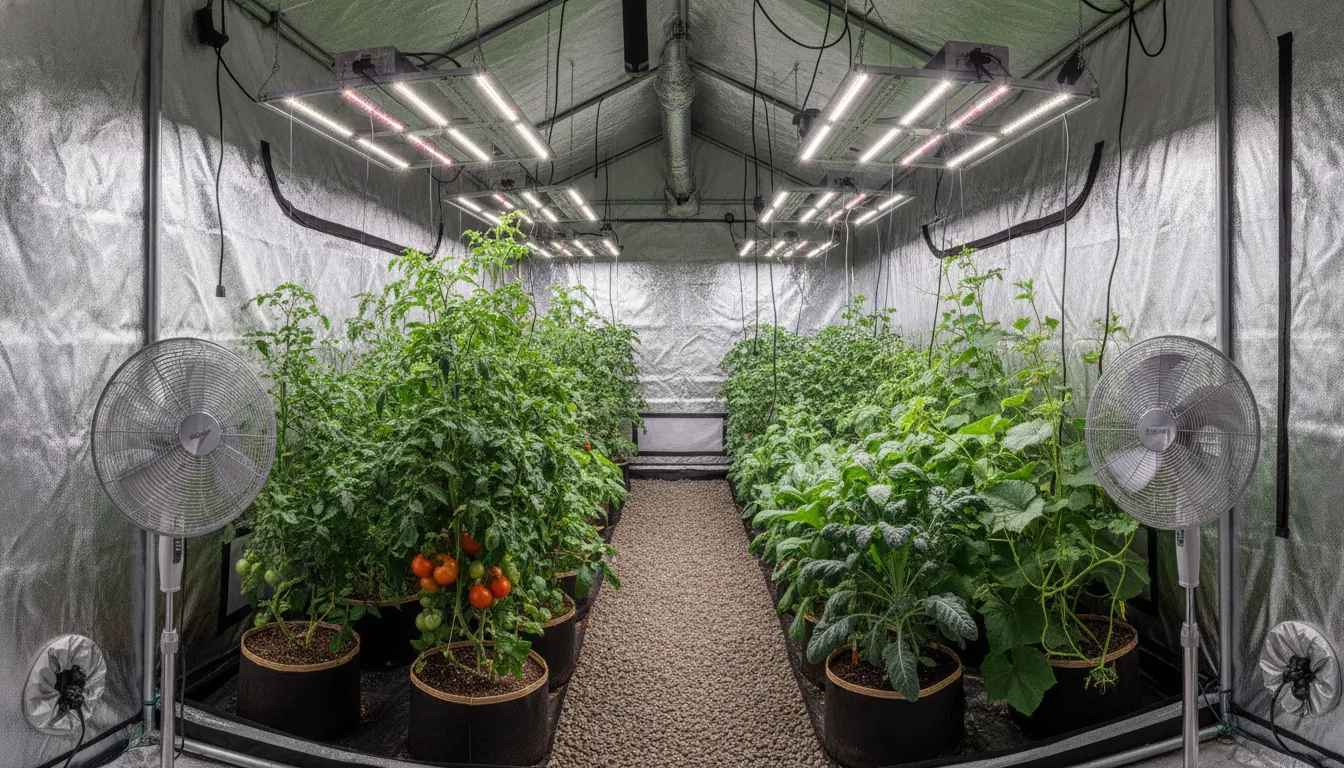
When you decide how many plants fit in a grow tent, you must think about more than just floor space. Airflow and easy access are just as vital for a healthy crop. If you pack too many pots into a small area, your plants will suffer from poor air movement and high heat. This often leads to pests and mold that can ruin your entire harvest before it is done.
The role of airflow in plant health
Good air movement is the best way to keep your tent cool and dry. Plants release moisture into the air through their leaves. If the air stays still, this moisture builds up and creates high humidity. High humidity can cause rot and slow down plant growth. You should use fans to move air around the tent and pull fresh air in from the outside.
Packing too many plants into your tent blocks this path for air. When leaves touch and overlap, they trap damp air near the stems. This can lead to a problem called etiolation. This happens when plants grow too tall and weak as they search for light. Proper air flow helps manage these risks by keeping the air fresh and moving at all times.
Maintaining working access and aisle space
You need enough room to reach every plant in your tent without breaking stems or spilling soil. This is why you must leave space for yourself to work. In a small tent, you can often reach in from the doors. But in larger setups, you must leave clear aisles between rows of plants. You should be able to walk around each plant to check for bugs or dry soil.
A good rule is to keep a few inches of space between your pots and the tent walls. This gives you room to prune leaves and water each pot with ease. You also need space to place your tools and water jugs. If you have to move three pots just to reach one in the back, your tent is likely too full.
- Leave at least 12 inches of space for pathways in large tents.
- Place fans where they do not blow directly on the leaves for too long.
- Make sure you can reach the back of the tent with both hands.
Signs of an overcrowded grow tent
It is easy to tell when you have too many plants in one spot. One clear sign is when your plants start to look stretched or thin. This happens because they are fighting for light and space. If you see yellow leaves near the bottom of the plant, it may be a sign that they are not getting enough light or air. The plants may also start to lean toward the center of the light.
Another sign of a tight fit is limited root growth. When plants are too close, they compete for food and water in the soil. This can lead to small yields and weak plants that do not live as long. To avoid these issues, always check your plant spacing and density before you start your next grow. Keeping your plant count low helps you spend more time on each one for better results.
Frequently Asked Questions
These quick answers cover common plant-count decisions for popular tent sizes. Use them as starting points, then adjust for mature canopy size, equipment, and access.
How many plants fit in a 2x2 grow tent?
A 2x2 grow tent mostly fits one to four plants. If you choose to grow four plants, you must manage their size to keep them from getting crowded. Keeping just one or two plants allows for more side growth and better air flow. As noted by GroIndoor, this size works well for new growers. It helps those with small spaces start an indoor garden easily.
How many plants can you fit in a 4x4 grow tent?
Most growers can fit four to sixteen plants in a 4x4 grow tent. The final count depends on the size of your pots and how you train your crops. Using a sea of green method allows for more small plants, while larger pots mean you should keep fewer plants. As noted by GroIndoor, this size is the most common choice for home growers who want a high yield.
What size grow tent do I need for 4 plants?
For four plants, a 3x3 or 4x4 grow tent is mostly the best choice. A 3x3 tent provides enough room for medium sized plants without wasting space. A 4x4 tent offers more room for each plant to spread out and receive better light. Giving each plant enough space helps with light interception as shown by Virginia Tech. This setup helps your garden stay healthy and grow well.
How many plants should be in a grow tent per square meter?
You should aim for one to four plants per square meter to prevent crowding. High plant density can lead to shading, which causes stems to stretch and become weak. Proper spacing ensures each plant gets enough light, water, and nutrients. As shown by Growell, keeping this density helps you avoid issues with humidity and pests. This balance is vital for a good harvest in any indoor grow space.
Ready to find the perfect grow tent for your garden?
Choose a tent that fits your mature plants, lighting footprint, ventilation equipment, and access needs. A little extra room makes daily care easier and protects plant health.
Choosing a grow tent that is too small for your space leads to poor air flow. Crowded plants can hurt your final yield and make it hard to stay healthy. If you do not act now, you will lose weeks of growing time you need. Starting your indoor garden today helps you reach your first harvest much faster. The right tent size helps you avoid the cost of buying new gear later. This setup ensures you are ready to support a heavy crop of plants. Starting your legal garden now gives you results without any extra hidden costs. You can contact our team of experts for more help.
Ready to contact our team? Shop grow tents and choose the right size to start your legal indoor garden.
Tags: