


Cultivating plants indoors requires a deep understanding of environmental variables, with lighting being the single most important factor for successful growth. For decades, indoor gardeners relied on high-intensity discharge systems, but the landscape of modern horticulture has shifted entirely. Today, high-quality LED lighting systems are the standard for both passionate home gardeners and large-scale commercial operations looking to optimize plant development and maximize their crop yields. The transition to solid-state lighting has fundamentally changed what growers can achieve indoors, from tighter control over plant morphology to dramatically lower operational costs.
Why are LED grow lights the ultimate choice for indoor gardening setups? Modern LED systems provide plants with tailored spectrums, exceptional energy efficiency, and low heat emission. By switching to LED, growers can optimize light delivery while reducing energy consumption by up to fifty percent compared to traditional HID fixtures. Call our team of experts at GroIndoor to find the perfect lighting solution for your growing space.
What Technology Makes LED Grow Lights So Effective?
To understand why these systems are so effective, it is essential to look at the technology that drives them. Traditional lighting systems like high-pressure sodium (HPS) and metal halide (MH) generate light by heating a metal filament or gaseous mixture. Which wastes a massive amount of energy as ambient heat. Light-emitting diodes, on the other hand, produce light by passing an electrical current through a semiconductor material. This process is direct, highly controllable, and incredibly efficient, converting over seventy percent of input energy into usable light rather than heat.
To help illustrate the real-world differences between lighting technologies, here is a direct comparison of the three main categories available to indoor growers today:
| Feature | LED Grow Lights | HPS / MH (Traditional) | Fluorescent T5 |
|---|---|---|---|
| Energy Efficiency | 2.5+ µmol/J (excellent) | 1.0-1.5 µmol/J (moderate) | 0.8-1.2 µmol/J (low) |
| Heat Output | Very low (passive cooling) | Very high (requires extraction) | Low to moderate |
| Spectrum Control | Full customizable (tunable) | Fixed (bulb-dependent) | Fixed per tube type |
| Lifespan | 50,000+ hours | 10,000-20,000 hours | 20,000-30,000 hours |
| Bulb Replacement | None (integrated diodes) | Every 12-18 months | Every 12-24 months |
| Upfront Cost | Higher | Lower | Lowest |
| 5-Year Total Cost | Lowest (no bulbs, less A/C) | Highest (bulbs + cooling) | Moderate |
In the context of indoor gardening, we measure the performance of a lighting system using specific metrics rather than just looking at raw power consumption. Understanding these terms will help you make an informed decision when browsing our extensive LED grow lights collection:
- Photosynthetically Active Radiation (PAR): This refers to the specific spectral waveband of light (400 to 700 nanometers) that plants use for photosynthesis. Standard household lights emit light that humans see well, but plants require PAR wavelengths to convert light into biochemical energy. A high-wattage bulb that produces mostly green and yellow light may appear bright to your eyes but delivers almost no usable energy to your plants.
- Photosynthetic Photon Flux Density (PPFD): This metric measures the amount of PAR that actually reaches the plant canopy per second. It is expressed in micromoles per square meter per second (µmol/m²/s). A light can have high total output, but if it is hung too high or lacks proper reflectors, the PPFD at the canopy level will be insufficient. Most leafy greens require a PPFD of 200-400 µmol/m²/s, while flowering crops need 600-900 µmol/m²/s at the canopy.
- Efficacy: This represents the efficiency of the light fixture in converting electrical energy into usable PAR. It is measured in micromoles per joule (µmol/J). Highly efficient fixtures boast an efficacy of 2.5 µmol/J or higher, meaning you get more light for your plants while drawing fewer watts from the wall. Comparing efficacy across fixtures is the single best way to determine long-term operating costs.
By focusing on these metrics, growers can ensure their lighting setup provides the exact intensity their plants need without unnecessarily driving up utility bills. Because these fixtures convert the majority of their electrical input into light rather than heat. They eliminate the need for noisy, high-powered cooling fans, making it much easier to maintain stable temperatures inside your indoor garden. This also means you can position lights closer to the canopy without risking heat stress, which directly improves PPFD delivery and overall plant health.
Which LED Form Factor Is Best for Your Space?
One of the greatest advantages of solid-state lighting is its design flexibility. Unlike bulky traditional bulbs, diodes can be arranged in various configurations to suit different growing environments. Choosing the correct form factor depends largely on your space, the type of crops you grow, and your vertical clearance.
The three primary form factors include:
1. LED Grow Light Bars
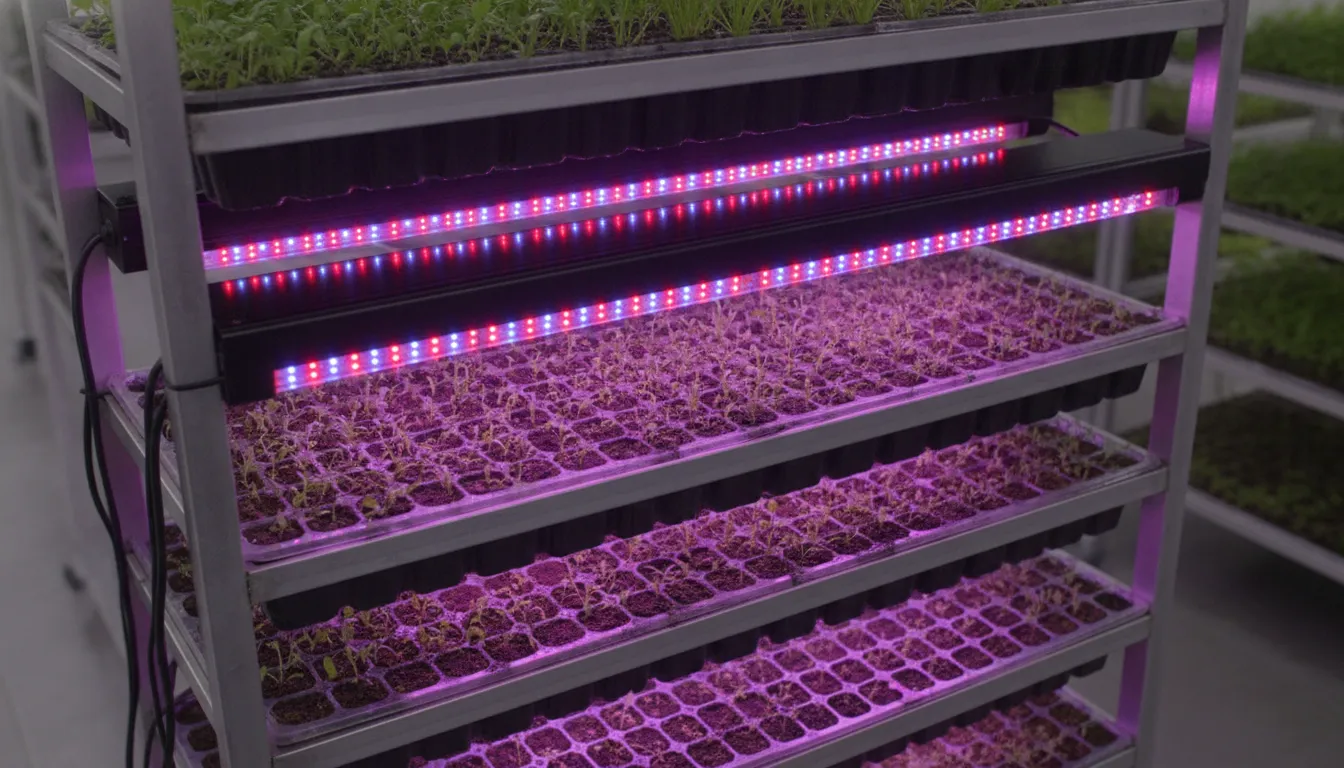
Bar fixtures consist of multiple linear arrays of diodes mounted on a rigid frame. This design distributes light exceptionally evenly across a wide area, reducing hot spots directly beneath the light and weak zones near the edges. Because the bars are separated by open space, they allow heat to dissipate naturally via passive convection, completely eliminating the need for built-in cooling fans. This form factor is highly favored for multi-tier vertical shelving units and large open grow rooms where uniform coverage across the entire canopy is critical for consistent crop quality.
2. LED Grow Light Panels
Panel fixtures feature a dense concentration of diodes mounted on a flat, solid board (often referred to as a quantum board style). These lights offer powerful, direct illumination and excel at deep canopy penetration. They are highly popular among hobbyists using enclosed growing environments, as they provide intense light within a compact, cost-effective package. For a deep dive into how these two designs compare in practice, read our detailed comparison of LED grow light bars vs panels.
3. LED T5 Tubes
Tubes are designed to replace traditional fluorescent fixtures. They emit a gentle, low-intensity light with minimal heat output, making them the absolute best choice for cloning, propagation, and the early seedling stages of plant development. Placing low-intensity T5 tubes close to young seedlings encourages healthy root development without risking light-induced stress or moisture loss. Many commercial propagators use T5 tubes exclusively for their first two weeks of growth before transitioning young plants to higher-intensity bar or panel fixtures.
How Does Light Spectrum Affect Plant Growth?
Plants have evolved over millions of years under natural sunlight, which contains a broad spectrum of colors. Different wavelengths trigger distinct physiological processes in plants. Modern LED systems allow manufacturers to customize the spectral output to target these biological mechanisms with pinpoint precision. This level of spectral control is simply not possible with traditional HID or fluorescent lighting, and it is one of the primary reasons LED fixtures produce superior results.
The two main spectral approaches are:
Targeted Spectrum (Red and Blue)
Chlorophyll, the primary pigment responsible for photosynthesis, absorbs light most efficiently in the blue (around 430-450nm) and red (around 640-660nm) wavelengths. Early lighting models focused exclusively on these bands, producing a distinct purple or magenta glow. Blue light is essential during the vegetative stage, promoting thick stems, tight node spacing, and robust leaf growth. Red light is the primary driver for flowering and fruiting, signaling the plant that it is time to allocate energy toward producing bountiful crops. A targeted spectrum approach allows growers to shift their light composition as their plants move through different growth phases, delivering exactly the wavelengths needed at each stage.
Full-Spectrum White Light
While red and blue are the primary drivers of photosynthesis, scientific research has shown that plants also utilize other wavelengths, including green and yellow light. Green light penetrates deeper into the plant canopy, reaching lower leaves that red and blue light cannot. Full-spectrum white fixtures utilize phosphor-coated white diodes to deliver a smooth, natural-looking spectrum that closely mimics the sun. Not only does this support healthier, more resilient plant development. But it also makes it significantly easier for growers to inspect their crops for nutrient deficiencies, pests, and pathogens without the visual distortion of a purple light. For most home growers, a quality full-spectrum fixture is the most versatile and practical choice.
Choosing the Right Wattage and Coverage Area
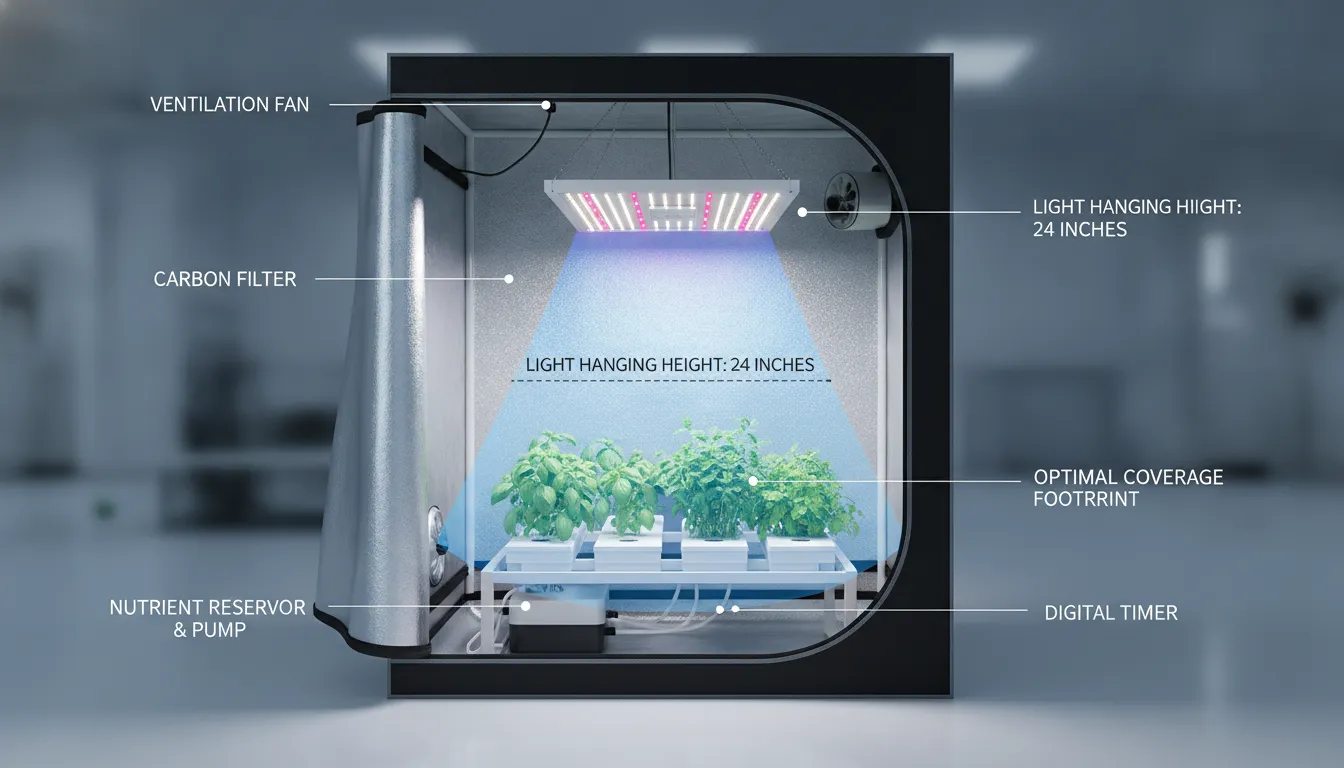
A common mistake among novice growers is purchasing a light based solely on its advertised wattage without considering the physical footprint of their growing area. To achieve optimal results, you must match the light output of your fixture to the square footage of your plant canopy. Undersizing your light leaves growth on the table, while oversizing wastes electricity and can stress sensitive plants.
Different plant species require varying light intensities during their lifecycle. Leafy greens, herbs, and microgreens thrive under lower light levels, while flowering and fruiting crops demand much higher intensities to produce dense, high-quality yields. When setting up your growing space, you should plan your footprint carefully:
- Small Spaces (2x2 to 2x4 feet): A high-quality 100-watt to 200-watt fixture is perfect for these compact areas. These lights provide ample coverage for starter setups and fit comfortably inside small grow tents without creating heat issues. Expect to achieve healthy growth of herbs, lettuce, and small flowering plants with this setup.
- Medium Spaces (3x3 to 4x4 feet): A 300-watt to 600-watt fixture is the sweet spot for these layouts. For detailed recommendations on finding the perfect match for a standard medium-sized enclosure, check out our selection of grow lights for a 4x4 tent. This is the most common size for serious hobbyists, supporting a wide variety of fruiting crops.
- Large Spaces (5x5 feet and larger): For large-scale home setups or commercial facilities, high-output systems drawing 800 to 1000+ watts are required. You can explore top-tier options in our guide to the best 1000W LED grow lights. These systems often involve multiple fixtures daisy-chained together for even coverage across an entire grow room.
Key Buying Considerations for Your Indoor Setup
When investing in a new lighting system, several practical factors will influence your success and the longevity of your equipment. Beyond raw specifications, the build quality and features of a fixture determine how well it performs over years of continuous operation in a warm, humid growing environment.
Thermal Management
Although LEDs are highly efficient, they still generate some heat at the circuit level. High-quality fixtures utilize thick aluminum heatsinks to pull heat away from the diodes and dissipate it into the surrounding air. Passive cooling is highly reliable and completely silent, whereas active cooling (utilizing fans) can introduce a point of mechanical failure if a fan motor burns out. Always prioritize passively cooled fixtures for long-term reliability in commercial applications where downtime is not an option.
Dimming and Control Options
Seedlings require far less light intensity than mature, flowering plants. A fixture equipped with a built-in dimmer allows you to dial down the power during the early stages of growth, saving on electricity and protecting sensitive young foliage. Advanced models offer external controller connections, allowing you to daisy-chain multiple lights together and program automatic sunrise and sunset schedules. These controllers can simulate natural daylight cycles, gradually ramping intensity up and down rather than switching lights on and off abruptly. Which reduces plant stress and improves overall growth consistency.
Build Quality and IP Ratings
Indoor grow environments are naturally humid, warm, and frequently exposed to water splashes from nutrient reservoirs or hand-watering. Look for fixtures with an Ingress Protection (IP) rating of IP65 or higher. This ensures the electrical components are sealed against dust and moisture, guaranteeing safe and reliable operation over years of continuous use. Fixtures with lower IP ratings may need to be positioned farther from your water source or protected with additional splash guards.
Frequently Asked Questions About LED Grow Lights
Can any standard household LED bulb work as a grow light?
No, standard household LED bulbs are designed for human visibility, not plant growth. They lack the specific blue and red spectral wavelengths required to drive photosynthesis and do not output sufficient light intensity (PPFD) to support healthy plant development beyond the very early seedling stage. Dedicated horticultural fixtures utilize specialized diodes engineered specifically to emit high-intensity PAR light in the wavelengths that plants actually use.
What are the primary disadvantages of LED grow lights?
The main disadvantage of high-quality LED fixtures is their initial upfront cost, which is generally higher than traditional HID or fluorescent systems. However, this initial investment is quickly offset by substantial long-term savings on your electric utility bills. Reduced cooling requirements, and the fact that you will not need to purchase expensive replacement bulbs every year. Most growers recoup the additional upfront cost within the first twelve to eighteen months of operation.
Do LED grow lights significantly increase your electric bill?
No, LED grow lights are exceptionally energy-efficient. Compared to traditional metal halide or high-pressure sodium systems. LEDs draw up to fifty percent less electricity to deliver the exact same amount of usable light to your crop canopy. Because they emit very little radiant heat, they also reduce the need for high-powered, energy-hungry extraction fans and air conditioning systems, further lowering your total power consumption.
What hanging height is best for LED grow lights?
The ideal hanging height depends on the specific wattage of your fixture and the current growth stage of your plants. Generally, seedling stages require a distance of 24 to 36 inches to prevent light burn. During vegetative growth, lights are typically positioned 18 to 24 inches above the canopy. For the high-intensity flowering stage, lights can be lowered to 12 to 18 inches, depending on the manufacturer's recommendations and the fixture's dimming setting. Always refer to the specific hanging height guidelines provided with your fixture, as different diode configurations and lens angles produce different light spread patterns.
Call GroIndoor at 866-GRO-INDR to speak with an experienced specialist who can help you select the ideal LED grow lights for your unique space and growing goals.
Tags: