


Running a commercial grow room on standard 120 volt circuits can create unnecessary current draw and limit circuit capacity. Professional grow operations often need higher-voltage circuits to run large banks of high-intensity lights efficiently.
Shop GroIndoor commercial grow lights and compare fixtures for your facility.
Commercial grow lights 208 240 volt fixtures are the industry standard for large indoor farms because they offer high efficiency and lower costs. Most commercial buildings in the United States use a 480V three-phase system. This provides a steady 277V supply for lighting to reduce energy loss. By using higher voltages like 208V, 240V, or 277V, growers can cut their electrical current in half compared to 120V systems. This reduction in current allows for smaller wire sizes and longer circuit runs without big voltage drops. According to PL Light, using the highest voltage available in a facility is the best way to lower driver losses and increase total fixture efficiency. These setups ensure that large light arrays can run safely while keeping the power system cost effective.
What do commercial grow lights 208 240 volt mean?
Commercial grow lights labeled 208-240V accept higher-voltage electrical service while delivering their stated fixture wattage. The higher input voltage lowers current draw compared with 120V, which can increase practical circuit capacity and simplify wiring for a large lighting plan.
Large grow rooms often use commercial grow lights 208 240 volt models to handle big power needs. These labels refer to the input voltage from your building. Many new growers confuse this with the light's power usage, or wattage. But voltage is really the pressure of the power coming in. Choosing a higher voltage can help your farm run better and save money on setup. GroIndoor organizes options into dedicated 208-240 volt commercial grow lights and 277 volt commercial grow lights collections.
Input voltage versus fixture wattage
Wattage tells you how much energy a grow light uses to work. For example, a 600-watt LED will always pull 600 watts of power to run its diodes. Voltage is the force that delivers that energy through your wires. Most homes use 120V for standard wall plugs, but large grow rooms need more force.
A light built for 240V will not grow plants faster than the same light at 120V. The total power usage stays the same. But using higher voltage changes how much current flows through the wires. High-voltage systems use less current to give the same power. This means your drivers stay cooler and your power bill may be slightly lower due to better output.
Benefits of 208V and 240V circuits
Commercial spaces often have 208V or 240V power ready for heavy machines. Using these higher voltages allows you to put more lights on a single circuit. When you double the voltage, you cut the current in half for the same load. This lets you use smaller wire gauges and run cables farther without losing power.
Many commercial LED fixtures compatible with 240 volt circuits are built to handle this extra pressure. These fixtures often have drivers that can switch between voltages. This ease of use is key for scaling up a farm. You can also improve output by lowering driver and conductor losses when you opt for the highest voltage on hand.
Checking your shop power
You must know what power your building has before buying lights. Most large shops in the U.S. use a 480/277V three-phase setup. But smaller shops might only have single-phase 120/240V power. An expert electrician should check your panel to see what is safe to use. Not all lights work with every voltage, so match your gear to your grid.
If your shop does not have the right power, you can use a transformer to get the voltage you need. This is a common step for growers who want to use specific high-output lights. Always check your local codes and keep safety first when you plan your power layout.
Which voltage is right: 120V, 208-240V, or 277V?
The right grow-light voltage is the one that matches the facility's electrical service and the fixture driver's approved input range. A 120V system is common in small spaces, 208-240V is typical for commercial equipment, and 277V often fits larger facilities with 480Y/277V service.
Choosing the best voltage for your grow room is a key part of your layout. While most home growers start with 120V outlets, larger setups often need more power to run many lights. Using higher voltage can help you save on energy costs and ease your wiring plan. It is often the best choice for those using commercial grow lights 208 240 volt systems in large sites.
Choosing the right voltage for your setup
Most homes in North America use 120V or 240V power. Smaller operations can also compare the wider grow light collection before deciding whether commercial-voltage fixtures are necessary. Standard 120V circuits are easy to use but can only support a few lights at once. In contrast, 240V circuits allow you to run twice as many lights on the same wire size. Commercial buildings often have 208V power from a three-phase system. You can buy commercial grow lights 208 240 volt compatible fixtures that work well on both of these standards.
The main gain of higher voltage is lower current draw. When you double the voltage, you cut the current in half for the same power load. This means you can use smaller wires and fewer circuits to power your whole room. This setup cuts the heat made by your wires and improves safety. Many growers find that 240V is the best choice for efficiency and easy setup in mid-sized rooms.
Comparing 208V and 240V systems
Growers often ask about the gap between 208V and 240V circuits. While they seem close, they come from different power types. 240V is common in homes and small shops using single-phase power. 208V is found in large buildings with three-phase power. Many high-end lights can handle both, but you should check the specs first. Running a light on the wrong power can cause issues or lower your light output.
Efficiency also changes slightly between these two. Three-phase power at 208V is stable and works well for large loads of lights. Single-phase 240V is also very efficient compared to 120V. Most modern lights can find the voltage on their own and adjust. This makes it easier to set up your room without buying new gear if you move to a new site. Always ensure your plugs match the outlets in your room for a safe connection.
| Voltage | Power Phase | Typical Use Case | Relative Efficiency |
|---|---|---|---|
| 120V | Single-Phase | Small home tents and hobby setups | Standard |
| 208V | Three-Phase | Small to mid-sized commercial farms | High |
| 240V | Single-Phase | Large home rooms and commercial use | High |
| 277V | Three-Phase | Industrial facilities and large scale | Very High |
Efficiency gains with higher voltage
For large farms, 277V power is often the top choice. This voltage comes from 480V three-phase systems used in industrial areas. Using 277V can improve efficiency by lowering power loss during use. It allows for much longer wire runs with smaller cables. This can lead to big savings on setup costs for large sites. It is a smart move for any large grower looking to cut costs.
Safety and code rules are also key when you pick your power source. The National Electrical Code permits a 3% voltage drop on branch circuits. Managing this is easier with higher voltage systems. Always talk to a pro electrician to check your site before you buy gear. They can help you find what power you have and keep your room safe. Proper planning now will save you time and money in the long run.
How does voltage change current draw and circuit planning?
For the same fixture wattage, raising input voltage reduces current draw. Lower current draw can allow more fixtures per properly designed circuit, reduce conductor losses, and make large lighting layouts easier to plan. A licensed electrician must calculate actual loads and code requirements.
When you plan a commercial grow, the voltage you choose is a key part of your design. Standard home outlets in the United States use 120V. But most large farms use 208V or 240V power. The main rule to know is that doubling the voltage cuts the current in half for the same power load. For instance, if a grow light draws 10 amps at 120V, it will only draw 5 amps at 240V. This change lets you put more LED commercial grow lights for 240 volt circuits on a single breaker. By cutting the current, you also reduce the heat in the wires. This makes your whole site safer and helps your gear last longer.
Planning for large scale layouts
Higher voltage makes it easier to set up large lighting layouts in big rooms. Since the current is lower, you can often use smaller wire sizes to carry the same amount of power. This saves you money on costly copper parts and makes the work go faster. In fact, a circuit at 277V can run up to four times farther than one at 120V while using the same wire gauge. You can find custom commercial grow lights electrical requirements for these 277V systems. Experts suggest using the highest voltage you have because it is the best way to run grow lights. It lowers the power lost in the drivers and wires while the lights are on.
It is vital to know which power system your building has. Homes and small shops usually have single-phase power at 120/240V. Large commercial sites often have 208V three-phase power. While both work well, some fixtures are made for only one of these. Many modern LED units, like the Gavita RS 1900e, can handle a wide range from 208V up to 480V. But you must always check the label on your light. Using the wrong voltage can damage the ballast or driver. Most grow lights are single-phase loads. This means they only need a link to two live lines or one line and a neutral wire to work. Always match your light to your power source to avoid costly mistakes.
Safe circuit planning and codes
Safety must be your top goal when you plan your electrical setup. The National Electrical Code (NEC) has strict rules on how much load you can put on a circuit. For instance, the NEC permits a 3 percent voltage drop on your branch circuits. If the drop is too high, your lights might not get enough power. This can lead to poor plant growth or gear failure. You should always leave a safety buffer so you do not reach the max limit of your breakers. For any new install, you must talk to a licensed electrician. They will check your panel and make sure your commercial grow lights 208 240 volt setup meets all local laws. A pro can also help you work out the total load so your farm runs without any power trips.
How do you choose the right voltage for a commercial grow?
Choose voltage by verifying the building's electrical service, calculating the planned lighting load, and checking every fixture driver's approved input range. GroIndoor can help compare compatible fixtures, while a licensed electrician should confirm circuit design, conductor sizing, protection, permits, and installation.
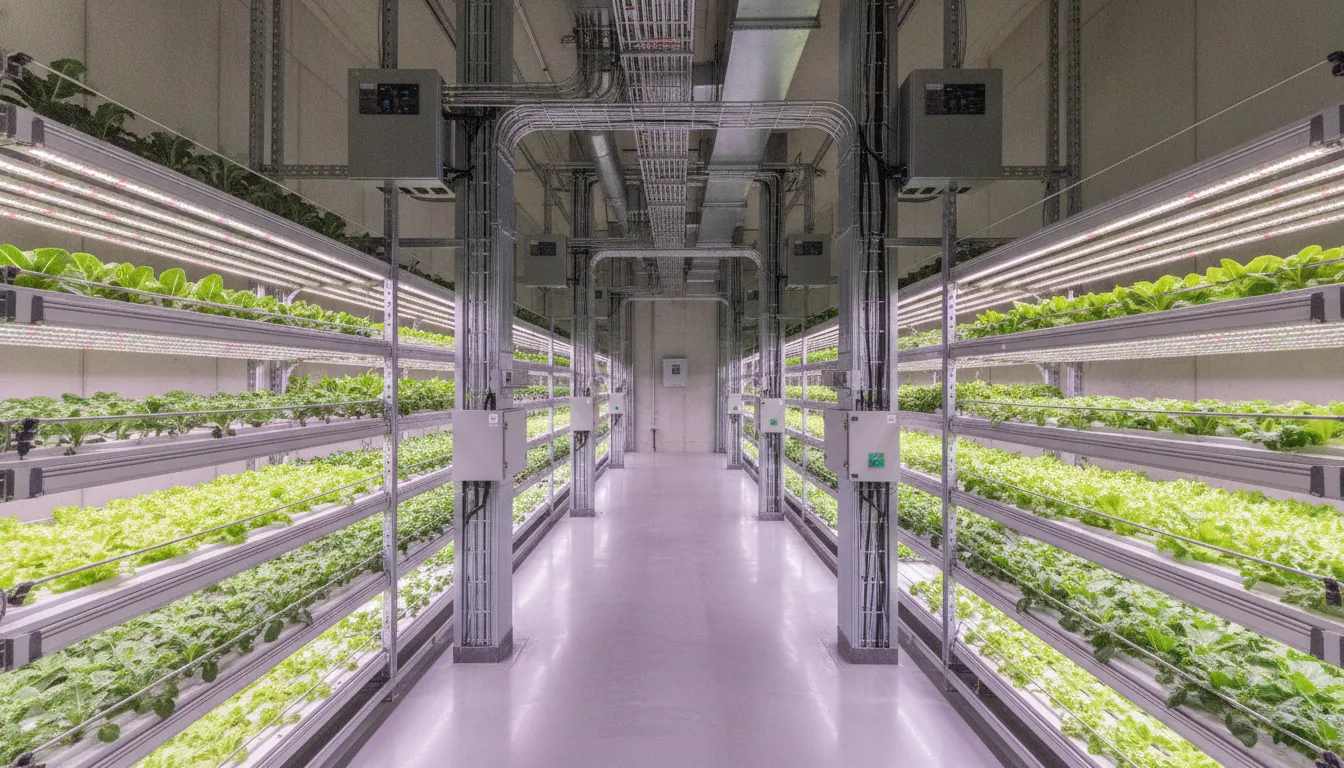
Picking the right power setup is key for any large farm. It helps you save money and keep plants healthy for a big harvest. Using a higher voltage for your setup can lower wire losses and save energy. This means you get more out of the power you pay for each month to run your lights.
Check your power service first
Before you buy gear, you must know what your building has. Most homes in the U.S. use 120V or 240V power. Large farms often have 480V three-phase systems that offer more power for big tasks. You should check if you have 240V-compatible LED fixture or if you need a bigger setup.
Match your lights to your site power
Not all lights work with every power type, but some units run on 208V to 480V to give you the most options for your site. High voltage lets you put more lights on one circuit while using smaller wires. You can find commercial grow lights 208 240 volt fixtures that fit many setups. Always check the specs on the box before you buy any new lights for your farm.
Plan for safety and growth
As your farm grows, you will need more power. High voltage systems are great for scaling up your site in a clean way. They let you add more lights without adding too many new wires to the room. This makes it easier for a pro to fix any issues or move gear later on.
- Look at your main panel. Find out if your site uses single-phase or three-phase power. Single-phase is common for small shops, while three-phase is for big sites.
- Check the light input. Make sure the lights you want can handle the power at your site. Some lights work with 120V and 240V, but others need 277V or more.
- Plan your wire paths. Higher power lets you run longer wires with less loss. This can save you money on parts when you set up your room.
- Choose your plugs and cords. Each power type uses a different plug. Make sure your cords match your outlets so you can plug in with no stress.
- Hire a pro to check. A skilled person should look at your site. They can tell you exactly what you have and make sure your plan is safe.
Working with high power is not safe for everyone. You need to follow the electrical code to stay safe. A pro will help you avoid fire risks and keep your farm running. If you have questions, call us at 866-GRO-INDR for help.
What fixture compatibility details should you check?
Before buying, confirm the driver's complete input-voltage range, plug and cord configuration, dimming controls, amperage, mounting requirements, and applicable certifications. Never assume that a fixture labeled 240V also accepts 208V or 277V unless the manufacturer's specifications explicitly say so.
Selecting the right gear for your facility involves more than just picking a light or wattage. You must ensure your power system matches the needs of your 208-240V commercial fixture. Many pro units use multi-voltage drivers that can handle a range of feeds. But checking these specs before you buy is vital for safety and performance.
Check driver voltage ranges
Modern LED drivers are often built to be flexible. Many high-end models are made to run on voltages from 208V up to 480V. This range lets you use the same light even if you move to a larger space or upgrade your power. But not all models offer this wide reach. You should always check the label for the exact input range.
If your shop has a 208V or 240V setup, you need to confirm that your light can run on those wires. Some fixtures allow for many inputs like 120V or 240V. Others are made for just one type. Choosing the highest voltage your building can give is usually best. Using higher voltage for commercial grow lights can lower driver losses and boost system gains.
Verify plug and cord options
The cord and plug are just as important as the light itself. When you buy 240V-compatible LED fixture, they often ship with a specific plug. You must make sure this plug fits the wall in your grow room. If the plugs do not match, you might need to buy new cords or have a pro change your wall ports.
Keep in mind that some big lights come with bare wire leads instead of plugs. This is common for fixed setups where the lights go right into a panel. If you plan to move your lights or use a plug system, check which cord comes in the box. Having the right parts ready before your gear arrives will save you from slow downs during the start phase.
Ask the right questions
Before you buy, speak with your vendor or a pro to clear up any doubts. You should know exactly what your building can handle before you pay for new gear. Since there are many power types, an experienced electrician should evaluate your site to see what is there. They can help you avoid errors that could break your gear or end your warranty.
Think about asking these questions while you shop:
- Input range: Does this light work on both 208V and 240V power?
- Plug type: What plug comes with this model?
- Driver rating: Is the driver rated for the power in my shop?
- Transformer need: Do I need a transformer to get the voltage I want?
Compare GroIndoor 208-240V commercial grow lights before finalizing your circuit and fixture plan.
Match commercial grow lights to the facility plan
A reliable facility plan starts with the available electrical service, target light layout, and total calculated load. Match those requirements to compatible fixtures, then account for controls, environmental equipment, expansion capacity, and safe access before finalizing the installation.
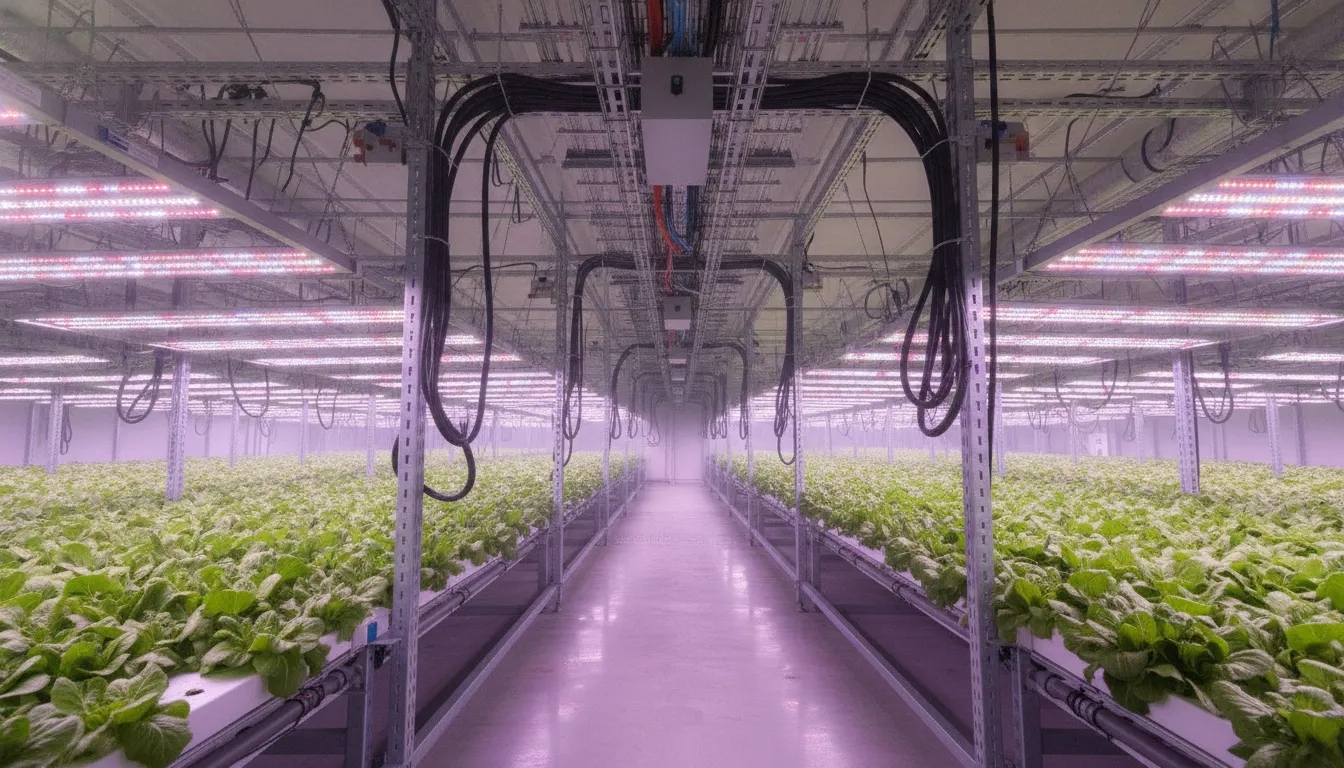
When you build a large indoor farm, your power plan and lighting must work together. Choosing the right 208-240V commercial fixture is a key step. High voltage systems help your shop run with more ease. They lower the heat in your wires and save on power costs over time. This makes your whole farm more stable and cheaper to run. Using the right power setup helps you grow more for less money.
Check your power size
Most big shops in the US use a 480V or 277V power system. These systems are common because they work well for large loads. Using high voltage cuts the current in half for the same amount of light. This lets you use smaller wires, which saves cash on setup costs. You can also run more lights on each circuit without trips or heat issues. This keeps your grow room safe and cool.
You should have a pro check your site before you buy gear. A good power expert can tell you what power you have. If your shop does not have high voltage, you can use a transformer to get it. This gives you more choices for your 240V-compatible LED fixture. High voltage drivers are built to last and handle the stress of a big grow room. They are a smart choice for any pro grower.
Map your lighting plan
Your floor plan should show where each light sits. Even light helps all your plants grow at the same rate. When you use high voltage, you can link more lights in a row. This keeps your walls clean and cuts down on the number of plugs you need. It also makes it easier to dim your lights from one spot. Many new lights use smart tools to act like the sun. This helps your plants stay happy and healthy.
Keeping your room cool is easier with high voltage. Lower current means less heat comes off your power lines. This helps your cooling gear work less and saves you money. You should also check for voltage drop across long runs. The field experts suggest keeping these drops low to protect your lights. Stable power means your bulbs and LEDs will stay bright for many years.
Plan for future growth
It is wise to think about growth now. Adding more power later is hard and costs a lot of money. If you set up a high voltage system now, you can add more lights with ease. You can also swap out old lights for newer ones as tech gets better. A good plan makes sure your farm can grow as big as you want. It is the best way to keep your business moving forward.
Always follow the rules for your area. Safe wiring protects your team and your crop. Using the right power specs ensures your farm stays up and running. A solid plan for your lights and power is the best start for a big grow. It helps you avoid big costs and keeps your plants in the best light.
Frequently Asked Questions
Commercial growers most often ask whether fixtures can cross 208V and 240V systems, whether higher voltage improves efficiency, and when 277V makes sense. The answers depend on the driver's approved range and the facility's electrical service, not voltage labels alone.
Can I run a 240V grow light on a 208V circuit?
Many modern fixtures can run on both 208V and 240V when the approved input range includes both. Compare the broader LED grow light collection before confirming a model. Many high-end models use multi-voltage drivers that handle a wide range of inputs. However, you should always check the label on your light first. Some units are built to only work on one specific voltage. If the label says the light is only for 240V, it may not start or run right on a 208V line. This could damage your gear over time.
Are 208-240V commercial grow lights more efficient than 120V models?
Yes, higher voltage systems are more efficient for large grows. When you double the voltage, you cut the electrical current in half for the same power load. This reduces heat in your wires and lowers energy loss. As shown by PL Light, using the highest voltage in your shop is the best way to lower driver losses and boost total fixture gains. This setup lets you run more lights on fewer circuits while keeping your power costs as low as possible.
What is the difference between 208V and 240V grow light ballasts?
The main difference is the type of power system they use. 240V power is common in homes and small shops with single-phase power. It uses two hot wires and a neutral line. 208V power is found in bigger buildings with three-phase power. While both systems use two hot wires to power the light, the source of that power is different. Most commercial grow lights are built to work with both, but you should check your building type with a pro before you buy.
What is the benefit of using 277V lighting in commercial facilities?
Using 277V power lets you run many more lights on a single circuit. This voltage is common in large U.S. buildings that have 480V systems. Since the voltage is high, the current is very low. This means you can use smaller wires to move power over long distances without losing much energy. It also helps you save money on parts like breakers and panels during the build. A 277V circuit can run four times farther than a 120V circuit while using the same size wire.
Ready to set up your commercial grow lights?
A well-planned voltage and fixture strategy supports reliable operation today and leaves room for future expansion. Confirm the facility service and planned load with a licensed electrician, then compare compatible fixtures by input range, plug type, controls, and mounting requirements.
Tags: