


Success in an indoor garden depends on hitting the right balance of light for your grow space. Using the wrong power levels can lead to thin stems or burnt leaves. You need a clear plan to get the most from every inch of your grow tent.
Shop GroIndoor LED grow lights sized for your grow space.
The correct LED grow light wattage per square foot ensures your plants have enough light to thrive without the risk of heat stress. Most experts suggest a range of 30 to 40 watts of real power draw per square foot of grow area for indoor LED setups. This need changes based on the plant growth stage. For the vegetative phase, you mostly need about 25 watts per square foot. During the flowering stage, the power need goes up to between 30 and 50 watts per square foot to help with plant growth. Total wattage depends on the size of your grow space and how well your light fixture works. High-quality LED fixtures are much better than old HPS bulbs, as they can reach high efficiency levels to improve plant yields (National Institutes of Health).
LED grow light wattage per square foot: quick answer
Most indoor growers need about 30 to 50 watts of actual power draw per square foot of canopy space for plants in the flowering stage. This range ensures your garden has enough light to produce thick, dense yields without causing heat stress or light burn. For the vegetative phase, plants often need less intensity, typically about 25 watts per square foot.
How to find your wattage needs
You can find the best LED grow light wattage per square foot by first finding the size of your grow area. Multiply the length of your garden by the width to get the total square feet. Then, multiply that number by 30 or 40 to find the total watts you need for a healthy grow. For example, a 3' x 3' space is 9 square feet, which means you would look for a light that draws about 360 actual watts.
High-quality LED fixtures are more efficient than older HID systems. Research shows that top LED lights can reach a photon efficiency of 1.7 micromoles per joule. While older mogul-base HPS lights often stay near 1.02 micromoles per joule, as noted by the National Institutes of Health. This means you can get better results with less power when you use modern LED tech.
Watts per square foot by plant stage
The amount of light your plants need changes as they grow. Seedlings and clones need very little light, while flowering plants need the most power to thrive. Setting the correct lighting wattage for each phase helps you save on power while keeping your plants healthy and strong. Proper light levels help avoid common issues like stretching or light stress.
| Growth Phase | LED Watts per Sq. Ft. | HPS Watts per Sq. Ft. | Light Goal |
|---|---|---|---|
| Clones & Seedlings | 15-20 Watts | 25-30 Watts | Low heat, mild light |
| Vegetative Stage | 25-30 Watts | 40-50 Watts | Strong leafy growth |
| Flowering Stage | 30-50 Watts | 60-70 Watts | Dense fruit and flowers |
Choosing the right LED fixture
When you buy a light. Check the "actual power draw" rather than the "rated wattage." Many LED brands use rated numbers that do not show how much power the light truly uses from the wall. Matching your wattage requirements for your grow tent to the actual draw ensures your plants get the right light levels for high productivity, according to NIH research. At GroIndoor, we carry lights from 100W to over 1000W to fit any size grow space.
How to calculate the wattage your grow space needs
Finding the right light for your indoor garden starts with clear math. You must match your fixture power to the size of your canopy to get the best results. If you use too little power, your plants may stretch and produce low yields. But too much light can cause stress or even burn your crop. By learning how to find your LED grow light wattage per square foot, you can ensure your plants get the energy they need to thrive.
Measure your garden footprint
The first step is to find the total area of your growing space. Use a tape measure to get the length and width of your tent or room in feet. Multiply these two numbers to find the square footage. For example, a 3-foot by 3-foot space has an area of 9 square feet. If you have a larger 4-foot by 4-foot tent, your total area is 16 square feet. This number is the base for all your lighting math.
Choose your target power level
Next, you need to set a goal for how many watts you want for each square foot. Most experts suggest a range of 30 to 40 watts of actual power draw for each square foot of canopy space. High-quality fixtures are very efficient. Some reach 1.7 micromoles per joule, as noted by the National Institutes of Health. This high efficiency means you can get more light while using less power than old systems.
Calculate your total wattage needs
To find your total needs, multiply your grow space area by your target power level. If you have a 3' x 3' tent and want 40 watts per square foot, you would need 360 actual watts. For a 4' x 4' tent, you would need between 480 and 640 watts to hit the same goal. Knowing these wattage requirements for your grow tent helps you pick the right fixture from the start.
- Measure the space: Find the length and width of your grow area in feet.
- Find the area: Multiply the length by the width to get the total square footage.
- Set a goal: Aim for 30 to 40 watts of actual power draw for each square foot.
- Multiply: Multiply your total area by your target wattage per square foot.
- Check the draw: Look at the "actual power draw" of the light, not the "LED wattage" label.
Wattage-by-space chart for common grow areas
Start with the actual square footage of the lit canopy, not the room around it. Multiply that footprint by your stage-specific wattage target, then check whether the fixture distributes light evenly at the intended height. GroIndoor's LED grow light selection makes it easier to compare fixtures by real power draw and coverage.
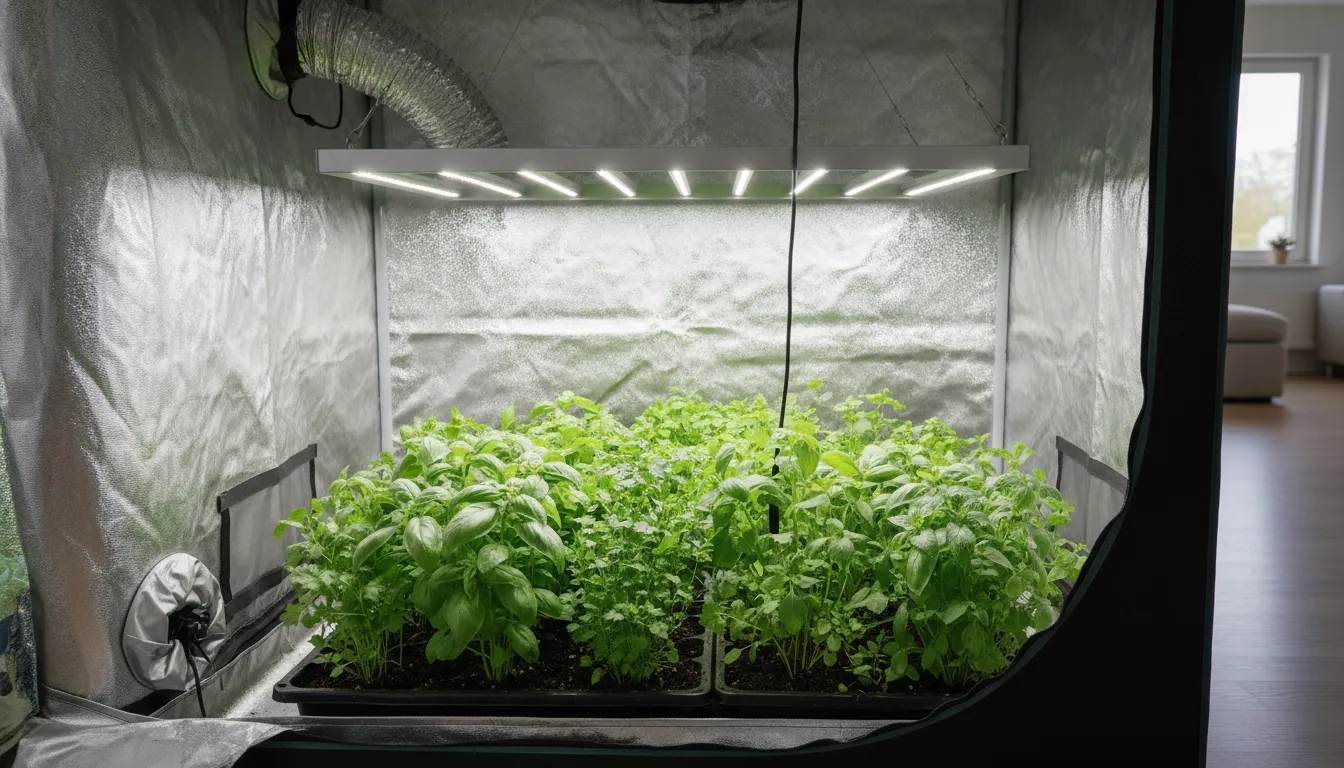
Finding the right LED grow light wattage per square foot is key for a healthy indoor garden. Most experts suggest a range of 30 to 40 watts of power draw per square foot for indoor LED setups. If you have too little wattage, your plants may stretch or produce small yields. But too much wattage can cause light stress or even leaf burn. By matching your light to your floor space, you ensure your plants get the energy they need without wasting power.
How to find your needs
To find your target power draw, first find the square footage of your grow area. Multiply the width by the length to get the total size. Then, multiply that number by your target watts per square foot. Plants in the early green phase typically need roughly 25 watts per square foot. This is about half the light needed for bloom. For the bloom stage, you should aim for 30 to 50 watts per square foot to get the best plant growth.
Wattage needs by tent size
Different tent sizes need different light levels to help plants thrive. A small 2x2 area only needs about 120 to 160 watts for bloom. A large 5x5 space needs much more. High-quality LED lights can reach a photon efficiency of up to 1.7 micromoles per joule. This is a big step up from older HPS lights. Using the right wattage for your space helps you manage power costs while keeping your plants healthy.
| Grow Space Size | Total Square Feet | Veg Wattage (25W/sq ft) | Bloom Wattage (40W/sq ft) |
|---|---|---|---|
| 2' x 2' | 4 sq ft | 100W | 160W |
| 2' x 4' | 8 sq ft | 200W | 320W |
| 3' x 3' | 9 sq ft | 225W | 360W |
| 4' x 4' | 16 sq ft | 400W | 640W |
| 4' x 8' | 32 sq ft | 800W | 1280W |
| 5' x 5' | 25 sq ft | 625W | 1000W |
Adjusting for crop type
Not every plant needs the same amount of light. Low-light crops like greens may do well with the lower end of the power range. High-light crops, like those found in 4x4 grow tents, need more light for dense growth. LED lights are great because they can focus light on specific areas. This helps you get more from your lights. Always check your light specs, as real power draw is more important than listed "equivalent" wattage.
Why fixture efficiency changes the wattage target
Wattage is often the first thing people look at when they buy a grow light. They want to know how much power the unit takes from the wall. But power is just one part of the story. You also need to know how well the light turns that power into food for your plants. This is what we call fixture efficiency. A better light will give you more usable rays for every cent you spend on power.
How PPE measures light quality
Growers use a term called PPE to talk about light quality. It stands for Photosynthetic Photon Efficiency. This number tells you how many light particles a fixture makes for each joule of power. Top LED lights are the best at this task. Facts show that new LED grow lights can reach 1.7 micromoles per joule. This is a huge leap over older HPS lights which only reach 1.02 micromoles per joule.
When a light is more efficient, you do not need as many watts to get the same results. This changes your goal for LED grow light wattage per square foot. You can use a smaller light to do a big job. This helps you save on gear and keeps your grow room from getting too hot. It also means you can grow more plants in a small space without using too much power.
The role of PPFD maps in your tent
A PPFD map shows how light hits the leaves of your plants. It is a grid of numbers that tells you the light strength at different spots. Some lights focus their rays right in the middle. Other lights spread them out to cover the corners. When you pick the wattage requirements for your grow tent, you must check these maps. They show if the light will reach all your plants.
LED lights are unique because they can focus photons on one spot. This helps you waste less light on the floor or the walls of your tent. If you have a wide space, you want a light that has a broad and even spread. This ensures that every plant gets the same amount of food. Even light growth makes it easier to care for your garden and leads to a better harvest in the end.
True power draw versus marketing claims
Many brands use marketing watts to sell their products. They might call a light a 1000W model, but it only uses 400W from the wall. This can be confusing for new growers. Always look for the true input wattage in the product specs. This is the real amount of power the light needs to run. Knowing this number helps you plan your LED grow light wattage per square foot the right way.
Using less power to get the same light levels is a big win. It keeps your tent cool and stops you from blowing a fuse. It also lowers your costs over time. While high-quality lights may cost more at first, they save you a lot of money on your monthly bills. Pick a light that offers high output with low power draw to get the best value for your indoor garden.
How mounting height affects usable light
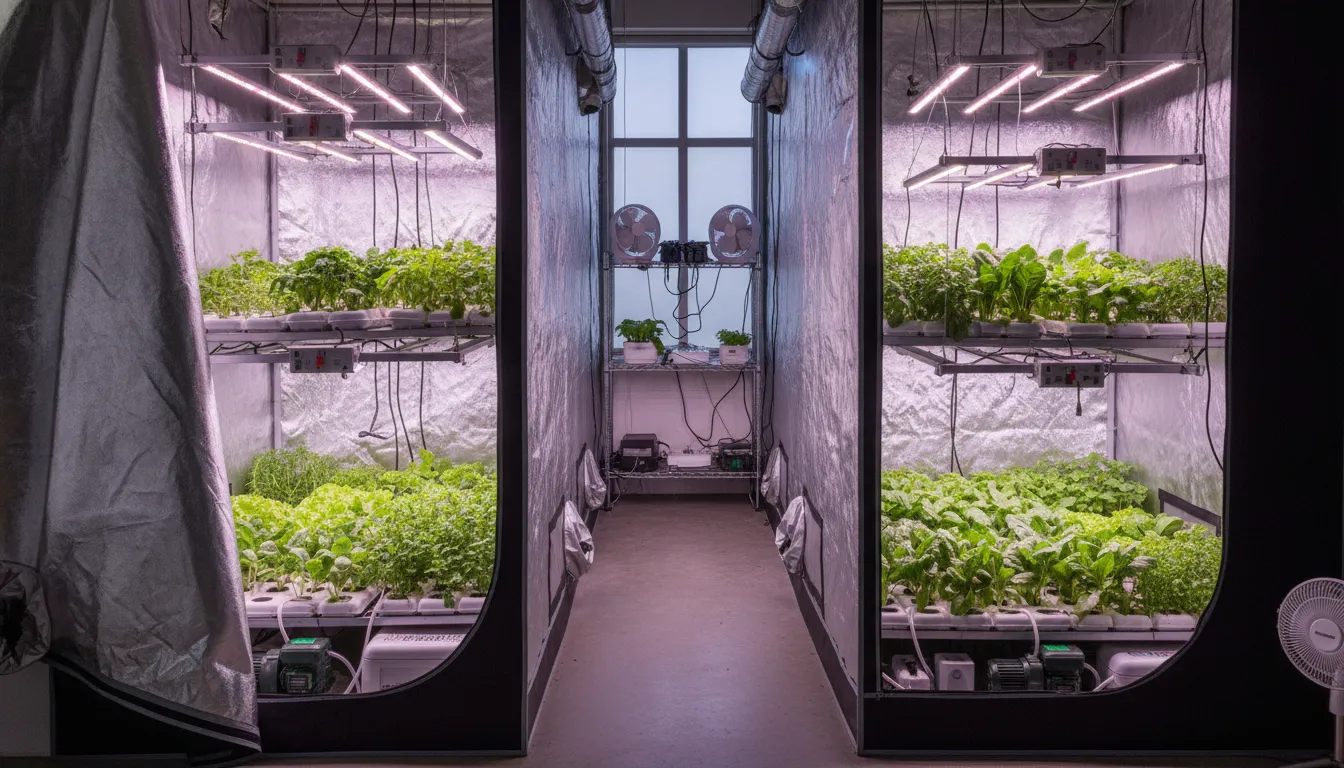
Mounting height changes how evenly a fixture spreads its output across the canopy. A lower fixture increases intensity in the center but may create hot spots. A higher fixture improves coverage but reduces intensity, so follow the fixture's coverage map and manufacturer guidance.
Mounting height changes both intensity and coverage. Hang a fixture too high and useful light weakens before reaching the canopy. Hang it too low and the center can receive excessive intensity while corners remain dim. Use the maker's PPFD map and observe plants to find the balanced position.
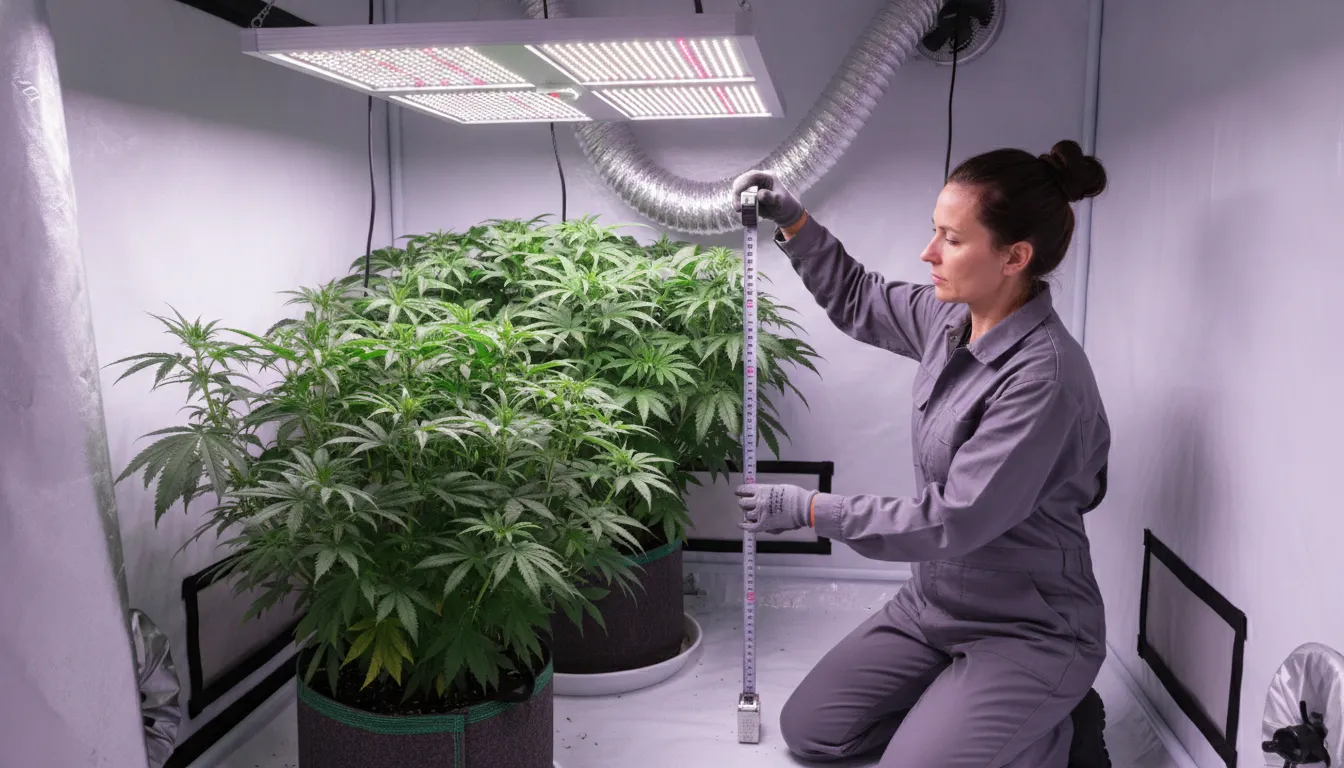
Mounting height is the key to making the most of your light. It shows how well your light covers the floor. If you hang your light too high, the rays spread out too far and lose power before they reach the leaves. If you hang it too low, you create hot spots that can hurt your crop. Finding the right height helps you reach the best LED grow light wattage per square foot for your space.
Managing power with height
Light power drops fast as you move the light up. Top LED lights have a unique way to focus light on specific spots. This helps your plants catch more light even in wide grow rooms. Research from the National Institutes of Health shows that LEDs can focus light better than older HPS bulbs. This focus lets you keep the light at a height that covers the whole canopy while still giving enough power to the plants.
For most indoor grows, you should aim for 30 to 50 watts of real power draw for each square foot. If your light is too high, the plants may not get this much power. This can lead to slow growth or thin stems. You can use a dim switch to help control the power if you need to keep the light close. This helps you save on power costs while giving your plants what they need to thrive.
Signs of bad mounting height
Your plants will tell you if the light height is wrong. When the light is too far away, plants will stretch. They grow tall and weak as they reach for the light. This makes the stems thin and leads to poor results later. You want a short and bushy plant for the best use of space. If you see stretching, you should lower your light to boost the power per square foot.
On the other hand, a light that is too low can cause stress. You might see the top leaves turn yellow or white. This is often called light burn. It happens when the strength is too high for the leaves to handle. You should also watch for leaf edges that curl up. If you see these signs, move the light up by a few inches or use the dim switch to lower the power.
Reading maker PPFD maps
The best way to set your height is to look at the PPFD map from the maker of your light. These maps show you how much light hits the floor at different heights. They help you find the best spot for your wattage requirements for your grow tent. A good map shows the strength in the center and the corners. You want the light to be even across the whole tent to avoid dark spots.
- Check the map for the set height for the growth phase.
- Look for even light numbers across the whole canopy.
- Adjust the height if the corners are much darker than the center.
- Use a par meter if you want to be sure of the local light levels.
Most lights come with a chart for the veg and bloom stages. Veg plants need less light, so you can hang the light higher. Bloom plants need more power, so you may need to move it closer. Always follow the guide to keep your plants safe and healthy.
Adjust wattage for plant stage and crop type
Indoor plants go through many changes as they grow. Each stage has its own light needs. If you give a small plant too much light, it can wilt or die. If you give a big fruiting plant too little light, it will grow tall and weak. Finding the right LED grow light wattage per square foot is key to a good harvest.
Lighting for early growth and seedlings
Seedlings and clones have thin leaves. They cannot handle high light levels. At this start, your light power should be low. Most experts suggest using about 15 to 20 watts per square foot for young plants. This prevents light burn and keeps the small plants from drying out.
If you have a dimmable light, start at a low setting. You can also hang the light higher above the tray. As the plants grow their first true leaves, you can slowly turn up the power. This helps the plant get ready for the next phase without stress. High-quality fixtures can help focus light where it is needed most to improve capture.
Needs for leafy greens and herbs
Not all plants need the same amount of light to thrive. Leafy greens like lettuce and herbs like basil have lower power needs than fruiting crops. For these plants, 20 to 30 watts per square foot is enough. This level helps them grow fast and stay crisp.
Using too much power on greens can lead to bitter tastes or burnt edges. It can also waste power. Research shows that special light mixes can help reduce power costs for greens like rocket. You should aim for a balance that keeps the plants healthy while saving on your power bill.
Flowering and fruiting stages
When plants start to flower or grow fruit, they need more energy. This is when the light needs for your grow tent will hit their peak. For best bloom, most growers aim for 30 to 50 watts of actual power per square foot. This high level of light helps plants build big, dense fruit and heavy flowers.
You should not jump to full power all at once. It is best to increase light strength over a week. This gives the plants time to adjust. High-strength light can increase edible biomass in crops like edamame and dwarf tomatoes. Watch for signs of light stress like bleached leaves. Using the correct lighting wattage ensures your harvest is high quality.
Managing light with dimmers
Modern LED lights often come with dimmers. This is a big help for home growers. Instead of moving heavy lights up and down, you can just turn a knob. Dimmers let you match the light to what the plant needs each day. This saves money and keeps the room cool. Most growers use a simple plan for power levels:
- Seedlings and clones: 20% to 30% power.
- Early growth phase: 50% to 60% power.
- Bloom and fruiting stage: 80% to 100% power.
This change mimics the sun and prevents shock. If you see plants stretching or growing thin, they need more light. Turn up the power or move the light closer to fix this. Proper light use is the best way to get a big yield from your garden.
How to choose the right LED grow light
Picking the best light for your garden is about more than just the price. You must match the light to your space and the needs of your plants. A good light helps you grow healthy crops without wasting power or making too much heat. You should look at the build quality and the parts inside the light too.
Measure your real power draw
When you shop, look for the real power draw from the wall. Do not just look at the wattage listed on the box. Many brands use big numbers that do not show the real power use. The driver and the diodes pull a fixed amount of power to work. For indoor crops, the best LED grow light wattage per square foot depends on the life stage of your plants.
Plants in the flowering stage need the most power to produce big yields. You should aim for about 30 to 50 watts of real power for each square foot of your canopy. Say a four by four tent has 16 square feet of space. You would need a light that draws about 480 to 800 watts to fill that area well. These wattage needs for your grow tent ensure your garden has enough juice to thrive.
If your plants are still in the vegetative stage, they only need about 25 watts per square foot. Giving them too much light early on can cause stress or burn the leaves. Using the right amount of power helps you save on your bill while keeping your plants happy. Most new lights let you adjust the power as your plants grow bigger.
Check the PPFD coverage map
A good light provides even light across your whole garden. You should check the PPFD map to see how the light spreads from the center to the edges. PPFD shows the amount of light that truly hits your plants. High-end LED lights are very good at sending light right where your plants need it most. They can focus photons on the canopy to help your plants catch more light in open spaces.
Efficiency also matters when you choose a light. Top LED lights can reach an efficiency of 1.7 micromoles per joule. This is a big jump over older HPS lights that only hit about 1.02 micromoles. Better efficiency means you get more light for every dollar you spend on your power bill. You get more growth for less power which helps your bottom line. Always check the specs to find the best diodes for your setup.
Look for a map that shows the light levels at the hang height you plan to use. If the light is too close, it might create a hot spot in the center while leaving the corners dark. A wide bar style light often gives better spread for large tents. Proper light spread ensures every plant in your tent grows at the same rate.
Plan for heat and efficiency
Even though LEDs stay cooler than old bulbs, they still make some heat. The heat usually comes from the driver and the diodes on the board. You need to plan your airflow and cooling to keep your room at the right heat level. Some lights have drivers that you can mount outside the tent. This helps keep the heat away from your plants and makes it easier to manage the air.
Choose a light with a built-in dimmer so you can turn the power down for young plants. Using a dimmer saves money and keeps your room from getting too hot. You can also look for lights with large heat sinks or fans to move the warm air away. Proper heat planning keeps your room stable and prevents your plants from wilting in the heat.
You can find a wide range of expert LED grow lights at GroIndoor. They carry lights from 100W up to 1000W to fit any size room. Their team can help you pick the right size for your exact grow tent or room. Choosing the right light is the first step toward a successful harvest.
Compare GroIndoor LED grow lights by wattage and coverage.
Frequently Asked Questions
How many LED watts are required per square foot for flowering?
Most indoor LED grow lights draw between 30 and 50 watts of actual power per square foot to support flowering plants. This range helps plants get enough light to produce large yields and dense growth. According to LED Grow Lights Depot, a range of 30 to 40 watts is the standard for most home grow setups. Using too little power can lead to thin stems and weak harvests.
Is there a difference in wattage required for vegetative vs. flowering stages?
Yes, plants need less light during the vegetative stage than they do when flowering. Most plants only need about 25 watts of actual power per square foot while they are growing leaves and stems. This is about half of the light strength needed for the bloom phase. Lowering the light output during this early stage helps save on power costs and prevents small plants from getting too much stress.
How do I calculate the wattage needed for my specific grow space?
To find the wattage you need, multiply the length of your grow area by the width to get the square footage. Then multiply that number by 30 or 40 watts. For example, a three foot by three foot space is nine square feet. Multiplying nine by 40 watts gives you a total of 360 watts needed for flowering. This simple math helps you find the right LED grow light wattage per square foot for your tent.
What happens if I have too little or too much wattage per square foot?
If you have too little wattage, your plants will stretch toward the light and become weak. This leads to poor yields and slow growth. If you have too much wattage, your plants may suffer from light burn or heat stress, which can damage leaves. Finding the right balance keeps your plants healthy. High quality LED lights can reach 1.7 micromoles per joule to improve photon capture and overall efficiency.
Ready to find the right LED grow light for your space?
Picking the wrong light can lead to slow growth and high power bills that waste your hard earned money. If you wait to fix your gear, you miss out on larger crops and better plant health right now. Every day you use the wrong wattage is a day your plants do not reach their best size. You can save time and grow thick, heavy buds by picking the best light for your space today. Our team has many lights for any size tent and can guide you to the perfect fixture. Do not let the next grow cycle pass with low light levels that hold your plants back.
Ready to talk to a grow expert? Shop LED grow lights to find the best fixture for your garden today.
Tags: