


Choosing a garden sprayer is easier when you compare how it operates, how much liquid it holds, how it applies a spray, and how much cleanup it needs. The right format depends on what you are applying, how many plants you tend, and how often you reach for it. For indoor plant care, comfort and control often matter more than choosing the largest tank.
Explore a handheld garden sprayer
Which garden sprayer formats should you compare?
Start by matching the sprayer mechanism to the size and rhythm of the job. A small hand-trigger bottle is simple to pick up, use for a short task, and put away. A pump-up sprayer stores pressure after you pump it, so you can apply liquid without squeezing a trigger for every spray. Battery-powered sprayers reduce repeated hand pumping, but bring charging, storage, and extra parts into the routine.
Those are broad format differences, not a guarantee that every model will behave the same way. Nozzle design, seals, pressure, and the liquid being used all affect performance. A gardening guide from GrowPlants.org on sprayers and applicators also frames selection around equipment type and the plants and garden size being served.
| Format | Best fit to consider | What to compare | Routine trade-off |
|---|---|---|---|
| Hand-trigger bottle | Small, occasional applications and spot tasks | Capacity, grip, trigger feel, and nozzle adjustment | Easy to pick up; repeated trigger pulls can be tiring over a larger area |
| Manual pump-up | Repeated applications across more plants | Tank size, pump effort, pressure controls, and cleaning access | Requires pumping and careful pressure management |
| Battery-powered | Longer or frequent tasks where reducing manual pumping matters | Run time, charging, weight when full, and replaceable parts | Less manual pumping, with battery care and more components to maintain |
| Specialty or compression sprayer | A specific application method or setup | Compatibility, spray pattern, instructions, and replacement parts | May be useful for a defined job but adds model-specific requirements |
For a few houseplants or a small indoor growing area, a compact trigger bottle may be enough. If the same task regularly takes many refills or repeated trigger squeezes, compare a pump-up model. Consider a powered option only if its added weight, maintenance, and charging needs make sense for how you work.
How much capacity is practical?
A larger tank means fewer refills, but it also weighs more when full and takes up more storage space. Do not compare capacity in isolation. Think about how much liquid you actually use in one session, where the sprayer will be stored, and whether you can comfortably hold and direct it.
- For spot applications: A smaller container can be easier to carry, aim, and empty after use.
- For many plants: A larger capacity may reduce interruptions, provided the filled sprayer remains manageable.
- For infrequent use: Choose a size you can empty and clean without leaving liquid stored between jobs.
- For tight spaces: Check the sprayer's overall shape, handle position, and ability to reach plants without bumping nearby equipment.
Estimate your usual session before buying. Note how many plants you treat, whether you work in one room or move between areas, and how often you are willing to refill. If possible, hold an empty unit and imagine its full weight. A tank that looks convenient on a shelf may be awkward to carry when filled.
The Grow1 listing describes a 1-liter spray bottle. Use the listed capacity as one comparison point, then decide whether a compact bottle matches your actual task. See the Grow1 handheld spray bottle details before choosing it for your routine.
What should you look for in a nozzle and spray pattern?
The nozzle determines how the liquid leaves the sprayer. Depending on the model, an adjustable nozzle may shift between a finer mist and a more concentrated stream. That flexibility can be useful, but it is not automatically better. Check the product instructions to learn what settings are offered and which applications they suit.
- Adjustment: Can you choose a pattern that suits the task, and can you repeat that setting easily?
- Reach: Does the nozzle direct liquid where you need it without forcing you to overextend?
- Control: Can you make a brief, controlled application rather than releasing more than intended?
- Cleaning: Can you remove or rinse the nozzle if residue affects the spray?
For indoor plant care, aim for control rather than maximum output. A pattern that is too broad may wet nearby surfaces; a stream may concentrate liquid in one spot. Test a new sprayer with water in a safe area, observe how the pattern behaves, and adjust your distance and technique before using it for its intended purpose. Follow the directions for the liquid you are applying.
Do not assume every liquid can go in every sprayer. Review the sprayer label and the liquid's directions for material compatibility, dilution, application, and cleanup. If instructions conflict or do not clearly cover your use, pause and confirm compatibility instead of improvising.
Think about where the spray should land, too. If you are working around shelves, lights, trays, or nearby plants, a controlled pattern can help you avoid wetting surfaces that are not part of the task. This is one reason it helps to test the nozzle with water before preparing any product. Stand in the position you will use, check the direction and reach, and see whether you can operate the trigger or pump without losing control of the bottle. If the pattern is difficult to direct, change the setup or choose another format rather than compensating by spraying more.
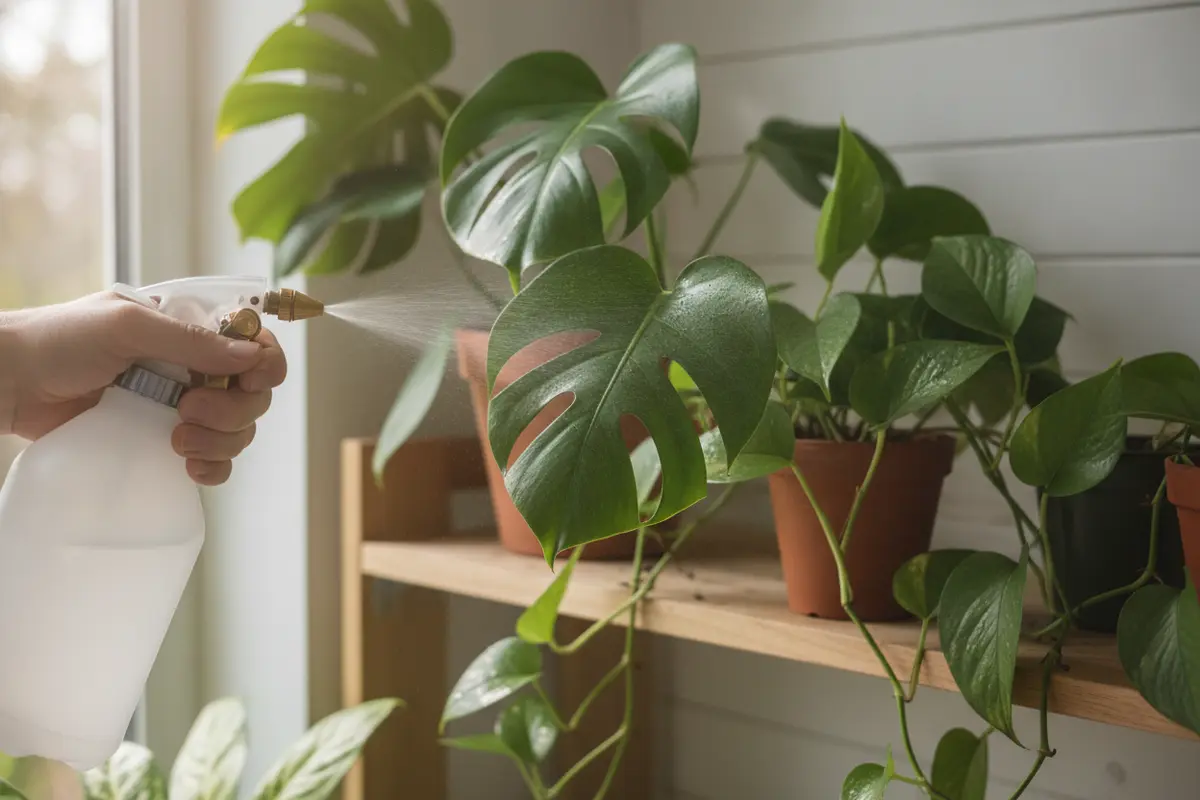
How do you choose a sprayer for indoor plant care?
Begin with the task, not the equipment. A sprayer used for water, a plant-care product, or another labeled application may have different handling and cleaning requirements. Use a dedicated sprayer for each purpose when directions call for it or when separating liquids helps prevent accidental mixing. Marking equipment clearly can also help you keep its use straight.
Before applying anything to plants, read the product label and follow its directions. Check whether the product is intended for the plant and application method, and whether it calls for a particular nozzle, dilution, timing, or protective measures. Avoid treating a general-purpose sprayer as permission to use a product in a way its label does not allow.
Some shoppers are comparing a sprayer with other plant-care supplies. GroIndoor lists fungus gnat control products and Optic Foliar ATAK; check each product's own instructions to determine whether it suits your particular plant-care need and application method. Other listed formulations include Optic Foliar SWITCH and Optic Foliar OVERGROW. Their product instructions determine whether and how they should be applied. A sprayer is an applicator, not a substitute for identifying the issue or following product directions.
Keep basic observation separate from treatment decisions. If you are checking leaves or stems for signs that warrant closer attention, a handheld grow-room microscope is another type of tool to consider. Inspect first, identify the task, then choose equipment and follow the relevant directions.
A short pre-use check can make the process more orderly. Confirm that the bottle is clean and correctly identified, inspect the cap and nozzle for visible damage or blockage, and prepare only the amount allowed by the product directions. Keep the work area organized so you can set the sprayer down securely between plants. If a task involves multiple products or separate growing areas, pause between steps to verify which container you are holding. A simple routine reduces mix-ups and makes it easier to clean and store the sprayer correctly afterward.
Which materials and maintenance details matter?
Materials matter because the sprayer has to hold up to the liquid and the care routine. Read manufacturer guidance on compatible liquids, cleaning agents, and storage. Look for clear instructions, accessible parts, and replacement seals or nozzles if the design uses serviceable components. Do not rely on appearance alone to decide whether a material is compatible.
After each use, follow the sprayer and product instructions for emptying and cleaning. A practical routine usually includes emptying leftover liquid as directed, rinsing the tank and nozzle when permitted, and allowing parts to dry before storage. Never combine leftover contents from different tasks. Dispose of remaining liquid according to its label and applicable local guidance.
- Check the sprayer and liquid instructions before filling.
- Use only the stated liquid and dilution, and do not exceed the sprayer's fill limit.
- Apply the liquid as directed, keeping the nozzle under control.
- Empty and clean the sprayer according to both sets of instructions.
- Store it safely, clearly identified, and out of reach of children and pets where applicable.
These steps are deliberately general. Specific products can have requirements that differ, so their labels take priority. If the sprayer cannot be cleaned as directed, or its materials are not confirmed as compatible, select a different tool rather than risking residue or damage.
Cleaning access deserves a close look before purchase, especially if you expect to use the sprayer regularly. Check whether the tank opening is large enough to rinse without awkward handling, whether the nozzle can be rinsed as directed, and whether the parts that need attention can be reached. Find out how the manufacturer says to store the unit between uses. A complicated design may still suit you, but only if its care steps are realistic for your routine. Make cleanup part of the comparison, not a chore to consider after you have chosen a model.
How should you compare comfort and ease of use?
A sprayer can be technically suitable and still be uncomfortable. Look at the trigger or pump position, grip shape, balance when full, and the effort needed to operate it. If you have limited hand strength, repeated squeezing may be a poor fit. A pump-up model shifts some effort to pressurizing the tank; a battery model may reduce that effort but can be heavier and needs charging.
Check how the unit is filled. A wide opening can make filling and rinsing easier, while a narrow opening may require more care to avoid spills. Inspect whether the cap, wand, and nozzle are easy to handle and whether the sprayer can stand securely during a pause. Think about the entire task, including filling, carrying, application, cleanup, and storage.
For a first comparison, write down your top priorities. For example, a grower tending a few plants once a week may prioritize a comfortable grip and quick cleaning. Someone regularly covering a larger set of plants may place greater weight on tank capacity and reduced repetitive effort. Neither situation calls for the biggest or most complex model by default.
Imagine a typical session from start to finish. You pick up the sprayer, carry it to the growing area, reach the plants, pause to adjust the nozzle, and then return it for cleaning. Any one awkward step can become noticeable when repeated. If shopping in person is possible, try the grip and trigger while the unit is empty and consider how the balance may change when filled. For online comparisons, use listed dimensions, handle design, and capacity, and look for clear care instructions rather than assuming a photo tells the whole story.
What common buying mistakes should you avoid?
- Buying by tank size alone: A large tank can add weight and leave more liquid to manage after a task.
- Assuming every nozzle is adjustable: Confirm the functions listed for the specific model.
- Ignoring compatibility: Verify that the sprayer materials are suitable for the liquid and cleaning routine.
- Using one tool for every purpose: Follow labels, and keep equipment separate when instructions or practical handling call for it.
- Skipping cleanup: Residue can affect a later use. Clean and store the sprayer as directed.
- Choosing a powered model without considering upkeep: Include charging, battery storage, and maintenance in the decision.
A product page can help answer specifications questions, but your routine determines which trade-offs matter. Compare the product details with your own checklist instead of choosing from a single feature or a broad claim.
How can you make a final comparison?
Use this quick decision process before purchasing:
- Name the task. Decide what you need to apply and confirm the application method is appropriate.
- Estimate the working amount. Choose capacity based on a typical session, not a hypothetical maximum.
- Pick the operating format. Compare a trigger bottle, manual pump, or powered model against frequency, area, effort, and storage.
- Check the spray pattern. Confirm the nozzle's actual settings and whether they suit the intended use.
- Verify care requirements. Read the compatibility and cleaning guidance for both sprayer and liquid.
- Consider comfort. Account for full weight, grip, reach, filling, and the effort of repeated operation.
- Review the product information. Make sure dimensions, parts, and instructions answer your open questions.
A compact spray bottle may be a straightforward choice for short, controlled jobs. A pump-up format can be worth comparing when refills or repeated squeezing interrupt a larger routine. A battery-powered model may suit frequent work where reducing manual effort is important, as long as its weight and upkeep are acceptable. The best choice is the one that fits the task and can be cleaned and stored correctly.
As a practical example, imagine two routines. For a few plants and occasional spot tasks, a small bottle may be simple to fill, carry, and rinse after each use. For a larger collection that needs regular applications, fewer refills may be valuable, but only if you can comfortably lift the filled tank and maintain its parts. If you are undecided, list your usual session length, number of plants, and cleanup steps, then compare each candidate against those same conditions. This keeps the choice tied to your real work rather than an assumed best-in-class feature.
Compare the Grow1 spray bottle details
Frequently Asked Questions
Is a small hand-trigger sprayer enough for indoor plants?
It can be enough for occasional, small-area tasks if its capacity, nozzle, and materials fit the intended use. If you are refilling often or find repeated trigger pulls tiring, compare a pump-up option as well.
Should I use the same sprayer for different liquids?
Follow both the sprayer instructions and each liquid's label. Use separate, clearly identified equipment when required by the instructions or when separation helps prevent accidental mixing. Do not put a new liquid into a sprayer until you know it can be cleaned and used appropriately.
Does a finer mist always work better?
No. The appropriate pattern depends on the product directions and the job. Confirm the sprayer's settings, test with water where practical, and follow the application instructions rather than assuming a fine mist is suitable for every use.
What is the most important feature to compare?
Start with compatibility and the intended application. Then compare capacity, spray control, comfort, cleaning, and storage. A feature only helps if it fits the work you actually do.
Compare sprayers by the job they need to do, how comfortably you can operate them, and whether you can maintain them according to their instructions. That approach keeps the decision practical and helps you choose equipment that fits your indoor plant-care routine.
Tags: